

 قم بزيارة صالة العرض
انتقل إلى
What Are the Proven Benefits of Sit-Stand Desks?
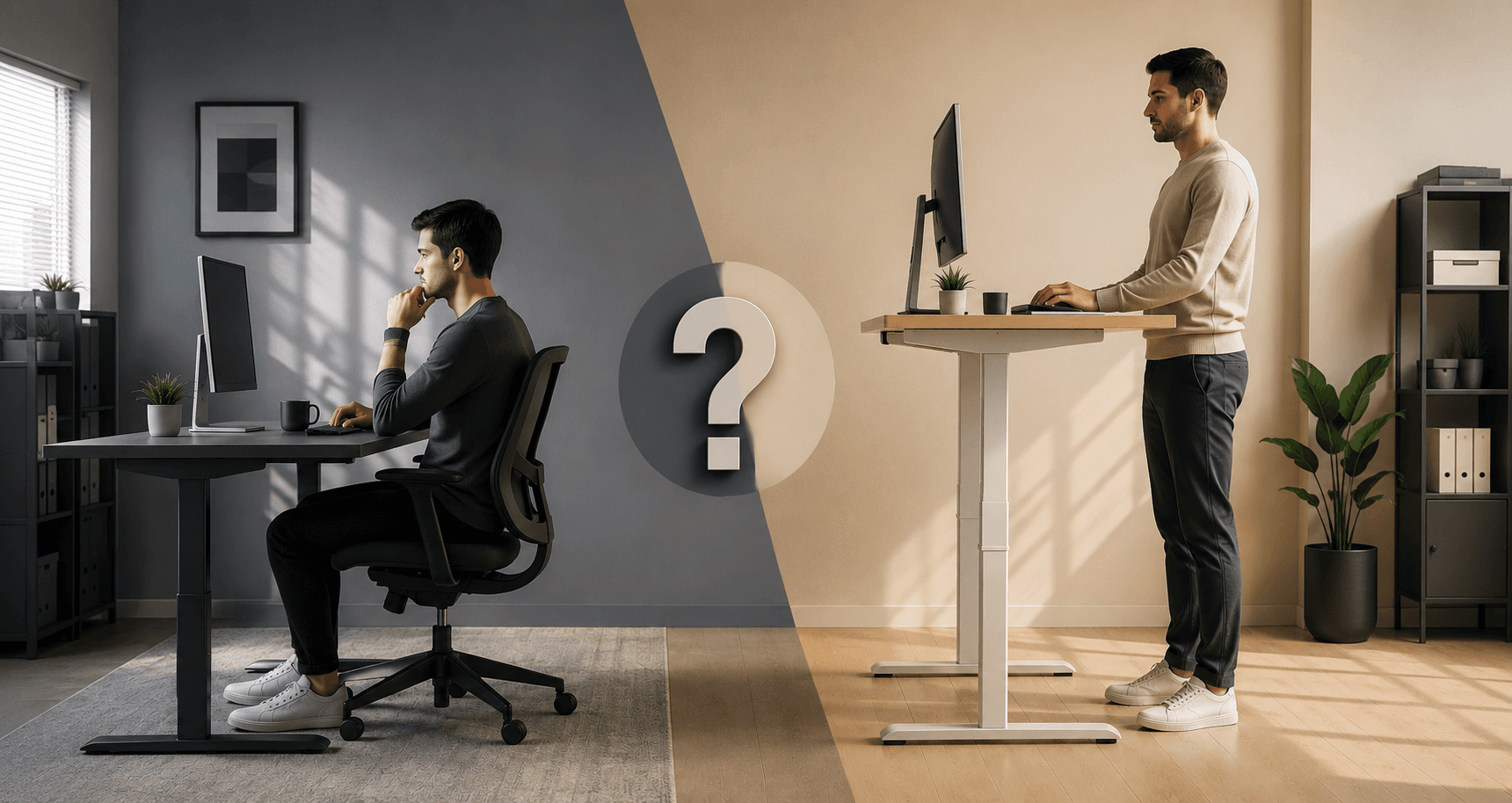
Sit-stand desks, also known as sit-stand workstations, have clear benefits. A review from 2727 Coworking shows that using these desks can reduce sitting time by 70–88 minutes daily in the short to medium term.
Outcomes include:
Less neck and shoulder pain
Lower blood pressure
Better glucose metabolism after meals
Improved well-being and energy
Randomised trials cited in the same review link sit-stand desk use specifically to reduced neck/shoulder pain, lower blood pressure, better glucose metabolism, and enhanced self-rated productivity. These outcomes are from genuine position variation - not from standing continuously.
The British Journal of Sports Medicine says to stand, move, or take breaks for at least 2 hours each workday. This time should be spread out in short intervals, not just standing continuously.
What Are the Most Common Sit-Stand Desk Myths?
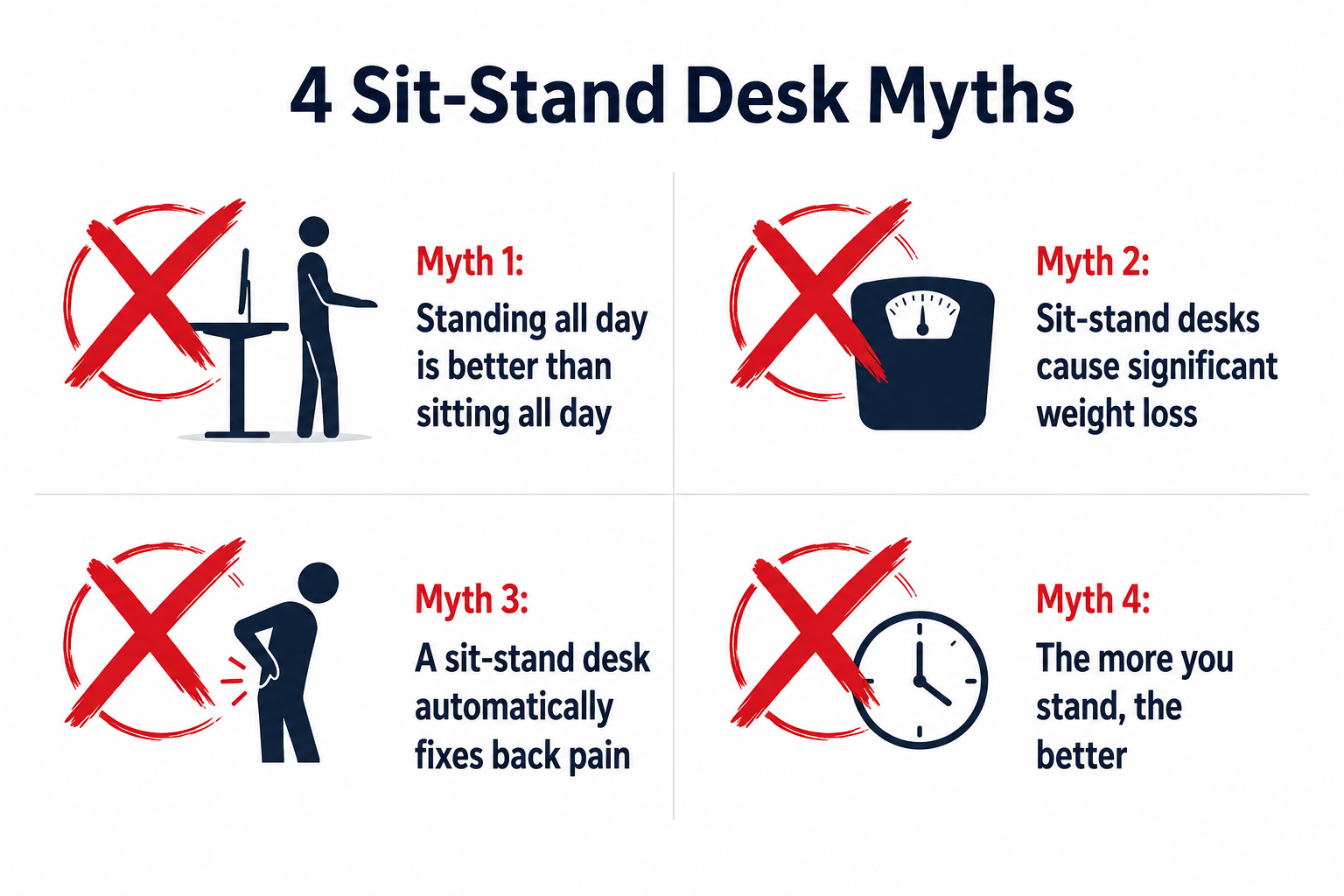
Myth 1: Standing all day is better than sitting all day. A 2024 Australian study had over 83,000 participants. Reported by CNN and The Conversation, it found that standing for long periods does not lower cardiovascular risk. In fact, it may raise issues like varicose veins and orthostatic hypotension. Standing isn't a neutral position. It stresses different parts of the body compared to sitting. Also, staying in either position for too long can cause issues.
Myth 2: Sit-stand desks cause significant weight loss. As covered in our standing desks and weight loss article, research in Applied Ergonomics found "people simply are not yet burning enough calories to lose weight with these devices." The calorie difference (8–20 per hour) is real but insufficient for meaningful weight management without dietary changes.
Myth 3: A sit-stand desk automatically fixes back pain Incorrect desk height or incorrect standing posture can create new pain. A sit-stand desk that is 3–4cm too high can raise your shoulders. This strain is as harmful as bad seated posture. Check our standing desk posture guide for more details.
Myth 4: Standing more is always better. Research in The Conversation shows that standing for about 40 minutes at a time helps. Taking breaks can ease muscle and joint pain from long periods of standing. The benefit is position variation, not standing duration.
How Do You Use a Sit-Stand Desk Safely?
Safe use of a sit-stand desk follows three key principles:
Set the desk height correctly. Your elbows should be at 90° when typing, whether sitting or standing.
Alternate positions progressively. New users should start with 10–15 minutes of standing per hour and work up to 20–30 minutes.
Take movement breaks. No matter your position, move every 30–45 minutes.
Step-by-step correct setup:
Set sitting height: Elbows at 90° sitting naturally. Desk meets your forearms here. Save as preset 1.
Set standing height: Stand naturally, shoulders relaxed, elbows at 90°. Desk meets your forearms here. Save as preset 2.
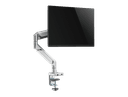
Set monitor position: Top of screen at eye level at BOTH positions. Monitor arm adjusts independently if screen height needs to differ between sitting and standing.
Use anti-fatigue mat: For standing periods over 20 minutes. Hard tile/marble in Dubai homes causes faster plantar fatigue than carpeted surfaces.
Set reminders: 20–30 minutes sitting, then stand. The Navodesk PRO app does this automatically.
What Does "20/8/2 Rule" Mean for Sit-Stand Desks?
The 20/8/2 rule is a health guideline. It splits a 30-minute block into three parts: 20 minutes of sitting, 8 minutes of standing, and 2 minutes of light movement. The 2-minute movement segment—like a quick walk, stretch, or stair climb—is the most effective part of the cycle. It boosts the calf muscle pump and enhances venous return better than just standing.
The rule gives a helpful guide for new standing desk users. It helps them develop the habit of alternating between sitting and standing. After 6–8 weeks, most users develop intuitive position-change patterns that don't require rigid timing.
For desk stretches that go with the 2-minute movement, our microbreaks and stretching guide shows movements for standing desk use.
How Do You Choose the Right Sit-Stand Desk for Safe Use?
To use a sit-stand desk safely, it must:
Reach your right height for sitting and standing—not just adjustable.
Have memory presets to return to the correct position—no guessing.
Include anti-collision tech for safe lowering.
Move smoothly and quickly to encourage use.
Navodesk features directly supporting safe sit-stand use:
Memory presets (all electric models): Return to exact correct height every transition
NavoSense™ anti-collision (PRO, AIR): Automatically stops and reverses if obstacle detected during descent - prevents damage to chair, cables, or objects under desk
Bluetooth activity app (PRO): Tracks position time, sends movement reminders - addresses the behaviour compliance problem
Height range (model-dependent): Verify your specific heights (sitting and standing) fall within the desk's range before purchasing
For a comprehensive understanding of how long to use each position and how to build the habit, our how long should you stand at a standing desk guide covers progressive adaptation schedules.
Frequently Asked Questions
- Yes for users sitting 6+ hours daily - the documented benefits (reduced back pain, improved afternoon energy, better blood glucose management) are well-supported. The desk is worth it when used with regular position alternation; a standing desk left permanently at one height doesn't produce these outcomes.
- Standing continuously for extended periods (2+ hours without a break) can cause leg fatigue, circulatory problems, and lower back pain from sustained lordotic posture. The 2024 Australian study found this specifically. The remedy is alternation, not continuous sitting or continuous standing.
- For practical daily use: strongly recommended. Lowering a loaded desk onto a chair, cable, or item left under the desk causes equipment damage and discourages use. NavoSense™ on the Navodesk PRO and AIR removes this risk entirely.
Need Help Building Your Ergonomic Setup?
We'll guide you to the perfect chair, desk setup, and comfort tips for a productive workday.
Shop Office Furnitureالمدونات الشائعة
عرض الكل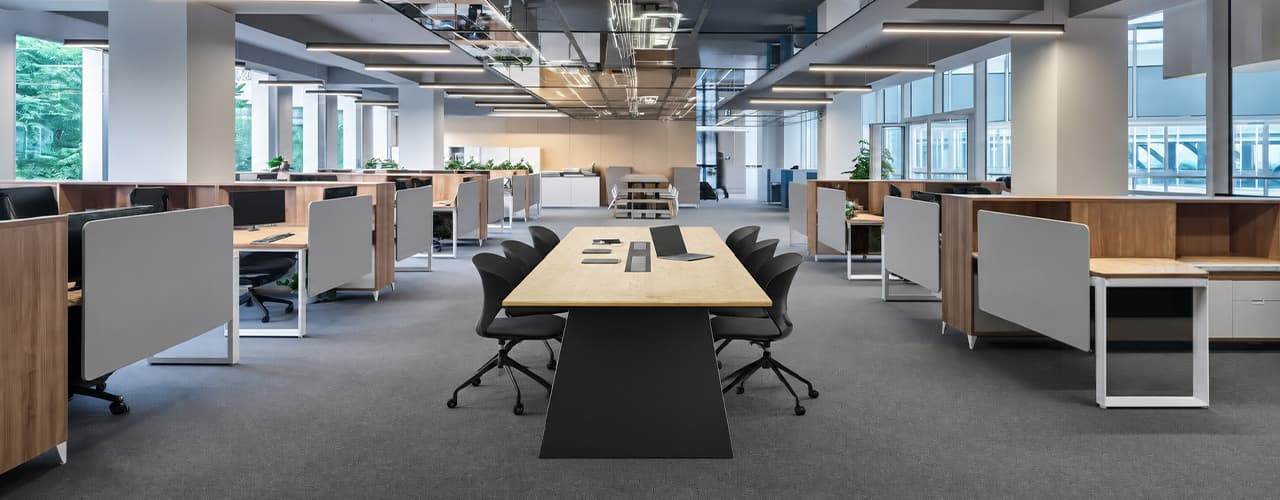
Open Plan vs Cubicle vs Hybrid Office Layout: Which Is Right for You?
The open-plan office was supposed to fix everything the cubicle farm got wrong. It didn't. It created a different set of problems and left people nostalgic for the one thing cubicles did well: quiet. The hybrid layout is positioned as the solution that addresses the shortcomings of both. It might be only if it fits how a specific team works. It shouldn't be a mix of two philosophies that didn’t help the team before. This guide shows what each layout offers and where it falls short. It also helps you choose the best option-or combination-for your office in Dubai or the GCC.
Key Findings
*Global office use is now at 53%, up from 38% in 2024. Also, 69% of teams have over 40% of their staff sharing desks. This shows that 2019 workspace designs don’t fit current needs.
*A Harvard study found that open-plan spaces often lower face-to-face interaction. Instead, they boost digital communication. This is the opposite of what these designs aim for.
*A hybrid model conversion at a 120-person SaaS company restored engineering deployment speed to baseline. It also reduced voluntary turnover in technical roles by 18% over nine months.
*Steelcase research shows that companies improving their work environment boost productivity by 17%.
*In 2026, the most innovative UAE offices aren’t just picking open plans or cubicles. They’re creating “activity neighborhoods.” These are clusters of spaces designed for different work styles.
*No layout is universally right. The best choice depends on your team's work style, industry, hybrid attendance ratio, and specific acoustic needs for your floor.
Sitting isn’t the Enemy, How You Sit Is: How to Align Your Desk for Zero Back Strain
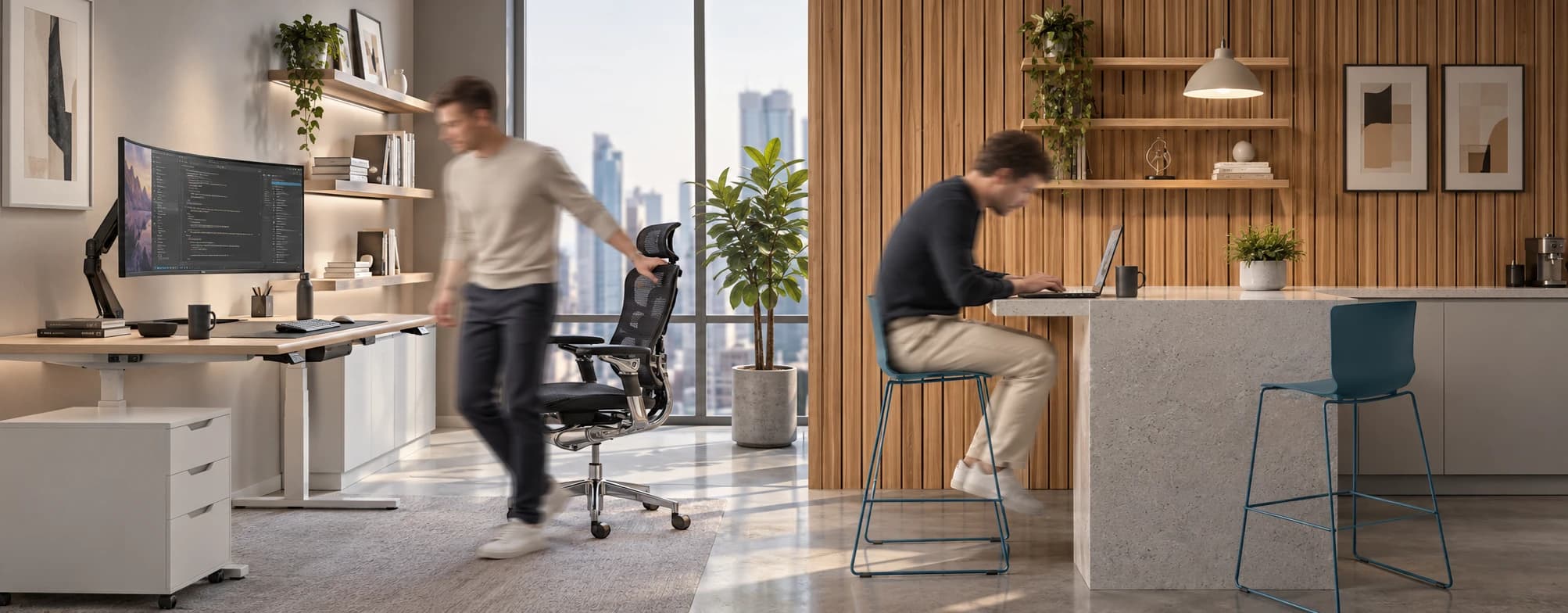
If your job keeps you at a desk for most of the day, you are not alone—and you are not stuck. Software developers and data entry keyers spend 100% of a typical workday seated, while financial managers sit for 94%. Sitting is a standard part of modern work, so the real goal is learning how to reduce its physical impact while staying productive.
What the Research Shows
*Sedentary Volume: Adults in high-income countries spend 11–12 hours daily sitting over 75% of their waking hours (British Journal of Sports Medicine).
*Cardiovascular Risks: Sitting 6–8 hours daily increases cardiovascular event risk by 125% to 150% (Mayo Clinic).
*The 22-Minute Counter: 22 minutes of daily moderate-to-vigorous activity (brisk walking, cycling, active housework) offsets the mortality risk of prolonged sitting (BJSM).
*Micro-Break Impact: 5-minute movement breaks every hour significantly reduce fatigue and improve mood without hurting work performance (2026 BJSM Study).
*Gym Fallacy: A 60-minute workout in the morning does not fully reverse 9 hours of continuous sitting; daily movement breaks are still required.
The Ultimate Office Furniture Setup Checklist for Modern Teams
Most offices aren't badly furnished. They're incompletely furnished. A great chair paired with the wrong desk height. A standing desk with no monitor arm. A collaborative floor with no acoustic separation.
The gap is rarely one big thing. It's several small things missing from the same setup at the same time.
This checklist covers every furniture category a modern UAE office needs — what to look for, what to avoid, and what the research says about each. Use it for a new fit-out, an upgrade review, or a department-by-department audit.
Key Findings
*The chair is the top furniture investment for knowledge workers. It has the most contact hours and directly impacts posture, energy, and afternoon performance.
*Fixed desks at 75cm fit about 30–40% of UAE office teams well. Height adjustability isn’t a luxury; it meets everyone’s needs.
*Open-plan offices without acoustic zones can lose employees up to 86 minutes of productive time each day. This is based on workplace productivity research.
*EU-OSHA highlights musculoskeletal disorders as the top workplace health concern worldwide. Poor seating and desk height are key factors.
*CBRE's 2026 Global Workplace Insights reveals that 69% of organizations have over 40% of staff sharing desks. This shift means adjustability is now a standard requirement, not just an upgrade.
*Quality ergonomic chairs last 8–12 years. A BIFMA-certified chair costs less per year when spread over 10 years. This cost is lower than one physiotherapy session for occupational back pain in Dubai.
أنت × نافو
لا تتردد في التواصل معنا لأي استفسارات أو مخاوف