

 Visit our Showroom
Take me to
What Is Custom Office Furniture?
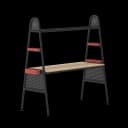
Custom office furniture is furniture designed and manufactured to specific dimensions, materials, finishes, or configurations that standard catalogue products don't provide. This includes: non-standard room dimensions requiring fitted workstations, branded colour schemes and material specifications, specialist work surfaces (drafting tables, laboratory workbenches, reception counters), and multi-unit layouts where standard products create inefficient configurations.
Custom furniture is not inherently better than standard - it's appropriate when standard products create compromises that affect function, space efficiency, or brand presentation. For a standard rectangular office with standard team sizes and standard workflows, a well-curated standard product range is simpler, faster, and often more cost-effective.
For irregular spaces, client-facing environments requiring brand alignment, or specialist workflows - the calculation changes.
When Does Custom Office Furniture Make Sense in Dubai?
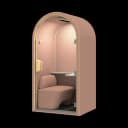
Custom furniture makes practical sense in four Dubai office contexts: irregular floor plan dimensions that standard workstation grids can't efficiently fill (common in converted villas and non-rectangular DIFC office suites), client-facing reception and lobby environments where visual impression matters for business, specialist professional environments (healthcare, architecture, media) with non-standard workflow requirements, and executive offices where material quality and proportion require matching the overall interior specification.
Context 1: Irregular Spaces Dubai's commercial real estate includes converted villas, curved-wall Marina towers, and irregular DIFC floor plates that standard rectangular workstation grids waste 20–30% of usable area. Custom workstations designed to the actual room geometry recover this space - often making custom furniture financially justified by real estate efficiency alone at Dubai's AED 150–300/sq ft costs.
Context 2: Reception and Brand Environments Reception desks, lobby furniture, and client meeting rooms in Dubai's competitive professional environment often require material specifications (specific stone surfaces, branded upholstery colours, integrated lighting) that catalogue products don't provide. Navo's custom office furniture service addresses this - tailoring furniture to brand identity, interior scheme, and reception workflow.
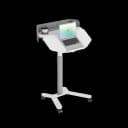
Context 3: Specialist Professional Environments Architecture studios, media production facilities, and specialist healthcare environments have workflow requirements that standard desks and chairs don't serve. The Navodesk TILT's 40° drafting surface serves creative professionals - a specialist function unavailable in standard standing desk catalogues. For configurations beyond standard products, Navo's custom service creates solutions that match the actual workflow.
What Does the Custom Office Furniture Process Look Like?
Custom office furniture projects typically follow a structured process: space measurement and functional brief (what work happens here, who uses it, what standard products fail to provide), design and 3D visualization (confirming proportions, materials, and configuration before production), material and finish specification (fabric, wood, metal, stone, finish options), production timeline (typically 4–8 weeks depending on complexity), and professional installation.
Navo's workspace optimization service includes space planning and 3D visualization - allowing clients to confirm how furniture will look and function in their specific space before production begins. This is particularly valuable in Dubai where office fit-outs often proceed on tight timelines with senior stakeholder approval requirements.
The For Business service provides: dedicated design assistance, space planning support, material sampling, project coordination, and delivery and installation - covering the complete process from brief to installed workspace
How Does Custom Furniture Integrate with Ergonomic Standards?
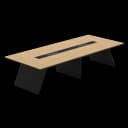
Custom office furniture should be designed to ergonomic specifications - not sacrificed for aesthetics. The most common custom furniture ergonomic failure is reception counters and meeting tables at non-standard heights that force staff into sustained awkward postures for the sake of visual impact.
ANSI/BIFMA ergonomic guidelines specify sitting surface heights (74–76cm standard) and keyboard heights that apply to custom furniture as much as standard. A reception counter at 115cm height for visual impact forces shorter staff into shoulder elevation. A custom executive desk at 80cm forces taller users into forward lean.
Ergonomic specifications - correct sitting height range, accessible knee clearance, appropriate reach zones - should be locked into custom furniture design briefs before production. Custom should mean "designed for this space and this person," not "standard ergonomics sacrificed for aesthetic impact."
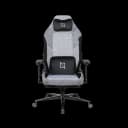
For hybrid team environments needing both standard and custom pieces, Navo's For Business service coordinates standard ergonomic products with custom elements into a coherent space design.
Frequently Asked Questions
- Typically 4–8 weeks from brief confirmation to installation for most custom furniture projects. Complex multi-room projects may extend to 10–12 weeks. For urgent timelines, Navo's For Business team provides realistic production timelines during the initial consultation.
- Generally yes - design and production setup costs per unit are higher for custom. The cost difference is often justified by: real estate efficiency recovery, brand alignment value in client-facing environments, or function requirements that standard products simply can't serve. For large installations, volume pricing on custom products can sometimes approach standard catalogue pricing for equivalent quality.
- Yes - Navo's custom furniture can incorporate Navodesk standing desk frames within custom tabletop configurations, and ergonomic chairs pair with any custom desktop. The frame and mechanism are standard; the surface material, dimensions, and finish are custom. This provides both ergonomic function and visual specification matching.
Need Help Building Your Ergonomic Setup?
We'll guide you to the perfect chair, desk setup, and comfort tips for a productive workday.
Shop Office FurniturePopular Blogs
View all
Ergonomic Furniture Meets Gaming & Education: Highlights from the University of Wollongong Event
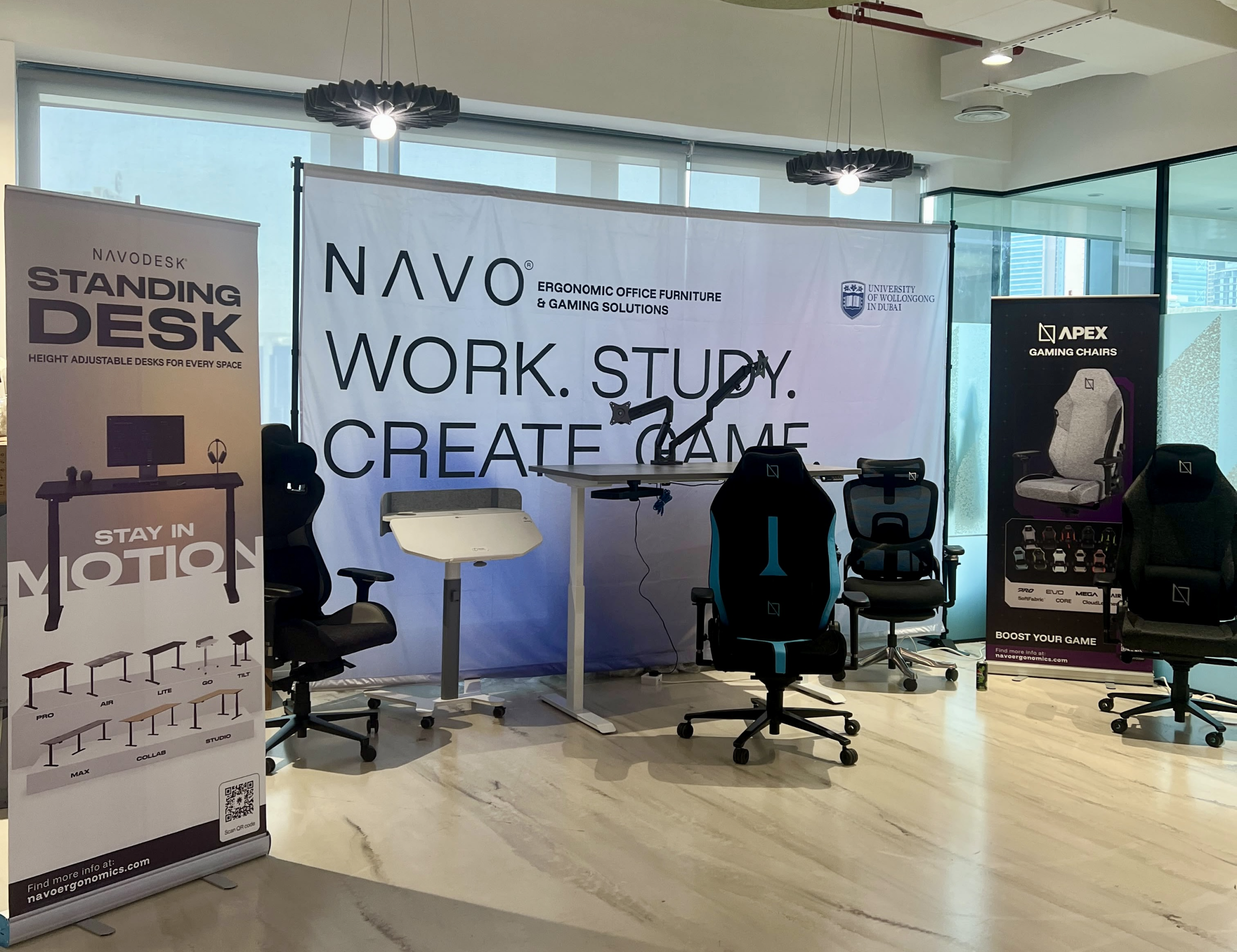
The tournament attracted over 70 participants, including avid gamers and curious onlookers. Our display featured gaming desks, chairs, and ergonomic accessories such as monitor arms. Students could compete in exciting gaming matches while experiencing our products firsthand.
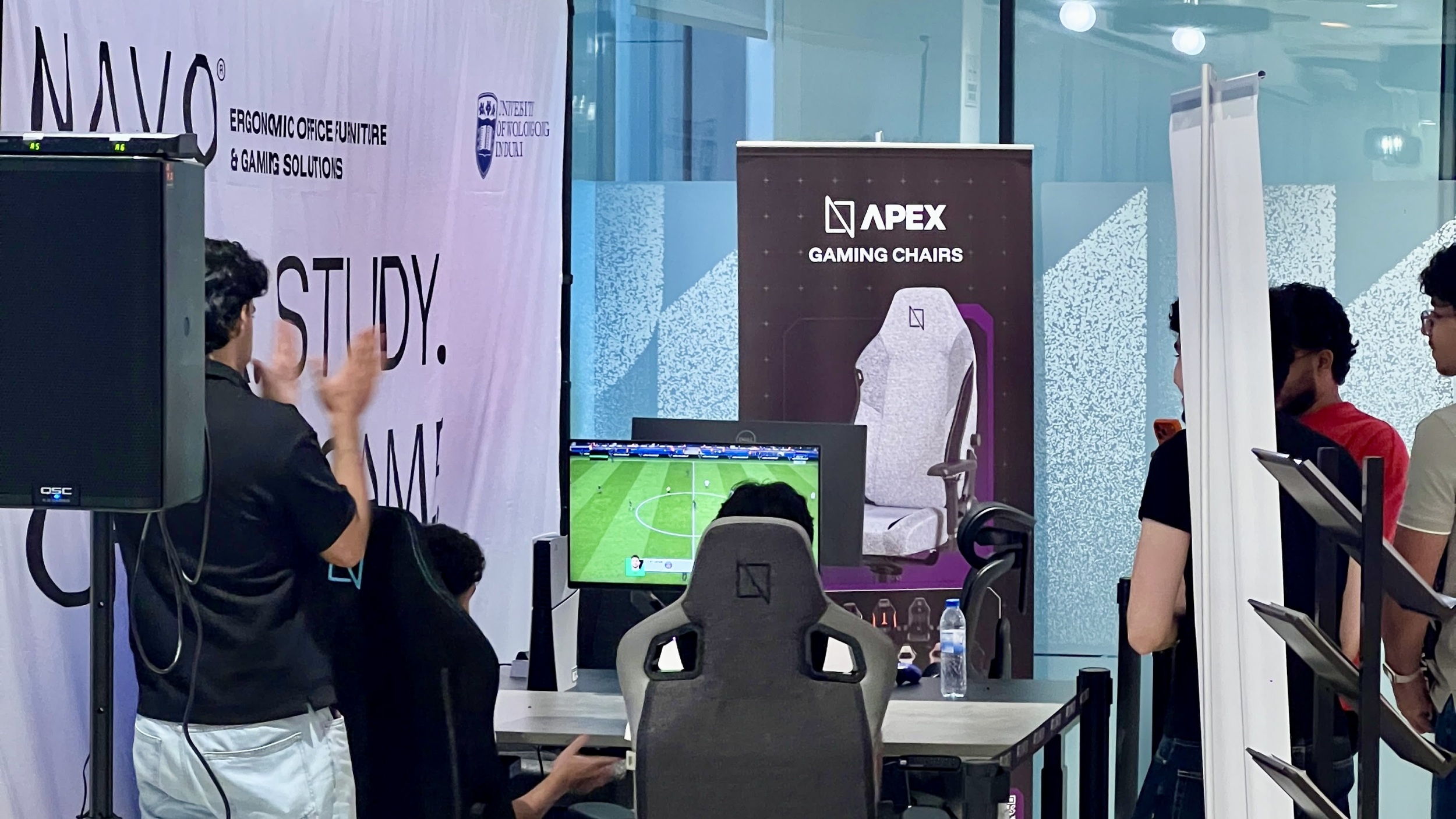
One of the event's highlights was the opportunity to experience our ergonomic gaming chairs alongside our specially designed ergonomic chairs. Students could compare their comfort, support, and overall seating experience. The feedback was overwhelmingly positive, with many participants noticing differences in posture support and comfort during extended use.
Looking back, we are encouraged by the positive interactions and insights shared by students and faculty. Promoting ergonomic awareness in university environments is a cause we strongly support, and we look forward to continuing our efforts to help create more comfortable and productive spaces for learning, gaming, and work.
Open Plan vs Cubicle vs Hybrid Office Layout: Which Is Right for You?
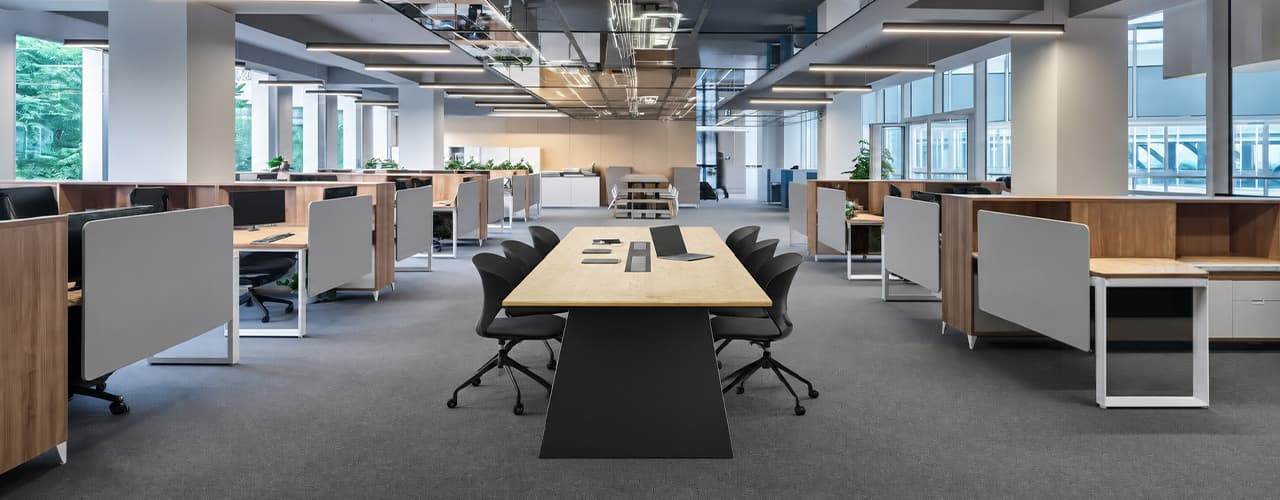
The open-plan office was supposed to fix everything the cubicle farm got wrong. It didn't. It created a different set of problems and left people nostalgic for the one thing cubicles did well: quiet. The hybrid layout is positioned as the solution that addresses the shortcomings of both. It might be only if it fits how a specific team works. It shouldn't be a mix of two philosophies that didn’t help the team before. This guide shows what each layout offers and where it falls short. It also helps you choose the best option-or combination-for your office in Dubai or the GCC.
Key Findings
*Global office use is now at 53%, up from 38% in 2024. Also, 69% of teams have over 40% of their staff sharing desks. This shows that 2019 workspace designs don’t fit current needs.
*A Harvard study found that open-plan spaces often lower face-to-face interaction. Instead, they boost digital communication. This is the opposite of what these designs aim for.
*A hybrid model conversion at a 120-person SaaS company restored engineering deployment speed to baseline. It also reduced voluntary turnover in technical roles by 18% over nine months.
*Steelcase research shows that companies improving their work environment boost productivity by 17%.
*In 2026, the most innovative UAE offices aren’t just picking open plans or cubicles. They’re creating “activity neighborhoods.” These are clusters of spaces designed for different work styles.
*No layout is universally right. The best choice depends on your team's work style, industry, hybrid attendance ratio, and specific acoustic needs for your floor.
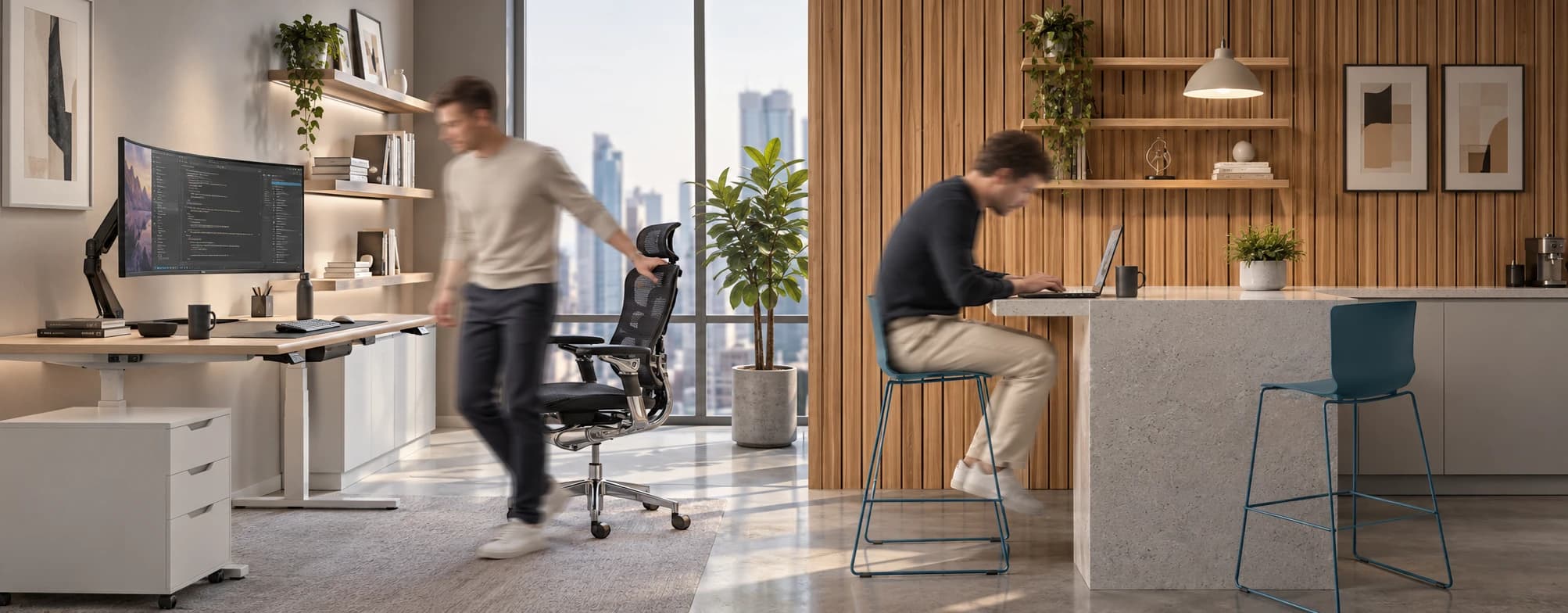
Sitting isn’t the Enemy, How You Sit Is: How to Align Your Desk for Zero Back Strain
If your job keeps you at a desk for most of the day, you are not alone—and you are not stuck. Software developers and data entry keyers spend 100% of a typical workday seated, while financial managers sit for 94%. Sitting is a standard part of modern work, so the real goal is learning how to reduce its physical impact while staying productive.
What the Research Shows
*Sedentary Volume: Adults in high-income countries spend 11–12 hours daily sitting over 75% of their waking hours (British Journal of Sports Medicine).
*Cardiovascular Risks: Sitting 6–8 hours daily increases cardiovascular event risk by 125% to 150% (Mayo Clinic).
*The 22-Minute Counter: 22 minutes of daily moderate-to-vigorous activity (brisk walking, cycling, active housework) offsets the mortality risk of prolonged sitting (BJSM).
*Micro-Break Impact: 5-minute movement breaks every hour significantly reduce fatigue and improve mood without hurting work performance (2026 BJSM Study).
*Gym Fallacy: A 60-minute workout in the morning does not fully reverse 9 hours of continuous sitting; daily movement breaks are still required.
You x Navo
Feel free to reach out to us for any queries & concerns