

 Visit our Showroom
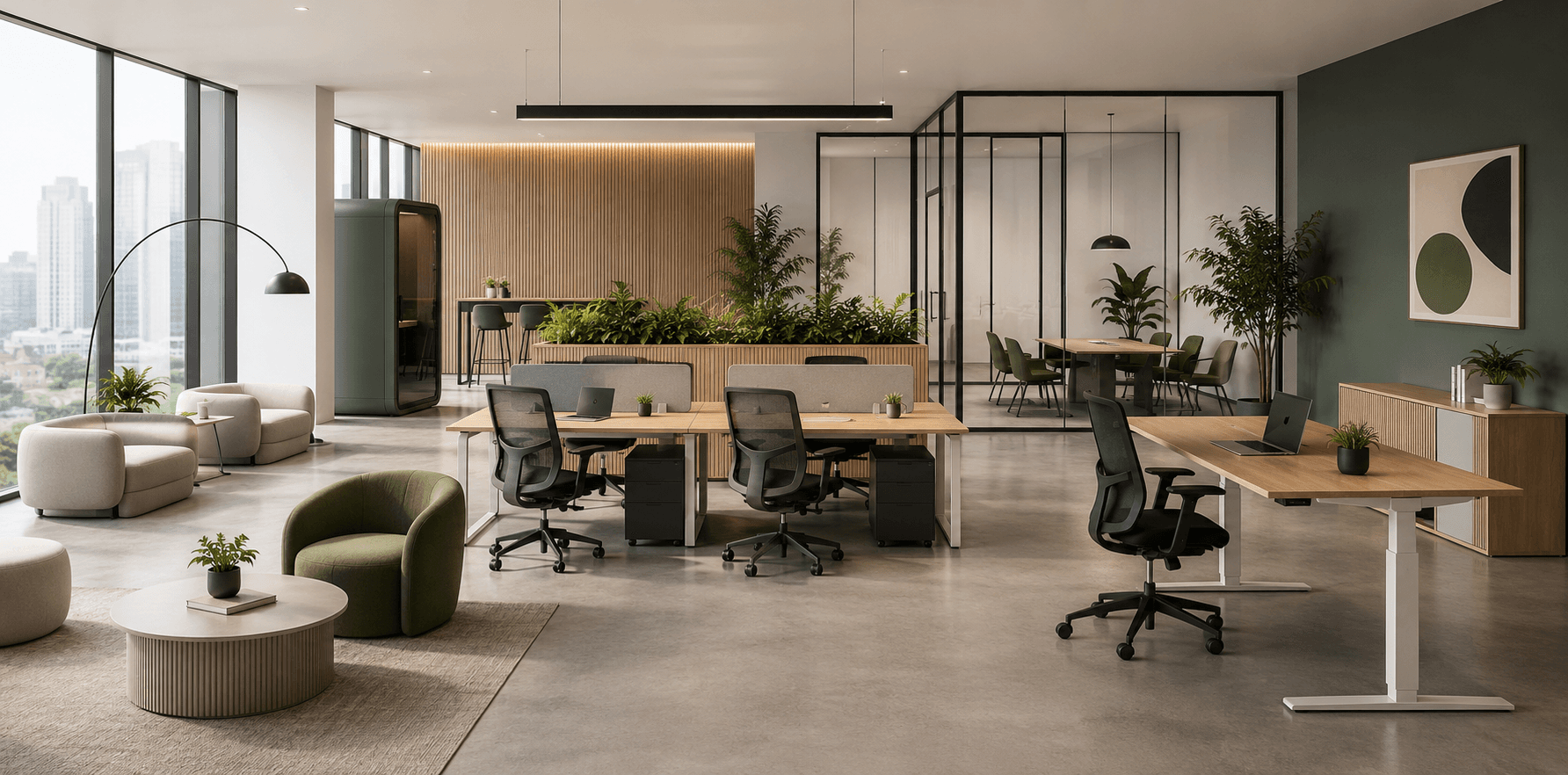
In 2026, office furniture suppliers in Dubai get briefs that are very different from those three years ago. The gap isn't stylistic — it reflects a genuine rethink of what an office is supposed to do and what furniture needs to deliver.
Clients are no longer asking whether they need ergonomic chairs and adjustable workstations. They're asking which configurations, materials, and features best serve their specific team.
Here are the trends driving that shift.
Take me to
What Is the Biggest Office Furniture Trend in 2026?
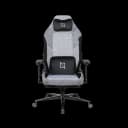
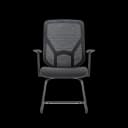
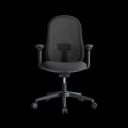
The defining shift in 2026 is that ergonomics has moved from premium to standard. In our Dubai and UAE offices, you will find adjustable-height desks. We also have BIFMA-certified seating and acoustic privacy solutions. These are all standard features. They are no longer just upgrades. The question has changed from "do we need ergonomic furniture?" to "which ergonomic configuration fits our team?"
Office Furniture's 2026 market analysis shows Dubai businesses are choosing modern office design. They are shifting away from traditional styles. They aim for spaces that combine ergonomic function with a stylish look. Reports indicate a change in focus. Ergonomic workstations, modern aesthetics, and smart workspace solutions are key to attracting talent.
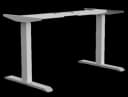
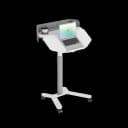
For Navo, this change means the standing desk range is now standard. It used to be special gear for health-focused workers. Now, it’s common in corporate spaces in DIFC, Business Bay, and Dubai Marina. The ergonomic chair range carries the same trajectory.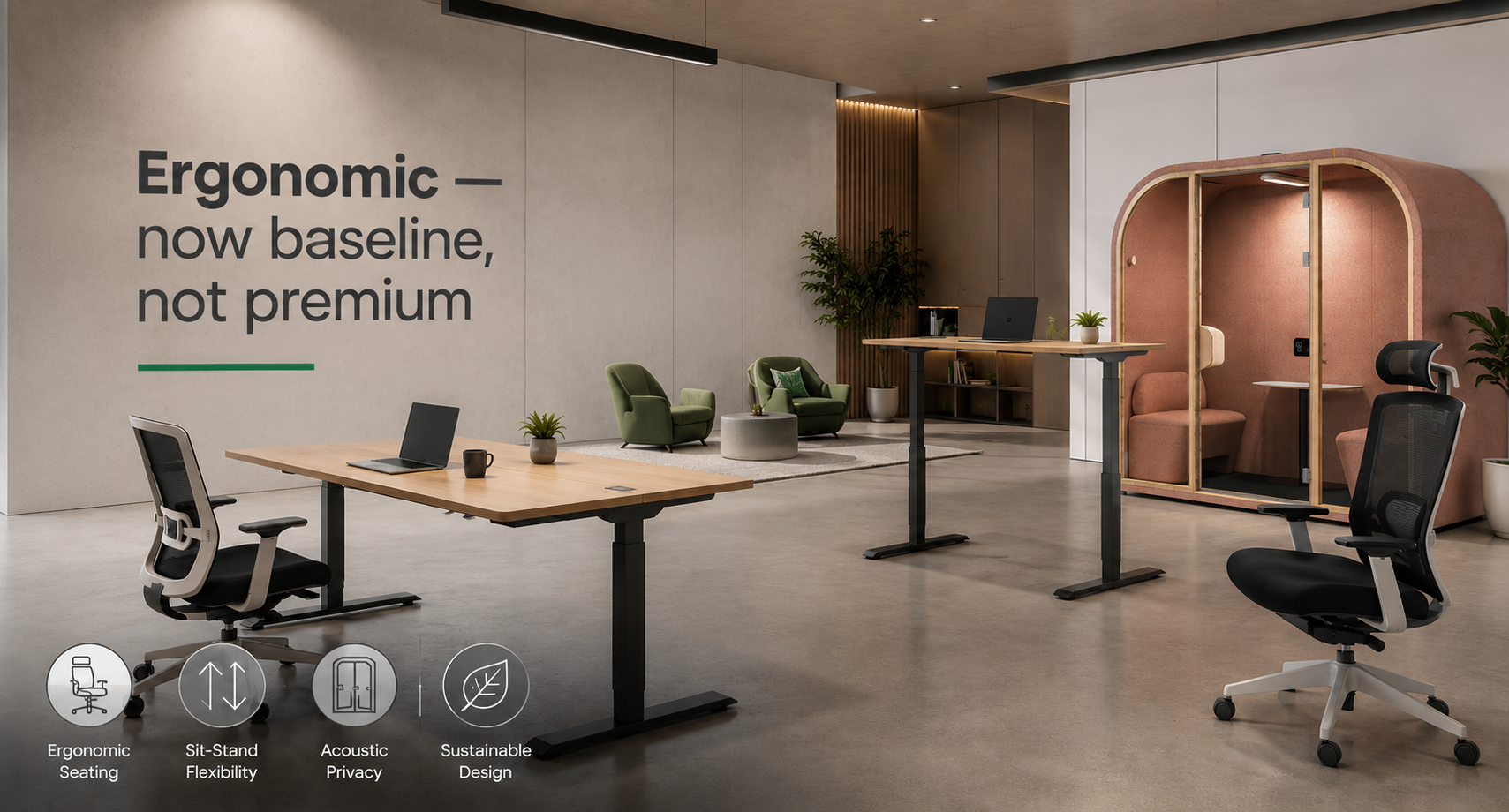
How Is Hybrid Work Changing Office Furniture in Dubai?
Hybrid work is changing office furniture layouts. Now, there are more collaborative spaces than individual workstations. Pre-pandemic offices dedicated 75–80% of floor area to individual desks. CBRE's 2026 Global Workplace Insights reveals that 50–60% of office space needs to be collaborative or flexible. This is the new goal for hybrid-optimized offices.
Organizations using flexible zones and shared spaces rose from 17% to 40% from 2024 to 2025, says Gensler's 2026 Global Workplace Survey.
The furniture changes are clear:
More modular workstations
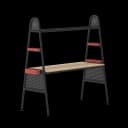
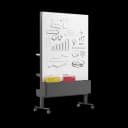
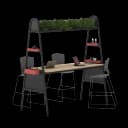
High tables for standing collaboration
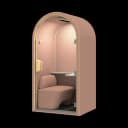
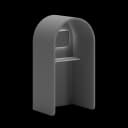
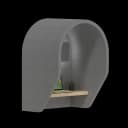
Acoustic pods for hybrid video meetings
Modern Office's 2025 hybrid trends show a big change: employees visit the office mainly to collaborate, not for the focused work they can do at home. So, the furniture ratio needs to change accordingly. Fixed individual workstations as the dominant office element is becoming a specification for the wrong era.
For hybrid Dubai offices, this means:
Height-adjustable hot desks for solo work.
High tables for standing collaboration.
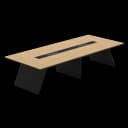
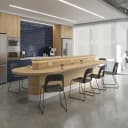
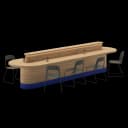
Meeting tables for team sessions.
Office pods for video calls and focused tasks.
Our guide on smart office furniture for the hybrid workplace shows that the four-zone model fits how hybrid teams use space.
What Material Trends Are Shaping Modern Office Design in 2026?
In Dubai 2026, the style moves away from shiny, cold looks. It focuses on warm, textured surfaces. This includes matte laminates and natural wood tones. Tactile materials add warmth without being too loud. This change aligns with the "resimercial" trend, which combines home comfort with workplace style.
"Furniture that feels premium and thoughtful, but not overly corporate." Clean silhouettes, quality edge detailing, and surfaces that improve with age rather than showing wear.
Navodesk desktops come in finishes that match this trend: Matte Black, White, Oak, Concrete, and Wild Walnut. The Oak and Wild Walnut options add warmth. Matte Black and Concrete offer a textured, minimal look. Both are anti-fingerprint, scratch-resistant, and suited to the dusty environment of Dubai offices.
How Is Technology Being Integrated into Office Furniture in 2026?
Technology integration has become standard in Dubai office furniture. Wireless charging surfaces, USB and USB-C outlets, and built-in cable management are now standard. Also, app connectivity for height adjustment is common. This is particularly true in client-facing and high-performance workstations.
Smart lighting, wireless charging stations, and meeting room tech are now standard in Dubai offices. They aren’t just extras anymore.
Smart desks that remember height preferences per user — like the Navodesk PRO with NavoControl™ Pro Bluetooth — serve the hot-desk environment that hybrid offices create. Five team members can use the same desk on different days. One-touch preset recall restores the desk to each user's exact ergonomic position. The technology doesn't change the ergonomics — it changes whether different users actually get ergonomic setups at a shared desk.
The Navodesk AIR's integrated USB charging addresses the device-heavy hybrid professional whose laptop, phone, earbuds, and monitor all need simultaneous power — without four separate cables running to a wall outlet.
What Role Do Acoustic Solutions Play in 2026 Office Design?
Acoustic management has become a primary design challenge in hybrid offices. When 40–50% of occupied desks may be on video calls simultaneously in an open-plan space, unmanaged noise makes the office counterproductive for both callers and colleagues trying to focus. Acoustic pods, panels, and furniture-based sound absorption are now structural requirements for hybrid fit-outs, not aesthetic additions.
Gensler's 2026 workplace survey found two-thirds of workers report hacking their workspace to compensate for noise deficiencies. Acoustic separation is consistently the most-cited unmet need in hybrid offices.
Janatofficefitout's 2026 Dubai office design analysis identifies acoustic panels, meeting pods, and multipurpose furniture as among the strongest fit-out trends in Dubai for 2026. The UAE's Net Zero 2050 alignment is also influencing acoustic specification: fabric-wrapped acoustic panels using recycled or sustainable materials are increasingly common in ESG-conscious fit-outs.
Navo's acoustic solutions range — office pods, phone booths, meeting room pods — and office pods category address this directly in the UAE market. For a full overview of how acoustic furniture fits into hybrid office design, see our smart office furniture for the hybrid workplace guide.
What Are the Key Office Furniture Trends Specific to Dubai in 2026?
Dubai trends for 2026 show quick shifts. Ergonomic designs are taking off, driven by talent competition in this global hub. Sustainability is speeding up material changes to meet the UAE's Net Zero 2050 goal. Plus, there's a blend of premium looks and functional ergonomics, matching Dubai's need for both style and performance.
Northcorp's Dubai office design analysis highlights biophilic elements. Green walls, indoor plants, and natural materials are key in Dubai 2026 corporate fit-outs. These features support wellness and sustainability goals. This intersects with the material warmth trend: natural wood finishes serve both aesthetic and biophilic functions.
For Dubai office furniture decision-makers: the trend direction is clear. Ergonomic baseline, acoustic management, hybrid flexibility, technology integration, and sustainable materials are the five axes along which modern Dubai workspaces are being specified. Custom office furniture meets the needs of brands when standard options fall short. It matches unique brand identities, suits specific floor plans, and aids specialized workflows.
Navo offers a complete range of office furniture in the UAE. This includes standing desks, ergonomic seating, meeting tables, acoustic solutions, and accessories. All items meet the latest trend specifications.
Frequently Asked Questions
- Ergonomic baseline (standing desks and BIFMA chairs as standard), hybrid zone design (collaborative over individual space ratio shifting), warm material aesthetics (matte, wood, textured), technology integration (charging, app-connected desks), acoustic management (pods and panels), and sustainability alignment with UAE Net Zero 2050.
- Yes — ergonomics is no longer a differentiating feature in UAE offices; it's a competitive baseline for talent attraction and retention. The shift from "premium optional" to "baseline expected" has occurred at market level.
Need Help Building Your Ergonomic Setup?
We'll guide you to the perfect chair, desk setup, and comfort tips for a productive workday.
Shop Office FurniturePopular Blogs
View all
Ergonomic Furniture Meets Gaming & Education: Highlights from the University of Wollongong Event
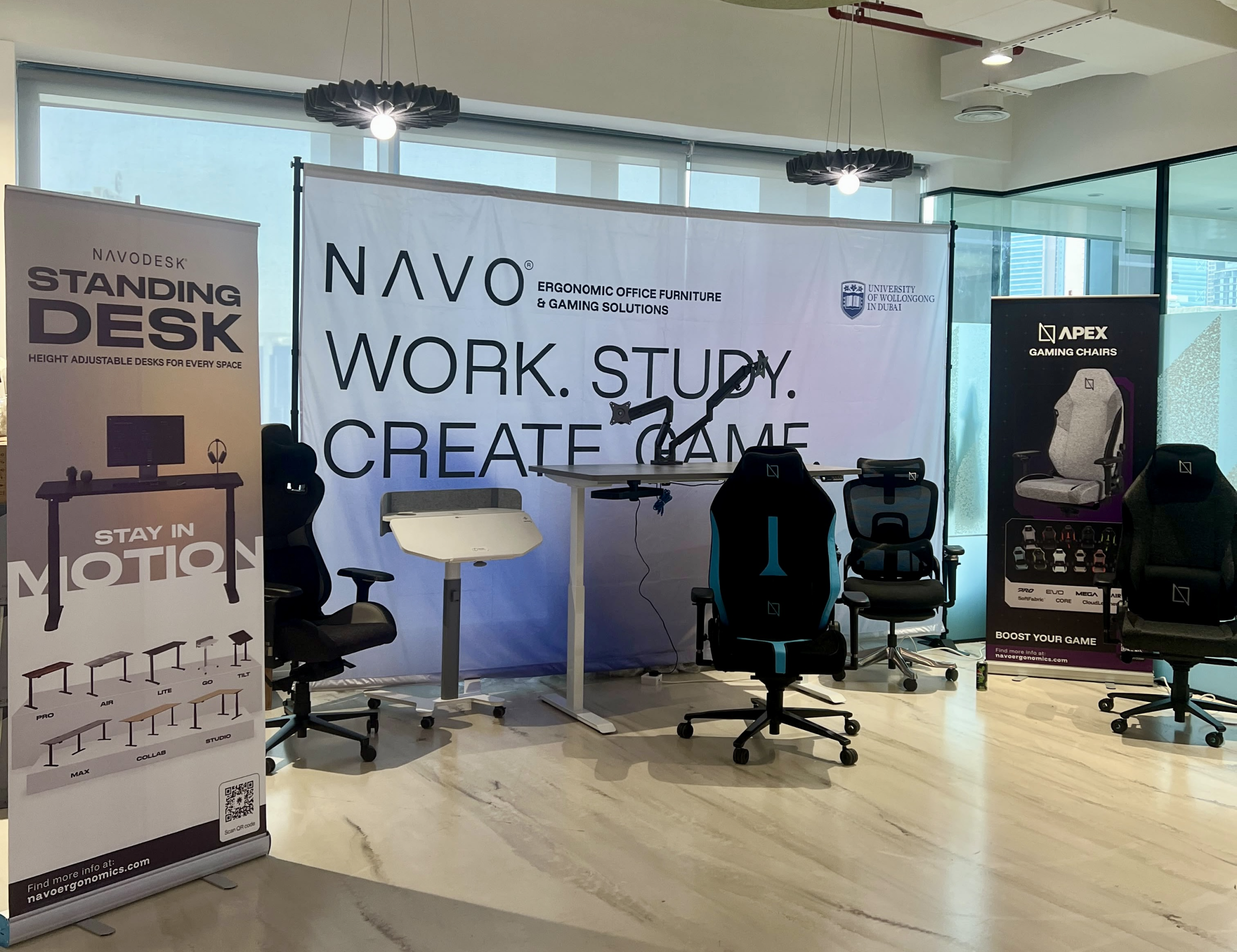
The tournament attracted over 70 participants, including avid gamers and curious onlookers. Our display featured gaming desks, chairs, and ergonomic accessories such as monitor arms. Students could compete in exciting gaming matches while experiencing our products firsthand.
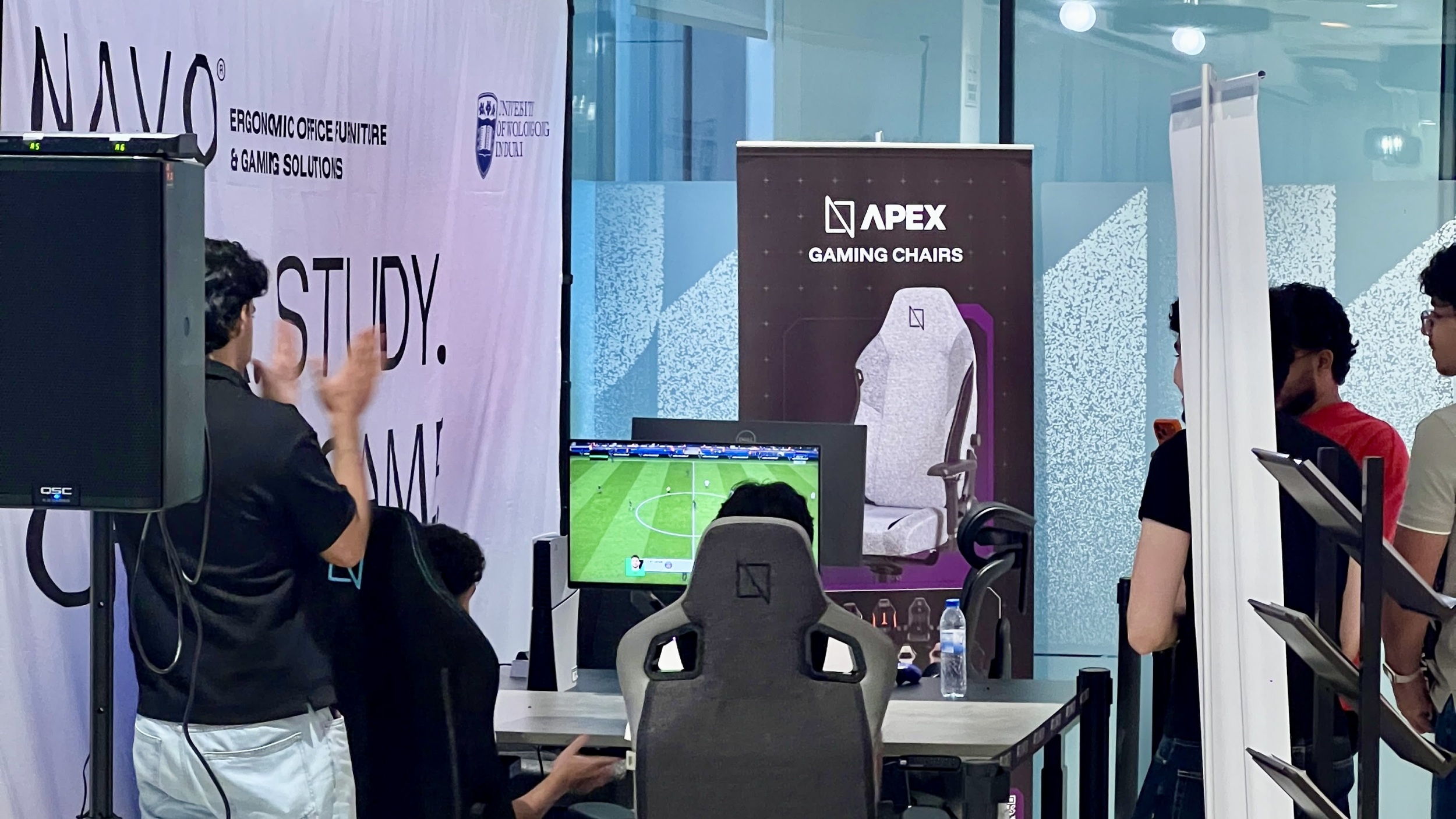
One of the event's highlights was the opportunity to experience our ergonomic gaming chairs alongside our specially designed ergonomic chairs. Students could compare their comfort, support, and overall seating experience. The feedback was overwhelmingly positive, with many participants noticing differences in posture support and comfort during extended use.
Looking back, we are encouraged by the positive interactions and insights shared by students and faculty. Promoting ergonomic awareness in university environments is a cause we strongly support, and we look forward to continuing our efforts to help create more comfortable and productive spaces for learning, gaming, and work.
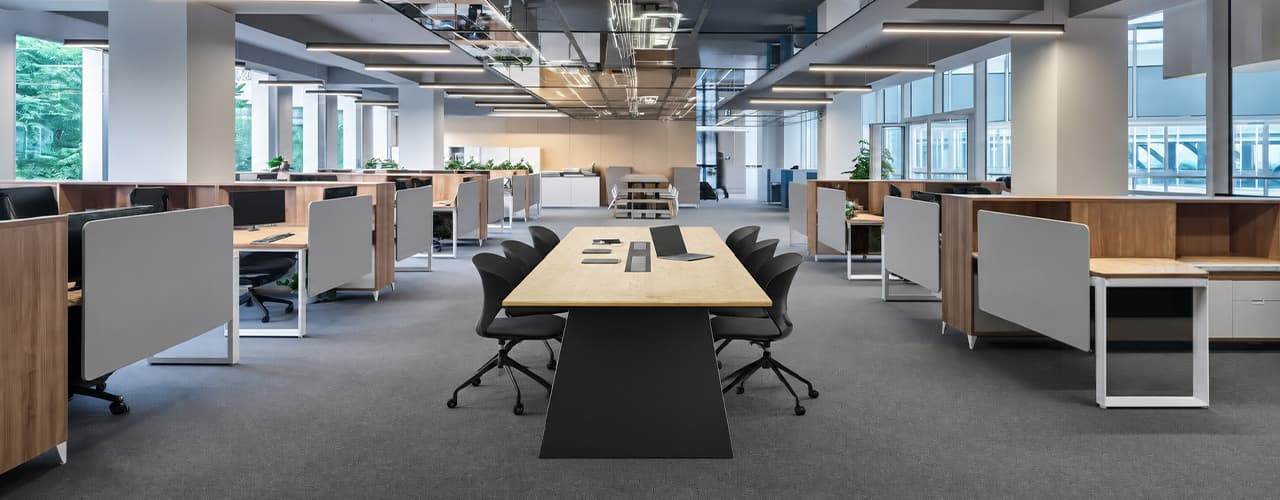
Open Plan vs Cubicle vs Hybrid Office Layout: Which Is Right for You?
The open-plan office was supposed to fix everything the cubicle farm got wrong. It didn't. It created a different set of problems and left people nostalgic for the one thing cubicles did well: quiet. The hybrid layout is positioned as the solution that addresses the shortcomings of both. It might be only if it fits how a specific team works. It shouldn't be a mix of two philosophies that didn’t help the team before. This guide shows what each layout offers and where it falls short. It also helps you choose the best option-or combination-for your office in Dubai or the GCC.
Key Findings
*Global office use is now at 53%, up from 38% in 2024. Also, 69% of teams have over 40% of their staff sharing desks. This shows that 2019 workspace designs don’t fit current needs.
*A Harvard study found that open-plan spaces often lower face-to-face interaction. Instead, they boost digital communication. This is the opposite of what these designs aim for.
*A hybrid model conversion at a 120-person SaaS company restored engineering deployment speed to baseline. It also reduced voluntary turnover in technical roles by 18% over nine months.
*Steelcase research shows that companies improving their work environment boost productivity by 17%.
*In 2026, the most innovative UAE offices aren’t just picking open plans or cubicles. They’re creating “activity neighborhoods.” These are clusters of spaces designed for different work styles.
*No layout is universally right. The best choice depends on your team's work style, industry, hybrid attendance ratio, and specific acoustic needs for your floor.
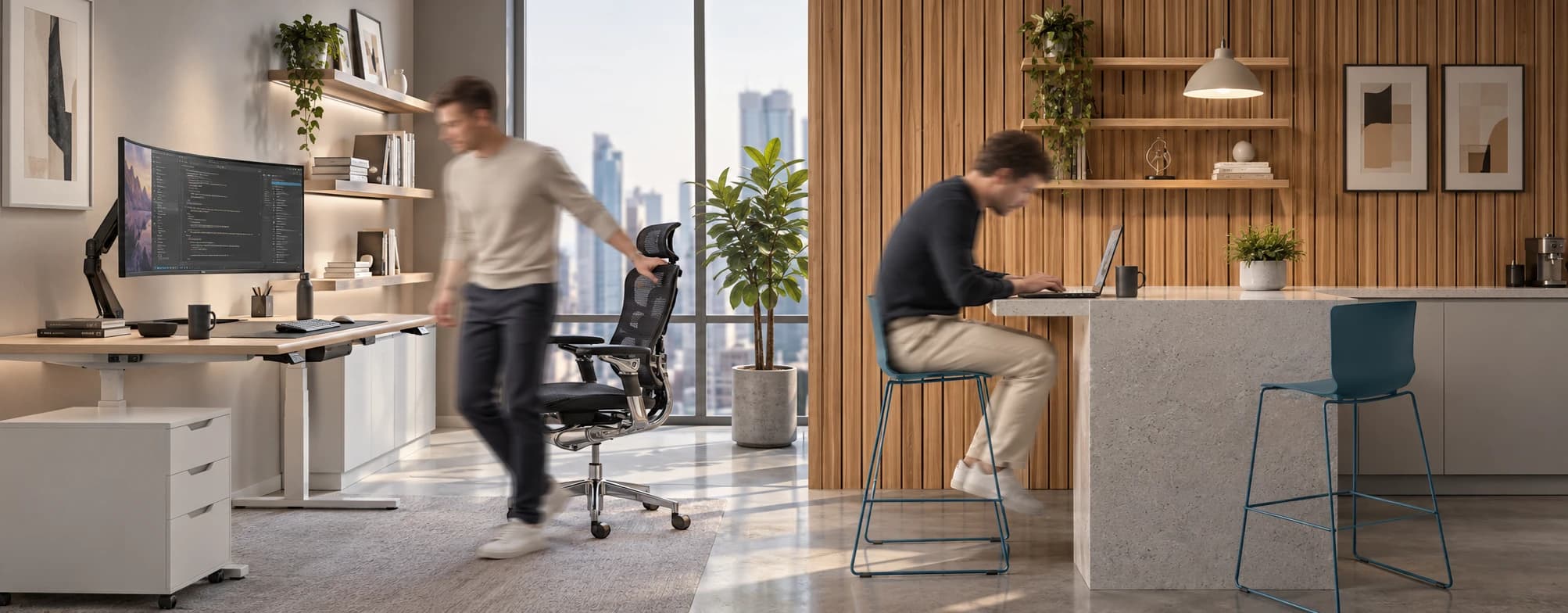
Sitting isn’t the Enemy, How You Sit Is: How to Align Your Desk for Zero Back Strain
If your job keeps you at a desk for most of the day, you are not alone—and you are not stuck. Software developers and data entry keyers spend 100% of a typical workday seated, while financial managers sit for 94%. Sitting is a standard part of modern work, so the real goal is learning how to reduce its physical impact while staying productive.
What the Research Shows
*Sedentary Volume: Adults in high-income countries spend 11–12 hours daily sitting over 75% of their waking hours (British Journal of Sports Medicine).
*Cardiovascular Risks: Sitting 6–8 hours daily increases cardiovascular event risk by 125% to 150% (Mayo Clinic).
*The 22-Minute Counter: 22 minutes of daily moderate-to-vigorous activity (brisk walking, cycling, active housework) offsets the mortality risk of prolonged sitting (BJSM).
*Micro-Break Impact: 5-minute movement breaks every hour significantly reduce fatigue and improve mood without hurting work performance (2026 BJSM Study).
*Gym Fallacy: A 60-minute workout in the morning does not fully reverse 9 hours of continuous sitting; daily movement breaks are still required.
You x Navo
Feel free to reach out to us for any queries & concerns