

 Visit our Showroom
Take me to
What Are the Key Benefits of BIFMA-Certified Ergonomic Chairs?
BIFMA-certified chairs deliver verified durability, structural stability, and consistent ergonomic support over time. Unlike non-certified chairs, they maintain performance under repeated loading, movement cycles, and daily use, making them more reliable for long working hours common in UAE offices.
Key benefits include:
Long-term durability under repeated use
Stable structure without wobbling
Consistent lumbar and back support
Better return on investment over time
Tested products outperform advertised claims.
Why Does BIFMA Certification Matter for Ergonomic Chairs Specifically?
Ergonomic chairs use features like lumbar support, recline systems, and seat design to help with posture. BIFMA certification makes sure these parts work well under stress. This helps avoid early failures that can cause discomfort or back strain.
Without certification: Support degrades faster. With certification: Support stays reliable.
That difference shows up within months of daily use.
How Are BIFMA-Certified Chairs Tested for Real-World Use?
BIFMA testing simulates long-term usage by applying repeated stress cycles to chair components.
Chairs are tested for:
Weight resistance
Backrest pressure
Armrest strength
Base stability
These tests ensure the chairs perform well during daily use.
Typical testing includes:
Weight load testing under repeated pressure
Backrest durability cycles simulating leaning
Armrest strength testing for long-term use
Base and caster movement testing for stability
Recline mechanism testing to prevent tipping
Material wear testing for mesh and foam
These aren’t basic checks. They simulate years of use in weeks.
What Are the Advantages of BIFMA Certification for Buyers?
BIFMA certification reduces risk for buyers by verifying product performance before purchase. It ensures office chairs are safe and durable. This makes them good for long-term use at home and in offices.
Advantages include:
Reduced chance of product failure
Verified performance, not marketing claims
Safer seating for daily use
Lower replacement frequency
You’re not guessing quality. You’re confirming it.
Why Is BIFMA Certification Important in UAE and GCC Workspaces?
In the UAE and GCC, furniture endures more stress. This is due to long work hours, tough climate conditions, and heavy use. BIFMA-certified chairs work better in these situations. This is true when AC use, humidity, and long sitting times affect material life.
In Dubai offices, we consistently see:
Chairs used 8–10 hours daily
Materials exposed to temperature variation
High expectations for durability in corporate setups
Certification ensures the chair holds up under these realities.
Who Should Choose BIFMA-Certified Chairs?
BIFMA-certified ergonomic chairs are crucial for users who need reliable seating for long hours. They’re great for professionals, remote workers, and businesses creating long-term workspaces.
Best suited for:
Professionals working long hours
Home office users needing daily comfort
Companies buying in bulk
Startups setting up initial workspaces
Users with posture or back issues
If your chair is used daily—it should be certified.
What Are the Signs You Need a BIFMA-Certified Chair?
You need a BIFMA-certified chair if your current setup fails to maintain comfort, stability, or support over time. Chairs without certification often lose structure within months under regular use.
Common signs include:
Sitting more than 6 hours daily
Seat cushioning losing shape quickly
Recline becoming unstable
Lumbar support weakening
Chair wobbling or creaking
These are not minor issues. They indicate structural failure.
How Can You Identify a BIFMA-Certified Chair?
A BIFMA-certified chair is typically labeled with compliance to ANSI/BIFMA standards on product pages or specifications. Reliable brands clearly mention certification, while non-certified products often avoid or omit such details.
Look for:
Mention of ANSI/BIFMA standards
Product specification sheets with compliance
Brand transparency about testing
Certification claims backed by documentation
If it’s not clearly stated, it’s usually not certified.
Our Expertise: Ergonomic Seating Solutions Across Dubai & GCC Since 2019
Since 2019, we’ve provided ergonomic chairs throughout Dubai. We serve Business Bay offices, homes in Dubai Marina, and markets in the GCC, like Riyadh and Doha.
We’ve seen consistent patterns:
Non-certified chairs fail within 6–12 months under heavy use
Certified chairs maintain structure significantly longer
Mesh materials perform better in UAE climate conditions
We don’t rely on product claims. We rely on tested performance in real work environments.
Final Thoughts: Tested Matters More Than Promised
Anyone can claim comfort.
Few can prove durability.
BIFMA-certified chairs are tested under pressure—literally. That’s what makes them reliable.
In Dubai and across the GCC, where work hours are long and expectations are high, that reliability isn’t optional.
It’s essential.
Need Help Building Your Ergonomic Setup?
We'll guide you to the perfect chair, desk setup, and comfort tips for a productive workday.
Shop Office FurniturePopular Blogs
View all
Ergonomic Furniture Meets Gaming & Education: Highlights from the University of Wollongong Event
We recently had the pleasure of hosting a gaming event at the University of Wollongong that combined competitive gaming with an opportunity to explore the importance of ergonomic furniture in gaming and educational environments. Our goal was to demonstrate how ergonomic products can support comfort and performance, enhancing the way students experience gaming and learning.
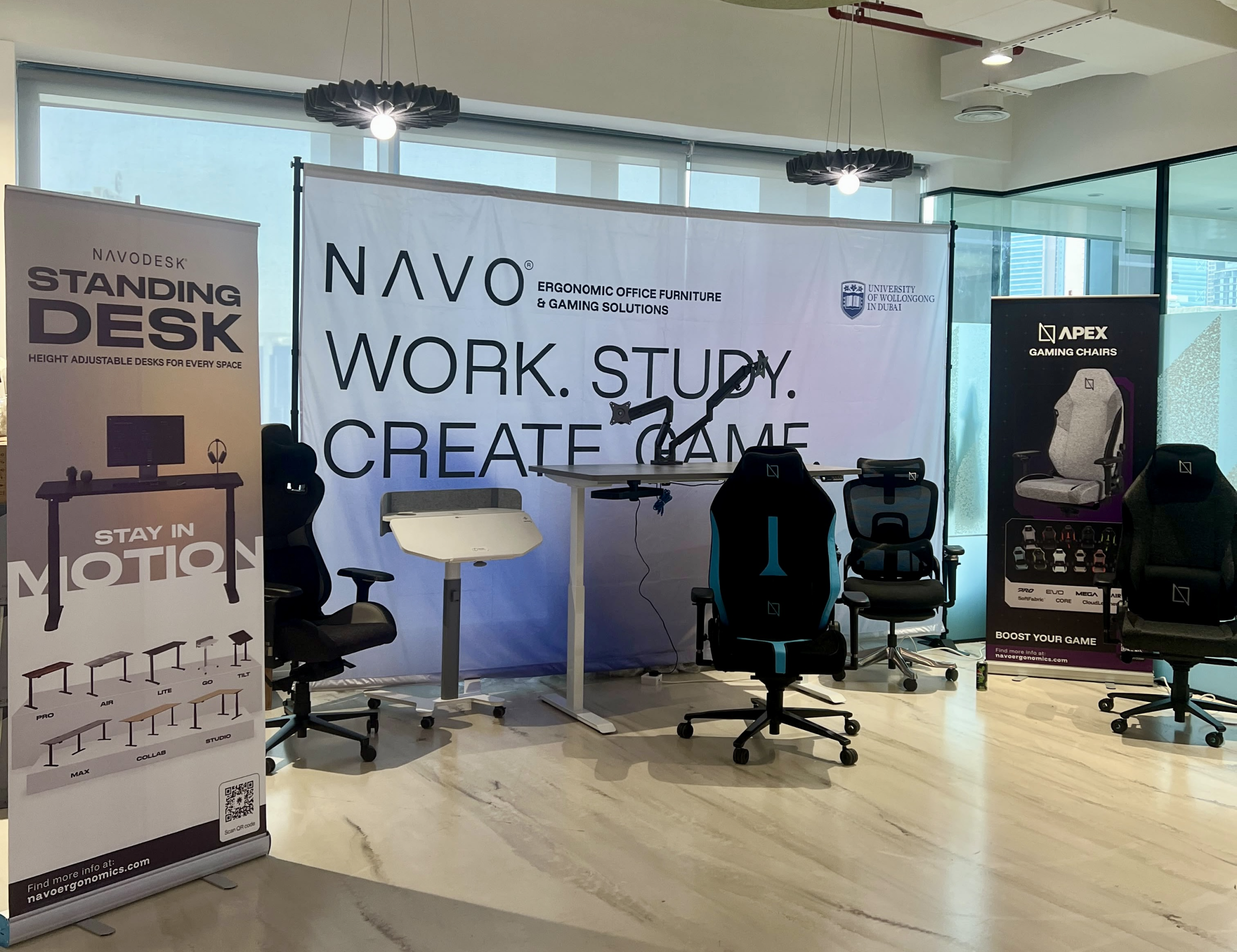
The tournament attracted over 70 participants, including avid gamers and curious onlookers. Our display featured gaming desks, chairs, and ergonomic accessories such as monitor arms. Students could compete in exciting gaming matches while experiencing our products firsthand.
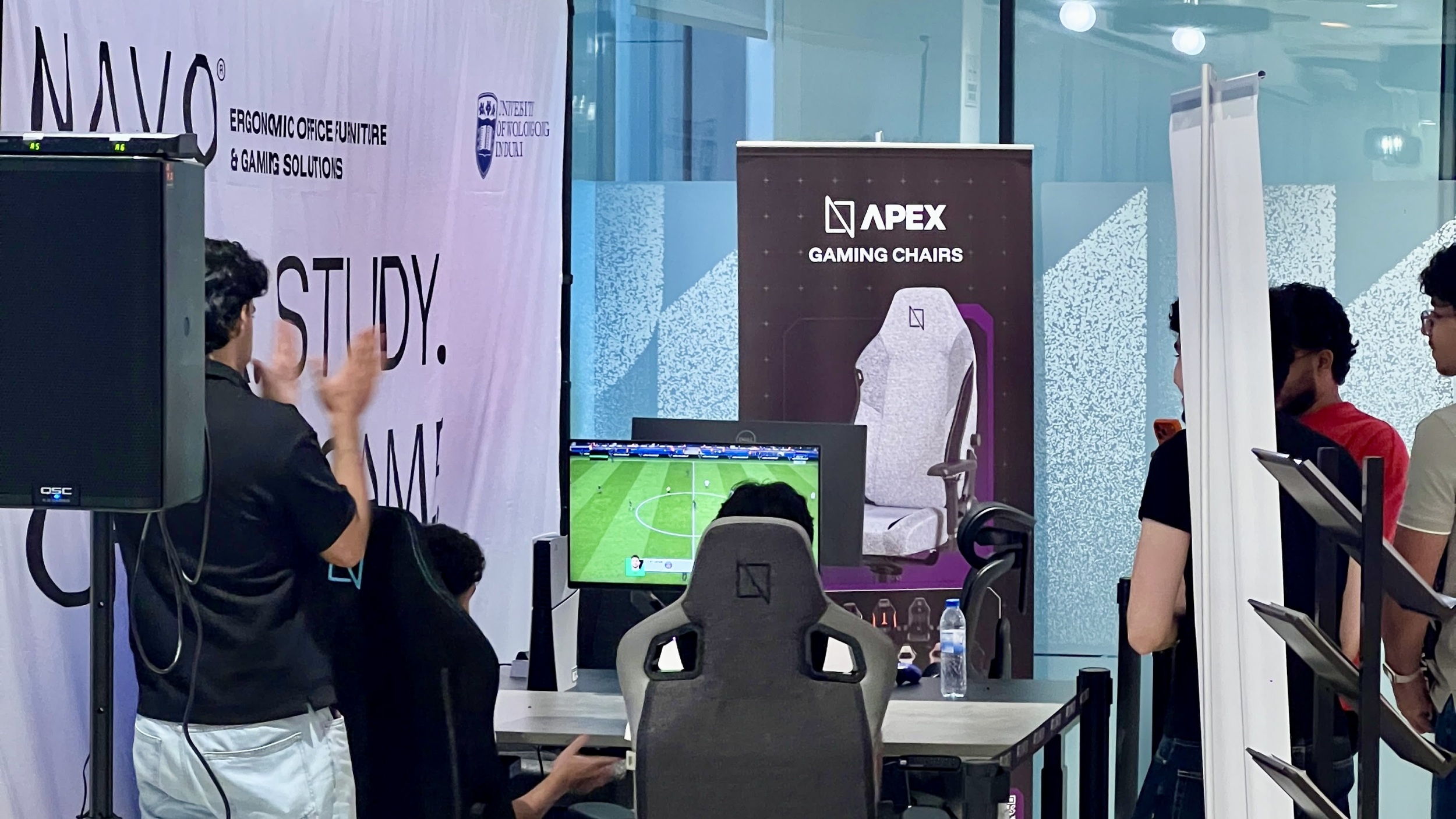
One of the event's highlights was the opportunity to experience our ergonomic gaming chairs alongside our specially designed ergonomic chairs. Students could compare their comfort, support, and overall seating experience. The feedback was overwhelmingly positive, with many participants noticing differences in posture support and comfort during extended use.
The excitement extended beyond the students, with faculty members also showing interest in our products. Professors and educators often spend long hours teaching, making ergonomic solutions a valuable consideration for classrooms and other educational spaces. It was encouraging to see faculty members explore how ergonomic furniture could support their everyday work.
The event provided a valuable opportunity to showcase NAVO's commitment to ergonomic solutions for both gaming and education. We aim to encourage greater awareness of workplace and study ergonomics, helping students and faculty create comfortable environments that support productivity while reducing physical strain.
Looking back, we are encouraged by the positive interactions and insights shared by students and faculty. Promoting ergonomic awareness in university environments is a cause we strongly support, and we look forward to continuing our efforts to help create more comfortable and productive spaces for learning, gaming, and work.
Open Plan vs Cubicle vs Hybrid Office Layout: Which Is Right for You?
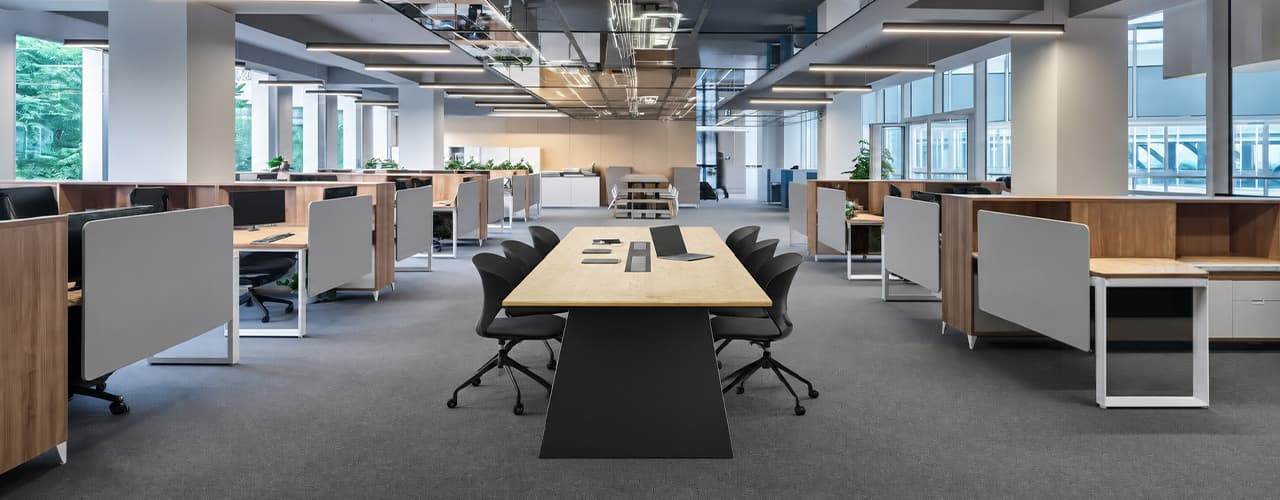
The open-plan office was supposed to fix everything the cubicle farm got wrong. It didn't. It created a different set of problems and left people nostalgic for the one thing cubicles did well: quiet. The hybrid layout is positioned as the solution that addresses the shortcomings of both. It might be only if it fits how a specific team works. It shouldn't be a mix of two philosophies that didn’t help the team before. This guide shows what each layout offers and where it falls short. It also helps you choose the best option-or combination-for your office in Dubai or the GCC.
Key Findings
*Global office use is now at 53%, up from 38% in 2024. Also, 69% of teams have over 40% of their staff sharing desks. This shows that 2019 workspace designs don’t fit current needs.
*A Harvard study found that open-plan spaces often lower face-to-face interaction. Instead, they boost digital communication. This is the opposite of what these designs aim for.
*A hybrid model conversion at a 120-person SaaS company restored engineering deployment speed to baseline. It also reduced voluntary turnover in technical roles by 18% over nine months.
*Steelcase research shows that companies improving their work environment boost productivity by 17%.
*In 2026, the most innovative UAE offices aren’t just picking open plans or cubicles. They’re creating “activity neighborhoods.” These are clusters of spaces designed for different work styles.
*No layout is universally right. The best choice depends on your team's work style, industry, hybrid attendance ratio, and specific acoustic needs for your floor.
Sitting isn’t the Enemy, How You Sit Is: How to Align Your Desk for Zero Back Strain
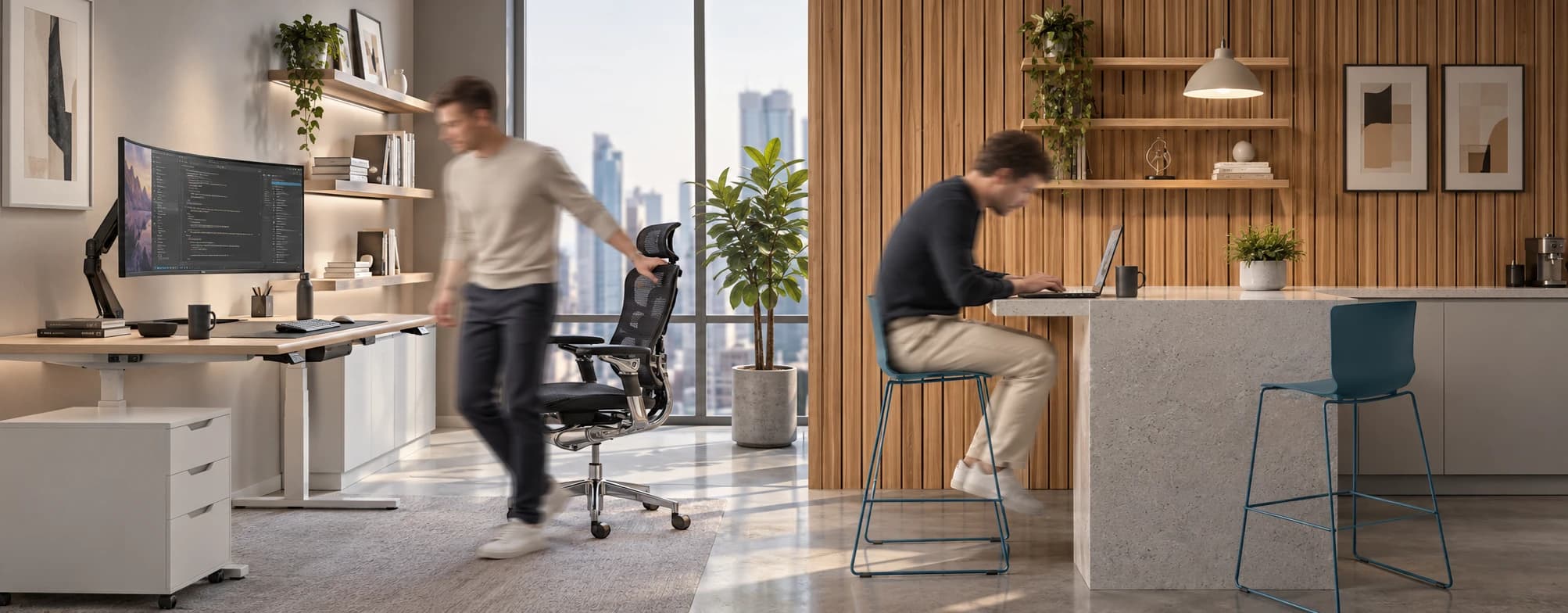
If your job keeps you at a desk for most of the day, you are not alone—and you are not stuck. Software developers and data entry keyers spend 100% of a typical workday seated, while financial managers sit for 94%. Sitting is a standard part of modern work, so the real goal is learning how to reduce its physical impact while staying productive.
What the Research Shows
*Sedentary Volume: Adults in high-income countries spend 11–12 hours daily sitting over 75% of their waking hours (British Journal of Sports Medicine).
*Cardiovascular Risks: Sitting 6–8 hours daily increases cardiovascular event risk by 125% to 150% (Mayo Clinic).
*The 22-Minute Counter: 22 minutes of daily moderate-to-vigorous activity (brisk walking, cycling, active housework) offsets the mortality risk of prolonged sitting (BJSM).
*Micro-Break Impact: 5-minute movement breaks every hour significantly reduce fatigue and improve mood without hurting work performance (2026 BJSM Study).
*Gym Fallacy: A 60-minute workout in the morning does not fully reverse 9 hours of continuous sitting; daily movement breaks are still required.
You x Navo
Feel free to reach out to us for any queries & concerns