

 Visit our Showroom
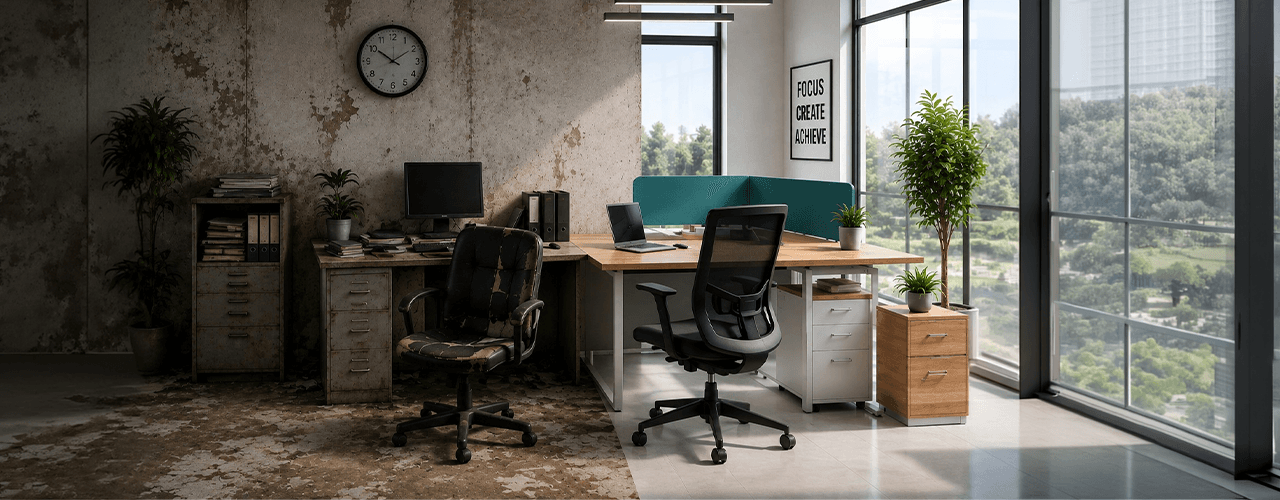
Office furniture doesn't fail dramatically. There's no single moment where everything breaks and the problem becomes undeniable.
It degrades quietly. The chair foam compresses over 18 months and nobody notices. The meeting room gets booked solid and people assume it's a scheduling problem. The afternoon slump hits harder than it used to and the team blames workload.
Furniture rarely announces itself as the problem. It appears sideways—in behavior patterns, health issues, and operational problems. They may seem unrelated, but you can see the connection once you know what to look for.
We've been assessing UAE and GCC offices since 2019. These are the signals that tell us a workspace is overdue — and what each one is actually indicating.
Take me to
Signal 1: Your Team Is Working Around the Furniture
Employees use their own cushions, stack books for laptops, take calls in halls, or move chairs from meeting rooms to their desks. This shows the furniture isn’t working well. They've stopped waiting for the organisation to fix it and started fixing it themselves.
Each workaround maps to a specific failure. A cushion means the seat foam has compressed past the point of providing support. A laptop on a box means the screen is too low and neck pain has become routine. A corridor phone call means the open floor is too noisy for a private conversation.
This is the clearest signal of all and the most commonly misread. Management sees resourceful employees making do. What;s happening is that workers are showing, through their actions, that the physical infrastructure isn;t enough.
When you see two or three of these patterns running simultaneously, the furniture is the diagnosis. Not the workload, not the team.
Signal 2: Multiple People Are Reporting the Same Physical Symptoms
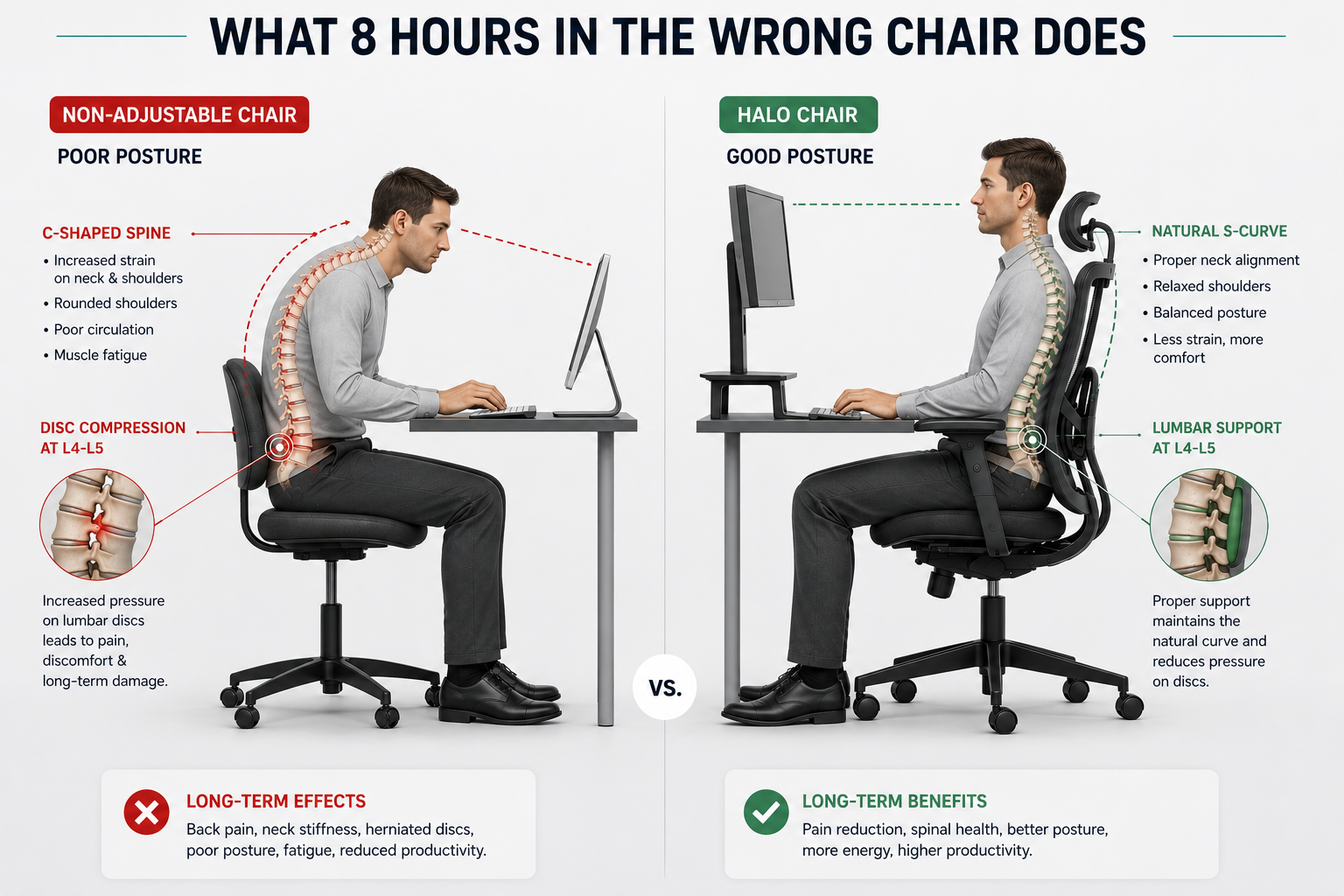
One person's back pain is a personal health matter. Three people's back pain in the same office is a workspace problem.
EU-OSHA research reveals that musculoskeletal disorders are the biggest work health problem worldwide. Poor seating and mismatched desk heights are key causes. The accumulation is gradual: a chair with no real lumbar depth adjustment loads the lower spine slightly wrong for every hour of sitting. Over weeks, that becomes tension. Over months, that becomes pain.
In Dubai and GCC offices with 8–10 hour workdays, this buildup happens quicker than in places with shorter hours. By the time someone raises it formally, the loading has been building for over a year.
When complaints arise, ask this: Is the chair really adjustable? Check the lumbar depth and height, seat depth, and if the armrests move in multiple directions. Or, does it have fixed features that seem adjustable but don;t fit different bodies well?
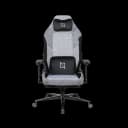
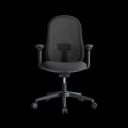
A BIFMA-certified ergonomic chair with real adjustability prevents this pattern. A chair that markets itself as ergonomic without functional adjustment perpetuates it.
Signal 3: The Meeting Room Is Booked for Solo Calls
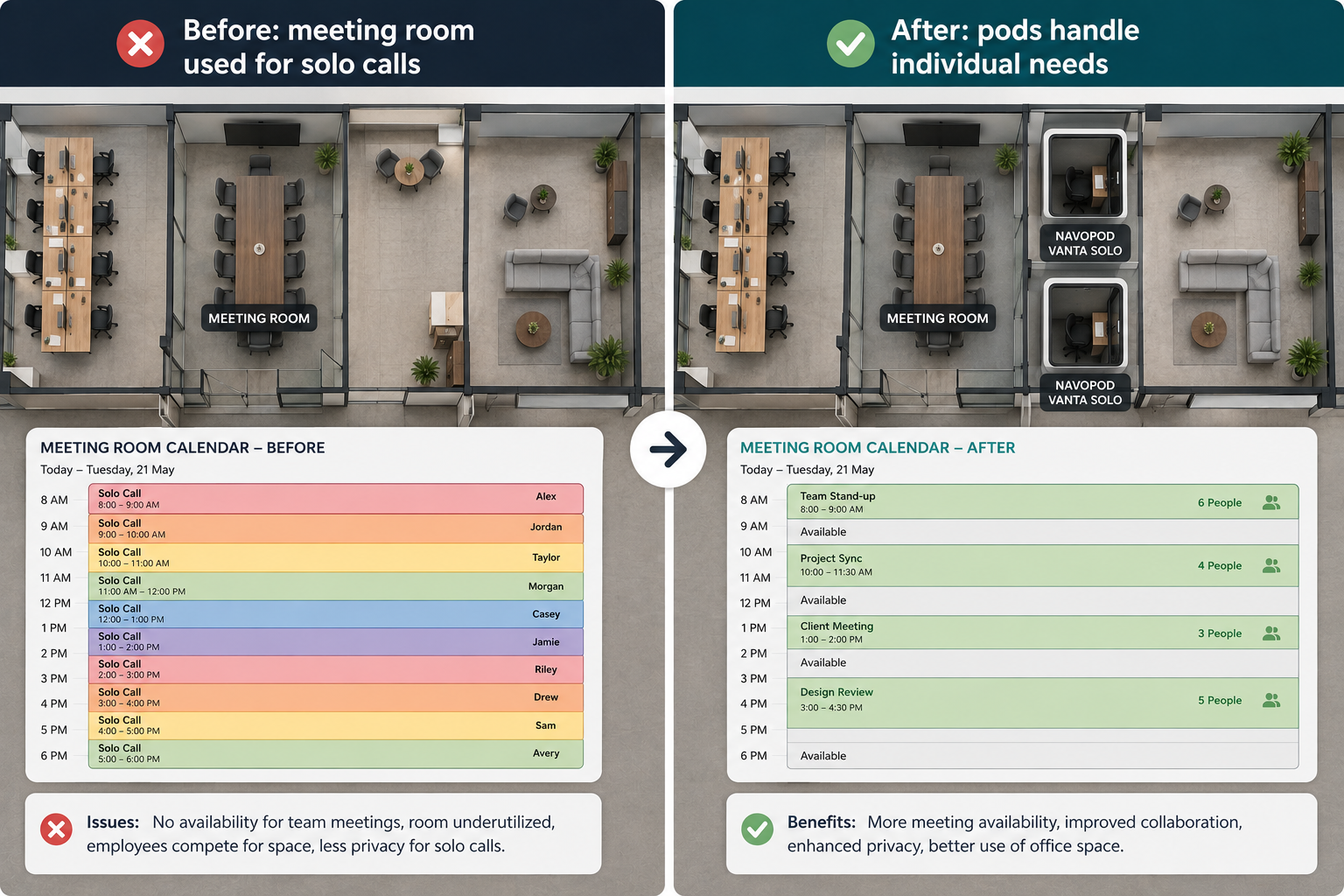
When the meeting room calendar is blocked two weeks out and most bookings are 1–2 person phone calls or individual video sessions - the office has an acoustic problem being solved by a space problem.
The meeting room isn't overbooked. The open floor is too noisy for a private conversation. These are different problems with different solutions.
Businesses react to “we need more meeting rooms” by planning construction. This involves permits, contractors, and takes 8–12 weeks. Each room costs AED 100,000 or more. The actual problem, solved correctly, costs a fraction of that.
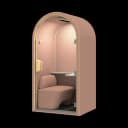
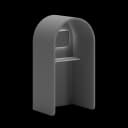
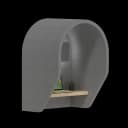
Acoustic phone booths from AED 3,350 provide standing call privacy without construction. Solo office pods from AED 12,999 provide seated, extended-session privacy for video calls and focus work. Neither requires permits. Both are operational within a day.
The moment individual call pods go in, meeting room bookings drop - because the demand driving them drops. The rooms become available for actual meetings again.
Signal 4: The Furniture Is Older Than Your Last Major Business Decision
Quality ergonomic chairs last 8–12 years with proper maintenance. Standard commercial chairs: 5–8 years. Budget chairs: 2–4 years before foam compression and mechanism degradation compromise ergonomic function - even if they're still standing.
Most businesses operate on a "replace when broken" policy. It misses the more significant problem: furniture that still functions mechanically but no longer functions ergonomically.
A seat that's compressed 25% of its original foam depth no longer distributes pressure correctly. A gas lift that sinks 2cm during a session means the user sits below their ergonomic height for most of the afternoon. A seized recline mechanism removes the postural variation that prevents fatigue buildup.
None of these are "broken." All of them mean the chair is no longer doing what it was bought to do.
The 5-year functional audit: any chair or desk over 5 years old gets tested - not inspected visually. Sit in it. Adjust every mechanism. Check foam compression. Verify the gas lift holds height. Visible condition and functional condition are two different things. Office furniture almost always looks better than it performs.
Signal 5: The Office Doesn't Match How the Team Works Now
The clearest structural sign a furniture review is overdue: the office was designed for a way of working that no longer exists.
Pre-2020 UAE offices were built for full-time, individually-assigned workstations. Five years on, most teams operate hybrid — some days in, some remote, attendance shifting daily. CBRE's 2026 Global Workplace Insights shows UAE offices averaging 60–70% peak occupancy. A fixed 1:1 desk-to-headcount ratio in that environment means 30–40% of workstations sit empty every day — expensive floor space at AED 150–300 per sqft generating no return.
The mismatch shows up in specific behaviours: teams clustering in one area while half the floor sits empty; collaborative sessions at individual desks because there's no appropriate informal space; video calls taken in stairwells because the open plan is too noisy and the meeting rooms are too formal.
These aren't behaviour problems. They're furniture problems - a floor planned for a work pattern that's been replaced by a different one.
The right review question isn't "does the furniture still work?" It's "does the furniture still serve the way this team actually works?" Those are different questions with different answers.
Signal 6: New Hires Comment on the Office in Their First Week
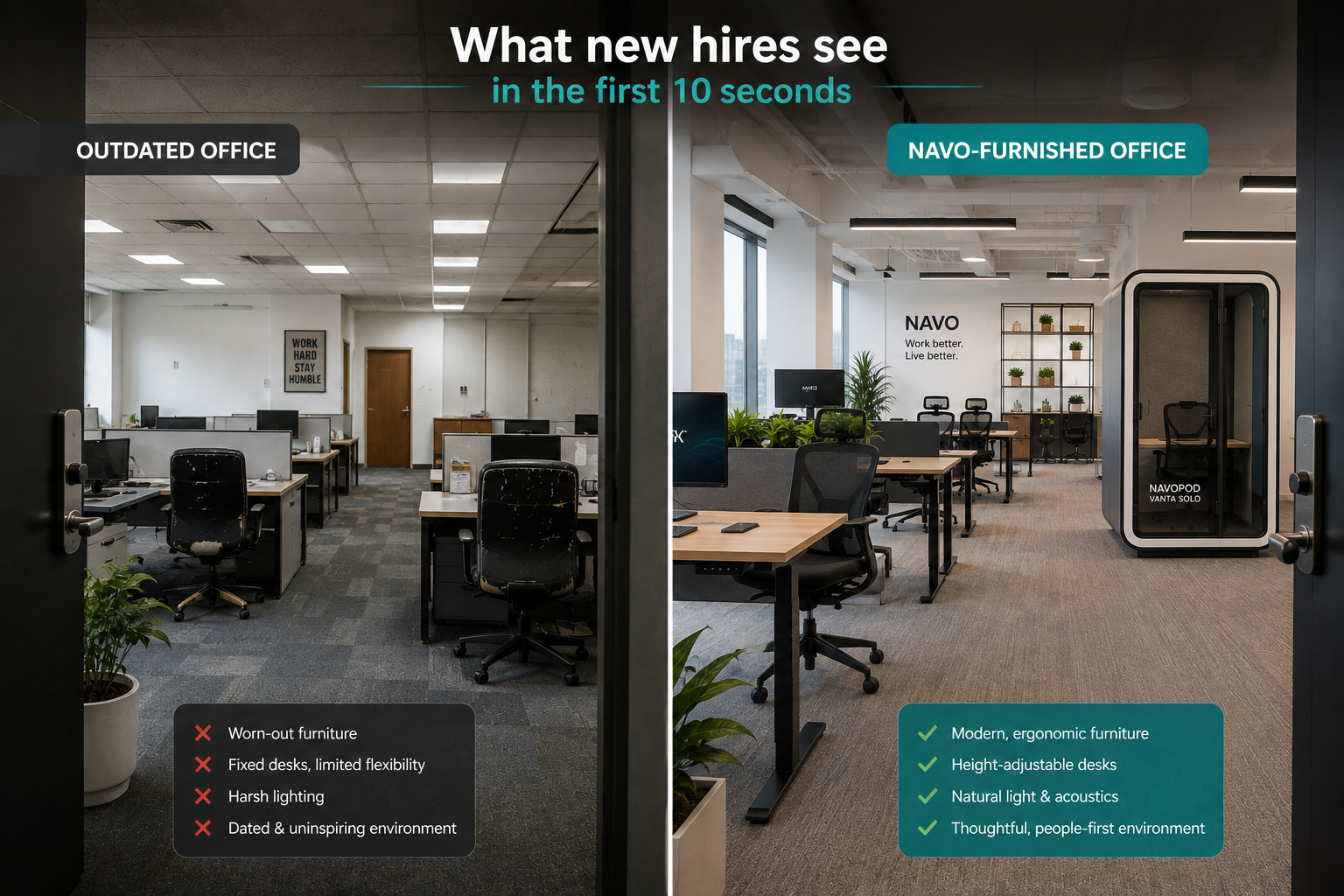
Existing teams stop noticing gradual decline. New employees notice right away. They compare their experiences to past jobs, offices they visited while job-hunting, and the expectations your brand set.
New hires often notice things like seating, noise, or desk setup that others overlook. In their first week, these comments reveal how the workspace sends signals about the organization. Tenured employees may not see these signals anymore.
Research shows 90% of workers believe a well-designed office signals respect from their employer. That's not about luxury. It's about what the physical environment communicates before a single meeting is held.
In Dubai's competitive talent market, that signal has a cost. Not always as immediate attrition - as slightly lower candidate acceptance rates, higher first-year turnover, and an undertone in exit interviews that's hard to attribute to a single cause. The furniture is rarely why someone leaves. It's part of the environment that made leaving easier.
The Cost of Waiting
The upgrade isn't a cost. The delay is.
A BIFMA-certified ergonomic chair at AED 1,500–2,500 lasts 10-12 years - roughly AED 150–250 per year amortised. A single physiotherapy session for occupational back pain in Dubai runs AED 250-400. Two sessions per year for one employee already costs more than the annual chair investment that would have prevented it.
That's before the productivity cost of someone sitting in pain for three hours every afternoon. Before the absenteeism. Before the new hire who joins in month one, notices the chairs in week one, and updates their LinkedIn profile in month six.
The furniture your team uses every day for 8–10 hours is the most used asset in your office. It deserves to be evaluated like one.
Where to Start
If two or more signals above describe your office, the next step is a functional audit — not an immediate procurement decision. Identify what's failing ergonomically, what's failing spatially, and what can wait.
Navo's complete office furniture UAE range covers the full upgrade: BIFMA-certified ergonomic chairs, height-adjustable standing desks, office pods, and acoustic solutions for the noise problems currently masking themselves as meeting room shortages.
Visit our Dubai showroom at Al Khabaisi Complex, 74 2B Street, Al Khabaisi. Call +971 4 262 2422. Or start with the complete workspace planning guide for a broader review framework.
Frequently Asked Questions
- Quality ergonomic chairs: 8-12 years. Standard commercial chairs: 5-8 years. Budget chairs: 2-4 years before ergonomic function degrades meaningfully. Any furniture over 5 years should be assessed functionally - not just visually - before assuming it's still performing.
- Chairs first - most contact hours, most direct ergonomic impact. Desks second - correct height determines whether chair adjustments can do their job. Acoustic solutions third - if meeting rooms are perpetually booked for individual calls, pods solve that faster and more cheaply than construction.
- Under UAE accounting standards, office furniture is typically capitalised as a fixed asset and depreciated over its useful life - commonly 5–10 years depending on quality tier. A planned upgrade is a capital expenditure decision worth building into annual planning rather than treating as reactive spend.
Need Help Building Your Ergonomic Setup?
We'll guide you to the perfect chair, desk setup, and comfort tips for a productive workday.
Shop Office FurniturePopular Blogs
View all
Open Plan vs Cubicle vs Hybrid Office Layout: Which Is Right for You?
The open-plan office was supposed to fix everything the cubicle farm got wrong. It didn't. It created a different set of problems and left people nostalgic for the one thing cubicles did well: quiet. The hybrid layout is positioned as the solution that addresses the shortcomings of both. It might be only if it fits how a specific team works. It shouldn't be a mix of two philosophies that didn’t help the team before. This guide shows what each layout offers and where it falls short. It also helps you choose the best option-or combination-for your office in Dubai or the GCC.
Key Findings
*Global office use is now at 53%, up from 38% in 2024. Also, 69% of teams have over 40% of their staff sharing desks. This shows that 2019 workspace designs don’t fit current needs.
*A Harvard study found that open-plan spaces often lower face-to-face interaction. Instead, they boost digital communication. This is the opposite of what these designs aim for.
*A hybrid model conversion at a 120-person SaaS company restored engineering deployment speed to baseline. It also reduced voluntary turnover in technical roles by 18% over nine months.
*Steelcase research shows that companies improving their work environment boost productivity by 17%.
*In 2026, the most innovative UAE offices aren’t just picking open plans or cubicles. They’re creating “activity neighborhoods.” These are clusters of spaces designed for different work styles.
*No layout is universally right. The best choice depends on your team's work style, industry, hybrid attendance ratio, and specific acoustic needs for your floor.
Sitting isn’t the Enemy, How You Sit Is: How to Align Your Desk for Zero Back Strain
If your job keeps you at a desk for most of the day, you are not alone—and you are not stuck. Software developers and data entry keyers spend 100% of a typical workday seated, while financial managers sit for 94%. Sitting is a standard part of modern work, so the real goal is learning how to reduce its physical impact while staying productive.
What the Research Shows
*Sedentary Volume: Adults in high-income countries spend 11–12 hours daily sitting over 75% of their waking hours (British Journal of Sports Medicine).
*Cardiovascular Risks: Sitting 6–8 hours daily increases cardiovascular event risk by 125% to 150% (Mayo Clinic).
*The 22-Minute Counter: 22 minutes of daily moderate-to-vigorous activity (brisk walking, cycling, active housework) offsets the mortality risk of prolonged sitting (BJSM).
*Micro-Break Impact: 5-minute movement breaks every hour significantly reduce fatigue and improve mood without hurting work performance (2026 BJSM Study).
*Gym Fallacy: A 60-minute workout in the morning does not fully reverse 9 hours of continuous sitting; daily movement breaks are still required.
The Ultimate Office Furniture Setup Checklist for Modern Teams
Most offices aren't badly furnished. They're incompletely furnished. A great chair paired with the wrong desk height. A standing desk with no monitor arm. A collaborative floor with no acoustic separation.
The gap is rarely one big thing. It's several small things missing from the same setup at the same time.
This checklist covers every furniture category a modern UAE office needs — what to look for, what to avoid, and what the research says about each. Use it for a new fit-out, an upgrade review, or a department-by-department audit.
Key Findings
*The chair is the top furniture investment for knowledge workers. It has the most contact hours and directly impacts posture, energy, and afternoon performance.
*Fixed desks at 75cm fit about 30–40% of UAE office teams well. Height adjustability isn’t a luxury; it meets everyone’s needs.
*Open-plan offices without acoustic zones can lose employees up to 86 minutes of productive time each day. This is based on workplace productivity research.
*EU-OSHA highlights musculoskeletal disorders as the top workplace health concern worldwide. Poor seating and desk height are key factors.
*CBRE's 2026 Global Workplace Insights reveals that 69% of organizations have over 40% of staff sharing desks. This shift means adjustability is now a standard requirement, not just an upgrade.
*Quality ergonomic chairs last 8–12 years. A BIFMA-certified chair costs less per year when spread over 10 years. This cost is lower than one physiotherapy session for occupational back pain in Dubai.
You x Navo
Feel free to reach out to us for any queries & concerns