

 Visit our Showroom
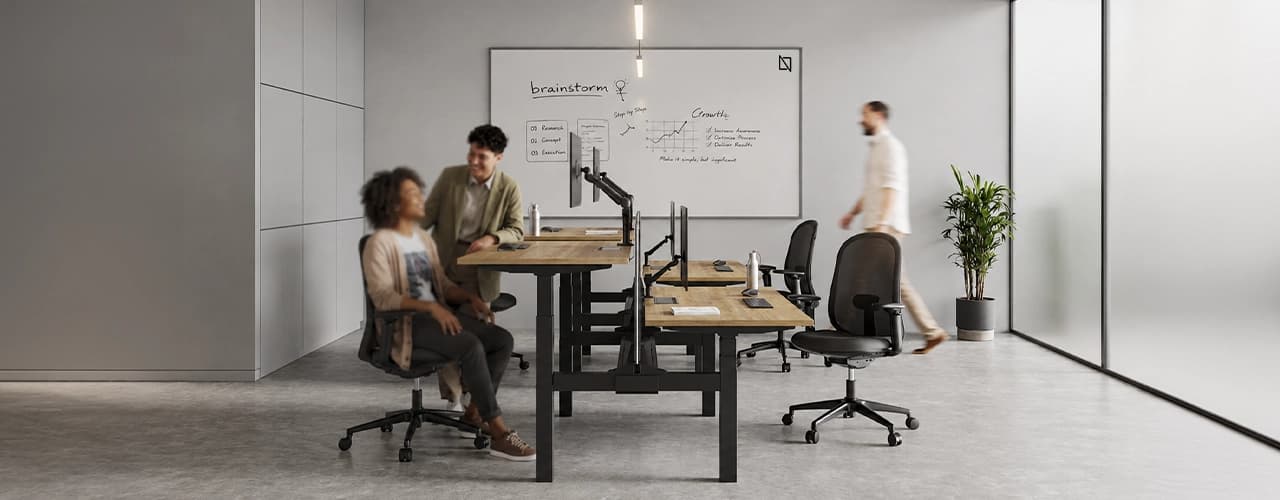
NAVO analyzed 2,000 employer sources and 1,000+ employee reviews to find out which workplace perks companies market and which ones employees actually talk about.
Companies have competed to “out-perk” one another for years, from on-site spas to free breakfasts, treating offices as lifestyle brands. But our new research suggests that employees aren't talking about these perks as much as employers might expect.
Employees are more likely to bring up practical, day-to-day benefits unprompted than traditional office perks, which is a pattern that suggests where real workplace priorities may lie.
We analyzed 2,000 employer sources — job ads, careers pages and LinkedIn posts — alongside more than 1,000 employee reviews and discussions from Glassdoor, Indeed, Reddit, Blind and Fishbowl. After removing duplicates and generic mentions, the study left a dataset of 1,121 workplace perk mentions, each classified as either employer-promoted or employee-driven.
Headline Metrics
Real Work Perk Study · NAVO Hero · 2,000 employer sources + 1,000+ employee reviews · July 2026
Key Findings
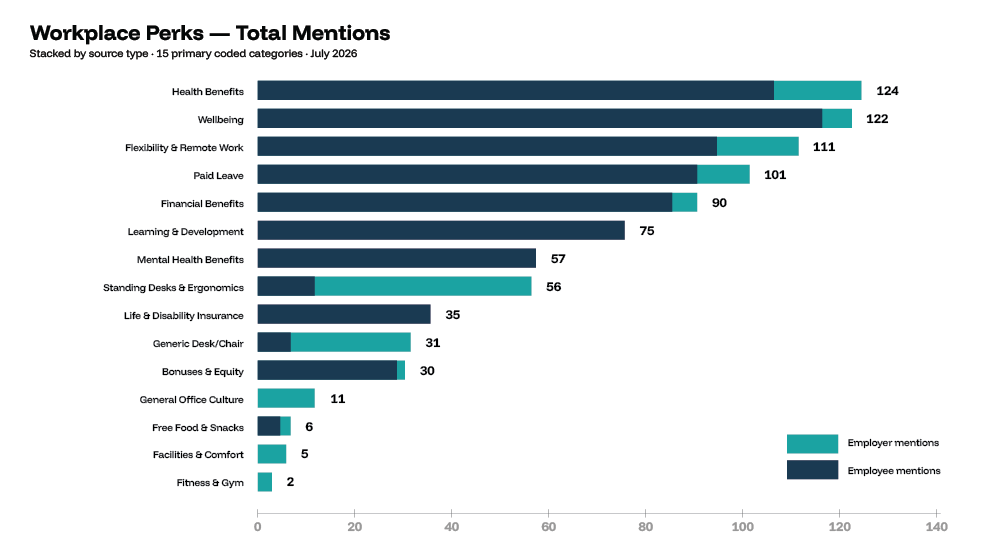
*Health benefits are the most-mentioned workplace perk overall, with 124 mentions, followed by well-being (122) and flexible or remote work (111).
*Long-term benefits dominate. Paid leave (101), financial and retirement benefits (90) and professional development (75) all land in the top six.
*Well-being is the biggest theme in the study. Combined with mental health benefits, well-being generated 179 mentions - more than any other category.
*Standing desks are the most employee-driven perk in the study. More than 80% of standing desk conversations came from employees, not employers.
*Free food and snacks ranked dead last, with just six mentions total.
Take me to
Top 10 Workplace Perks, Ranked by Total Employee Mentions
Although workplace initiatives like game rooms, on-site dry cleaning, and four-star meals have their appeal, Our analysis has uncovered a different reality. A clear signal emerging from this list of perks based on total mentions by employees is the need to prioritize health and well-being.
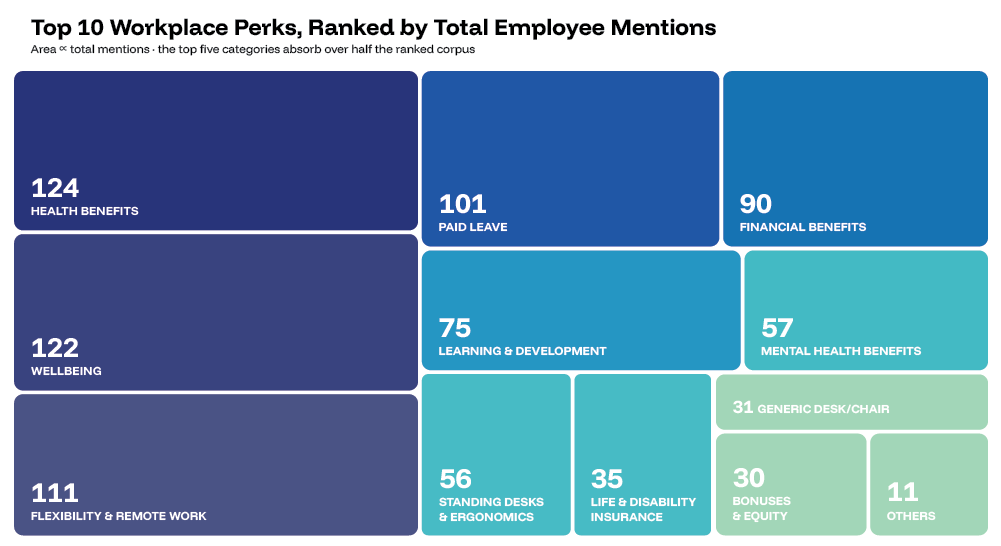
| Rank | Workplace Perk | Total Mentions |
|---|---|---|
| 1 | Health Benefits | 124 |
| 2 | Well-being | 122 |
| 3 | Flexibility & Remote Work | 111 |
| 4 | Paid Leave | 101 |
| 5 | Financial & Retirement Benefits | 90 |
| 6 | Professional Development | 75 |
| 7 | Mental Health Benefits | 57 |
| 8 | Standing Desks & Ergonomic Workstations | 56 |
| 9 | Life & Disability Insurance | 35 |
| 10 | Generic Desk/Chair | 31 |
1. Health Benefits
Health benefits top the list with 124 mentions, spanning health insurance, private medical cover, employer-funded healthcare, and Health Savings Accounts (HSAs). In a climate of rising healthcare costs, coverage isn't a nice-to-have - it's a necessity.
2. Well-being
Well-being programs and wellness initiatives account for 122 mentions on their own. Add the 57 mentions of mental health benefits, and well-being's true footprint climbs to 179 - the single biggest theme in the entire study. It’s a health benefit in practice because the everyday habits and support systems can help employees well before a medical issue requires coverage.
Well-being has stopped being a bonus. It's now an expectation.
3. Flexibility and Remote Work
Flexibility continues to be a defining feature of an appealing workplace. The most frequently cited benefits are hybrid schedules, remote work, flexible hours, four-day weeks, and work-from-home options. Racking up 111 mentions, flexible, remote work is no longer a trend.
With control over when and where work happens, employees have room to manage physical and mental health on their own terms, rather than build it around a fixed schedule.
4. Paid Leave
Earning 101 mentions, paid leave strongly reinforces just how central work-life balance has become to how employees evaluate a job. This perk covers annual leave, PTO, parental leave, and sick leave.
As employees have time to rest, recover, and care for family without sacrificing income, paid leave carries a health benefit dimension.
5. Financial and Retirement Benefits
Although financial perks make sense as a top drawer of talent, Financial and Retirement Benefits only receive 90 mentions, ranking 5th on this list. This category covers pension contributions, bonuses and stock options, and retirement plans.
Later in this report, the data will show that these benefits are among the perks companies promote far more than employees discuss on their own.
6-7. Professional Development/Mental Health Benefits
Professional development (75 mentions) and mental health benefits (57 mentions) round out the top seven. Each one represents a different kind of investment for the employer, but both are about the employee as a whole person (as opposed to a transactional compensation), in who they are becoming.
One is forward-looking, covering training programs, career development and tuition support that build toward where an employee is headed. The other deals with the present through counseling and therapy services that support how an employee is doing right now. Both mentions are employer-led.
8. The Standout: Standing Desks and Ergonomic Workstations
Unlike every other perk in the top 10, more than 80% of standing desk conversations were started by employees, not employers. Standing desks and ergonomic workstations ranked eighth overall with 56 mentions, well ahead of headline-making perks like life insurance or bonus and equity compensation, both getting zero mentions from employees.
Employees are choosing to raise the topic of comfort, movement and physical well-being on their own, whether or not their employer is talking about it.
9. Life and Disability Insurance
Life and disability insurance ranked ninth with 35 mentions, all from the employer’s side. It's a benefit that shows up consistently in job listings and careers pages, but employees in the dataset never raised it on their own. This finding doesn’t necessarily mean the perk isn’t valued at all by employees, but it may signal that it’s the kind of benefit people assume is in place instead of one they think to mention.
10. Generic Desk/Chair
Rounding out the top 10, Generic Desk/Chair receives 31 mentions. Unlike insurance, the trend here is going in the opposite direction: 4 in 5 of those conversations come from employees.
Paired with the standing desk findings above, it reinforces the same throughline: Workstation comfort is one of the few areas where employee conversation is outpacing employer promotion.
Which Perks Are Employees Actually Driving the Conversation On?
Ranked by absolute gap, which is how much more (or less) employees talk about a perk compared to how much employers promote it, the data below reveals that employers talk about perks more than employees do.
In the dataset, employers exclusively mention professional development (75), mental health benefits (57), and life insurance (35), whereas employees discussed health benefits (18), well-being (6), financial packages (5), and paid leave (11) comparatively little.
The gap, however, isn’t indicative of value: low employee mention volume doesn't mean low employee value. It might indicate expectations; health coverage and paid leave have become a baseline part of employment that employees are less likely to mention each one.
Workplace comfort, with standing desks and ergonomic workstations, is the exception to the broader pattern. It’s one of the few perks mentioned largely by employees.
| Rank | Workplace Perk | Gap (Employee-Employer) | Employee Mentions | Employer Mentions | Total Mentions | Employee Share |
|---|---|---|---|---|---|---|
| 1 | Well-being | -110 | 6 | 116 | 122 | 4.9% |
| 2 | Health Benefits | -88 | 18 | 106 | 124 | 14.5% |
| 3 | Financial & Retirement Benefits | -80 | 5 | 85 | 90 | 5.6% |
| 4 | Paid Leave | -79 | 11 | 90 | 101 | 10.9% |
| 5 | Flexibility & Remote Work | -77 | 17 | 94 | 111 | 15.3% |
| 6 | Professional Development | -75 | 0 | 75 | 75 | 0.0% |
| 7 | Mental Health Benefits | -57 | 0 | 57 | 57 | 0.0% |
| 8 | Life & Disability Insurance | -35 | 0 | 35 | 35 | 0.0% |
| 9 | Bonus & Equity Compensation | -26 | 2 | 28 | 30 | 6.7% |
| 10 | Standing Desks & Ergonomic Workstations | 34 | 45 | 11 | 56 | 80.4% |
| 11 | Generic Desk/Chair | 19 | 25 | 6 | 31 | 80.6% |
| 12 | General Office Culture | 11 | 11 | 0 | 11 | 100.0% |
| 13 | Facilities & Comfort | 3 | 5 | 2 | 7 | 71.4% |
| 14 | Fitness & Gym Membership | -8 | 2 | 10 | 12 | 16.7% |
| 15 | Food & Snacks | -2 | 2 | 4 | 6 | 33.3% |
Conclusion
Across a broad, global sample of employees and employers, both groups aren’t mentioning the same perks.
Companies lead with health benefits, well-being programs, and financial packages; perks that look good in a job listing. Employees, meanwhile, are more likely to bring up the benefits that shape their actual, daily experience of work: how their body feels after work, whether their desk supports a full day of focus, whether their workspace works for them instead of against them.
Driven primarily by employee conversations, standing desks and ergonomic workstations tell that story most clearly and present an opportunity for companies in search of talent. But workplace comfort is barely marketed.
As companies rethink how to attract and retain talent, the perks that employees raise unprompted are worth a closer look. Sometimes, the benefit that says the most isn't the one being sold hardest. It's the one people keep bringing up on their own.
Methodology
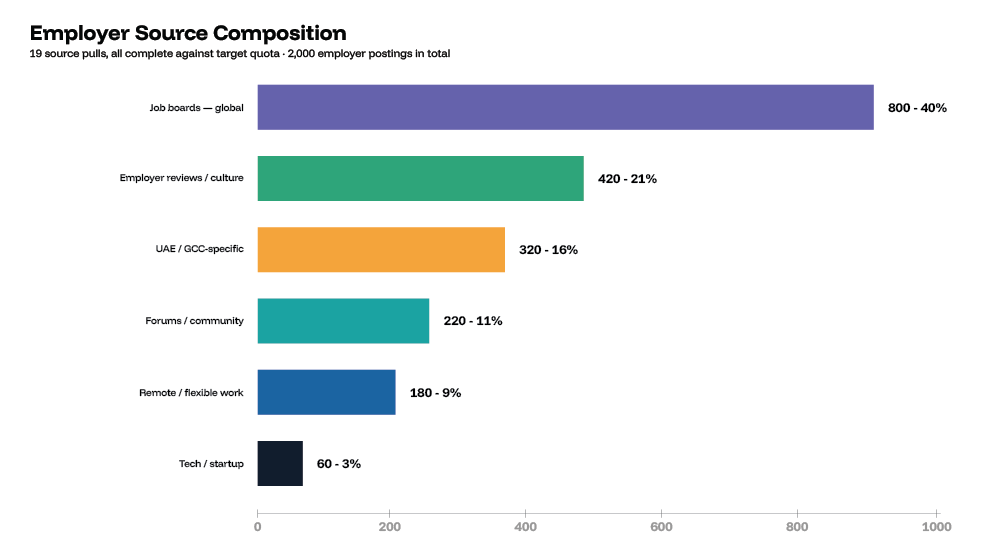
We analyzed 2,000 employer sources, including job advertisements, company careers pages and LinkedIn job posts, to identify the workplace perks employers promote during recruitment. The employer sample drew on a broad, global mix of listings, with a meaningful concentration from the UAE and wider GCC region (320 of the 2,000 sources). These findings were compared with more than 1,000 employee reviews and workplace discussions from platforms including Glassdoor, Indeed, Reddit, Blind and Fishbowl, to understand which workplace benefits employees talk about most.
Each mention was grouped into one of 15 workplace perk categories, including health benefits, well-being, flexible working, paid leave, financial and retirement benefits, professional development, mental health support, standing desks and ergonomic workstations, office facilities, food and snacks, fitness benefits and life insurance. Every mention was classified as either employer-generated or employee-generated. After removing duplicate and generic mentions, the final dataset comprised 1,121 workplace perk mentions, analyzed to compare the benefits companies promote with the perks employees discuss most.
Mention counts reflect the frequency with which a perk was discussed, not sentiment. A perk with a high mention count came up often in employer or employee sources; this does not indicate whether the sentiment behind those mentions was positive, negative or neutral. Given the mixed global and GCC composition of the sample, findings are presented as broadly applicable workplace trends rather than conclusions specific to any single region.
Data was collected and analyzed in July 2026.
Full data and methodology:
Need Help Building Your Ergonomic Setup?
We'll guide you to the perfect chair, desk setup, and comfort tips for a productive workday.
Shop Office FurniturePopular Blogs
View all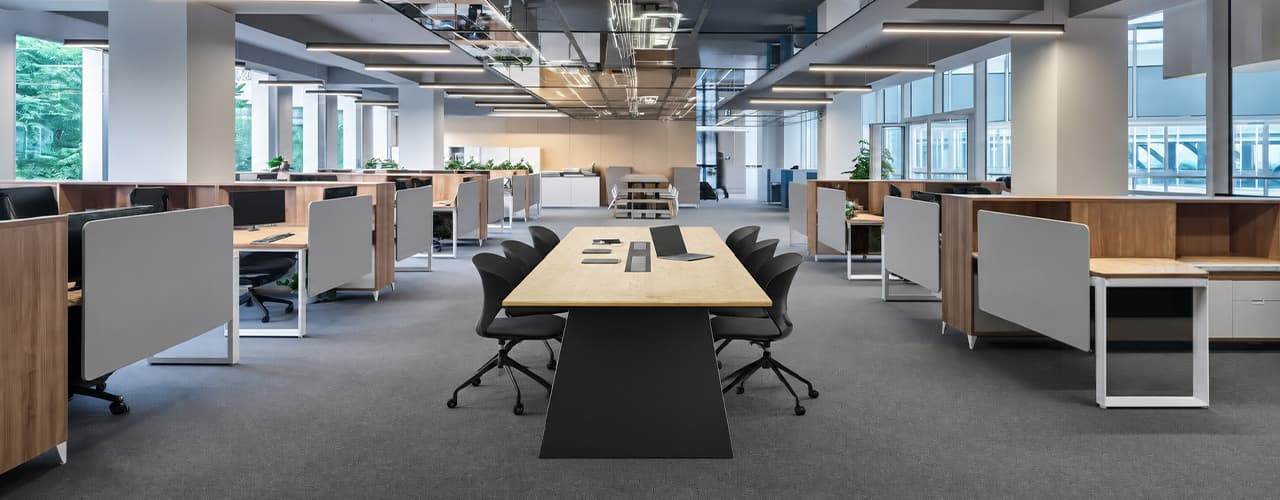
Open Plan vs Cubicle vs Hybrid Office Layout: Which Is Right for You?
The open-plan office was supposed to fix everything the cubicle farm got wrong. It didn't. It created a different set of problems and left people nostalgic for the one thing cubicles did well: quiet. The hybrid layout is positioned as the solution that addresses the shortcomings of both. It might be only if it fits how a specific team works. It shouldn't be a mix of two philosophies that didn’t help the team before. This guide shows what each layout offers and where it falls short. It also helps you choose the best option-or combination-for your office in Dubai or the GCC.
Key Findings
*Global office use is now at 53%, up from 38% in 2024. Also, 69% of teams have over 40% of their staff sharing desks. This shows that 2019 workspace designs don’t fit current needs.
*A Harvard study found that open-plan spaces often lower face-to-face interaction. Instead, they boost digital communication. This is the opposite of what these designs aim for.
*A hybrid model conversion at a 120-person SaaS company restored engineering deployment speed to baseline. It also reduced voluntary turnover in technical roles by 18% over nine months.
*Steelcase research shows that companies improving their work environment boost productivity by 17%.
*In 2026, the most innovative UAE offices aren’t just picking open plans or cubicles. They’re creating “activity neighborhoods.” These are clusters of spaces designed for different work styles.
*No layout is universally right. The best choice depends on your team's work style, industry, hybrid attendance ratio, and specific acoustic needs for your floor.
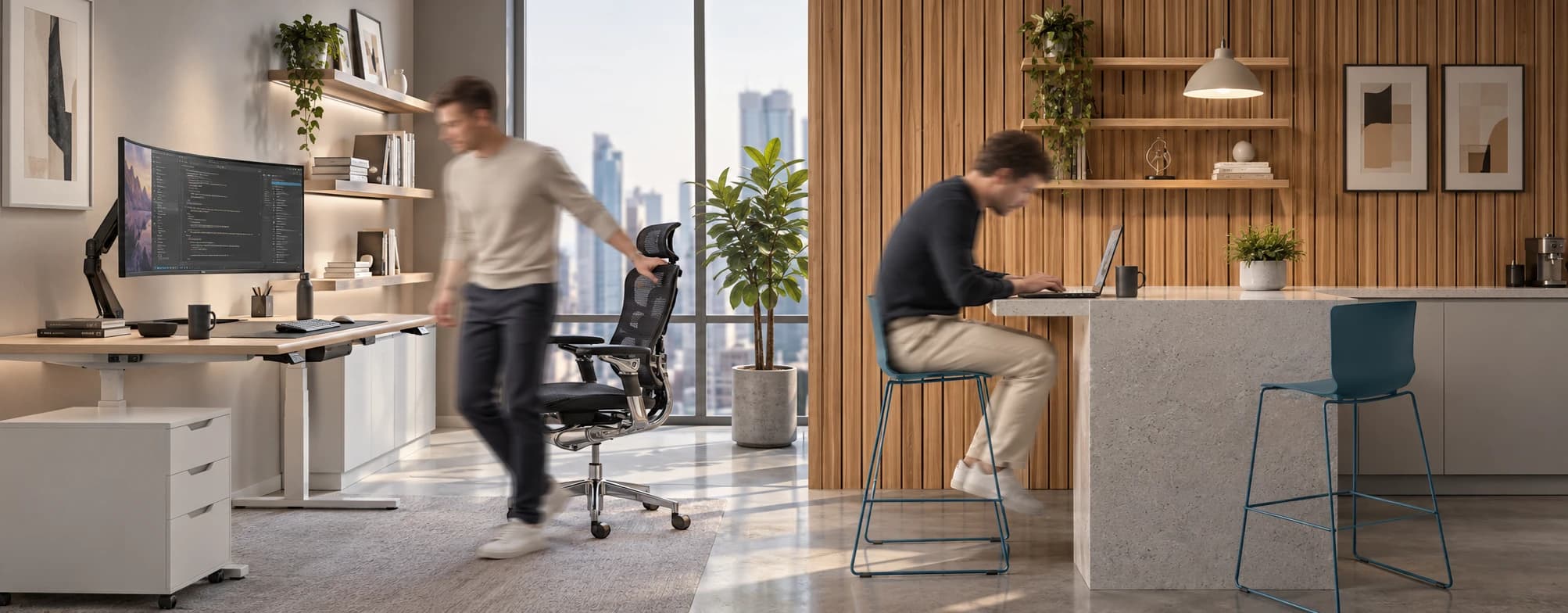
Sitting isn’t the Enemy, How You Sit Is: How to Align Your Desk for Zero Back Strain
If your job keeps you at a desk for most of the day, you are not alone—and you are not stuck. Software developers and data entry keyers spend 100% of a typical workday seated, while financial managers sit for 94%. Sitting is a standard part of modern work, so the real goal is learning how to reduce its physical impact while staying productive.
What the Research Shows
*Sedentary Volume: Adults in high-income countries spend 11–12 hours daily sitting over 75% of their waking hours (British Journal of Sports Medicine).
*Cardiovascular Risks: Sitting 6–8 hours daily increases cardiovascular event risk by 125% to 150% (Mayo Clinic).
*The 22-Minute Counter: 22 minutes of daily moderate-to-vigorous activity (brisk walking, cycling, active housework) offsets the mortality risk of prolonged sitting (BJSM).
*Micro-Break Impact: 5-minute movement breaks every hour significantly reduce fatigue and improve mood without hurting work performance (2026 BJSM Study).
*Gym Fallacy: A 60-minute workout in the morning does not fully reverse 9 hours of continuous sitting; daily movement breaks are still required.
The Ultimate Office Furniture Setup Checklist for Modern Teams
Most offices aren't badly furnished. They're incompletely furnished. A great chair paired with the wrong desk height. A standing desk with no monitor arm. A collaborative floor with no acoustic separation.
The gap is rarely one big thing. It's several small things missing from the same setup at the same time.
This checklist covers every furniture category a modern UAE office needs — what to look for, what to avoid, and what the research says about each. Use it for a new fit-out, an upgrade review, or a department-by-department audit.
Key Findings
*The chair is the top furniture investment for knowledge workers. It has the most contact hours and directly impacts posture, energy, and afternoon performance.
*Fixed desks at 75cm fit about 30–40% of UAE office teams well. Height adjustability isn’t a luxury; it meets everyone’s needs.
*Open-plan offices without acoustic zones can lose employees up to 86 minutes of productive time each day. This is based on workplace productivity research.
*EU-OSHA highlights musculoskeletal disorders as the top workplace health concern worldwide. Poor seating and desk height are key factors.
*CBRE's 2026 Global Workplace Insights reveals that 69% of organizations have over 40% of staff sharing desks. This shift means adjustability is now a standard requirement, not just an upgrade.
*Quality ergonomic chairs last 8–12 years. A BIFMA-certified chair costs less per year when spread over 10 years. This cost is lower than one physiotherapy session for occupational back pain in Dubai.
You x Navo
Feel free to reach out to us for any queries & concerns