

 Visit our Showroom
Take me to
How Do Ergonomic Chairs Actually Improve Posture?
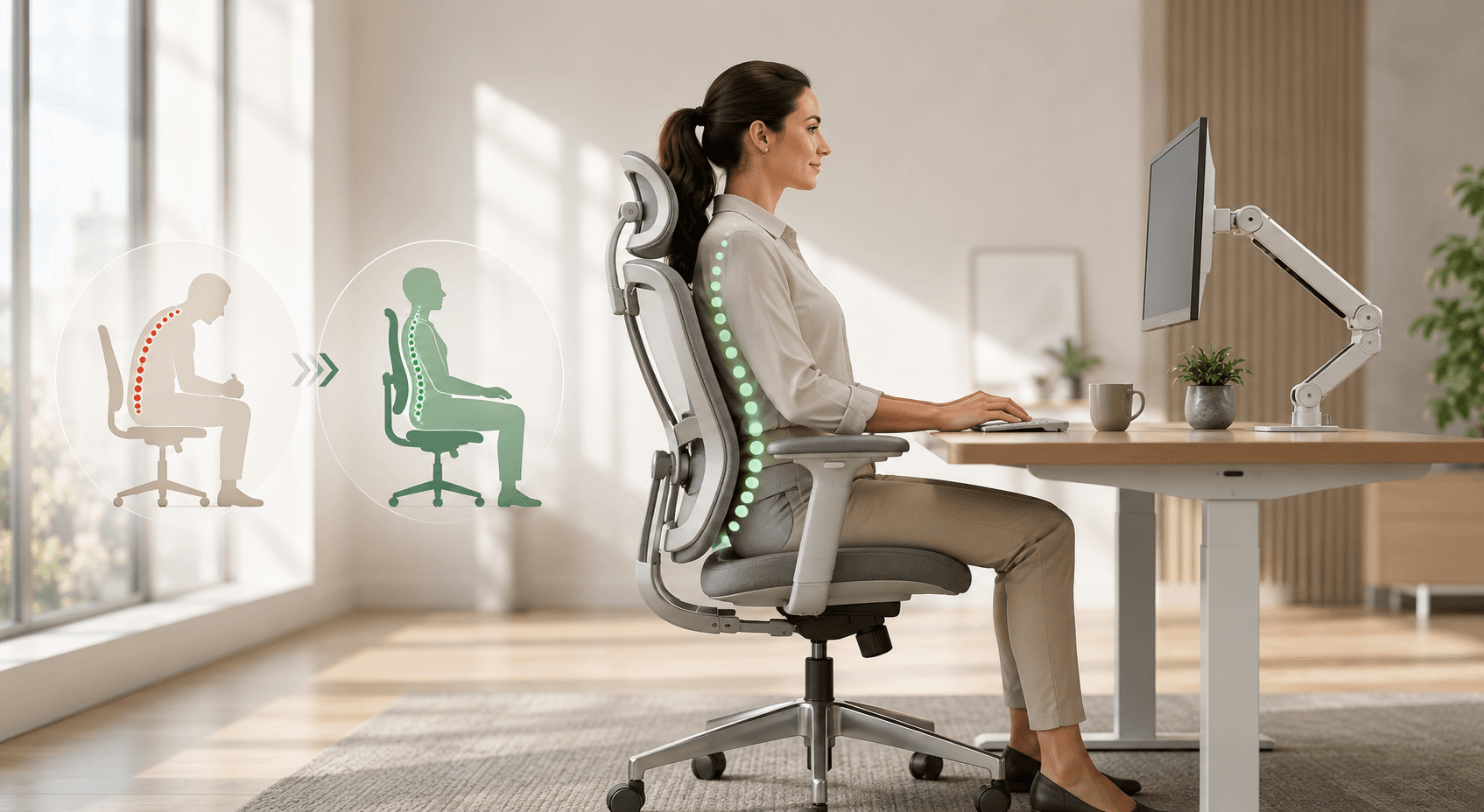
Ergonomic chairs improve posture by maintaining the spine's natural S-curve during seated work - specifically by supporting the lumbar (lower back) region at L4-L5 vertebrae level, preventing the posterior pelvic tilt and lumbar flexion that develops in chairs without lumbar support. This reduces disc pressure and keeps postural muscles active rather than fatigued.
A standard chair without lumbar support allows the pelvis to rotate backward (posterior tilt) during sustained sitting, causing the lumbar spine to flex rather than maintain its natural lordotic curve. Over 30–60 minutes, this shifts disc pressure anteriorly, loads posterior spinal ligaments, and creates the lower back tension that builds through a workday.
Adjustable lumbar support - the defining feature that separates ergonomic chairs from regular chairs - maintains the lordotic curve actively, regardless of how long the user has been seated. Research in Ergonomics consistently links adjustable lumbar support to reduced lower back discomfort scores during extended seated work.
What Does Research Show About Ergonomic Chairs and Productivity?
Research published in the Journal of Occupational and Environmental Medicine found employees using well-designed workstations with proper training achieved up to 17.7% higher productivity. A comprehensive systematic review of sitting and working furniture ergonomics (2012–2022) consistently linked ergonomic chairs to reduced discomfort, improved posture, and enhanced job performance.
The productivity mechanism is direct: physical discomfort competes for cognitive resources, increasing mental load and leaving less attention available for work tasks. Research from Buro Seating found that studies examining fatigue, posture, and task performance show prolonged sitting in non-supportive postures increases muscle fatigue, associated with slower reactions, reduced accuracy, and higher error rates late in the day.
The ergonomic chair market is projected to reach approximately USD 21.2 billion by 2031 (Transparency Market Research) - a growth rate that reflects corporate recognition of chairs as productivity infrastructure, not furniture.
For GCC professionals sitting 8–10 hours daily across global time zones, the difference between a supportive chair that maintains concentration through the afternoon versus one that causes accumulating discomfort is measurable in quality of output.
What Chair Features Actually Affect Posture?
Five chair features with direct postural impact, in order of importance: adjustable lumbar height and depth, seat height range (must reach the user's correct ergonomic height), seat depth adjustment, armrest height alignment with desk, and backrest recline tension.
Adjustable Lumbar Support
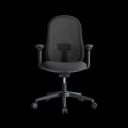
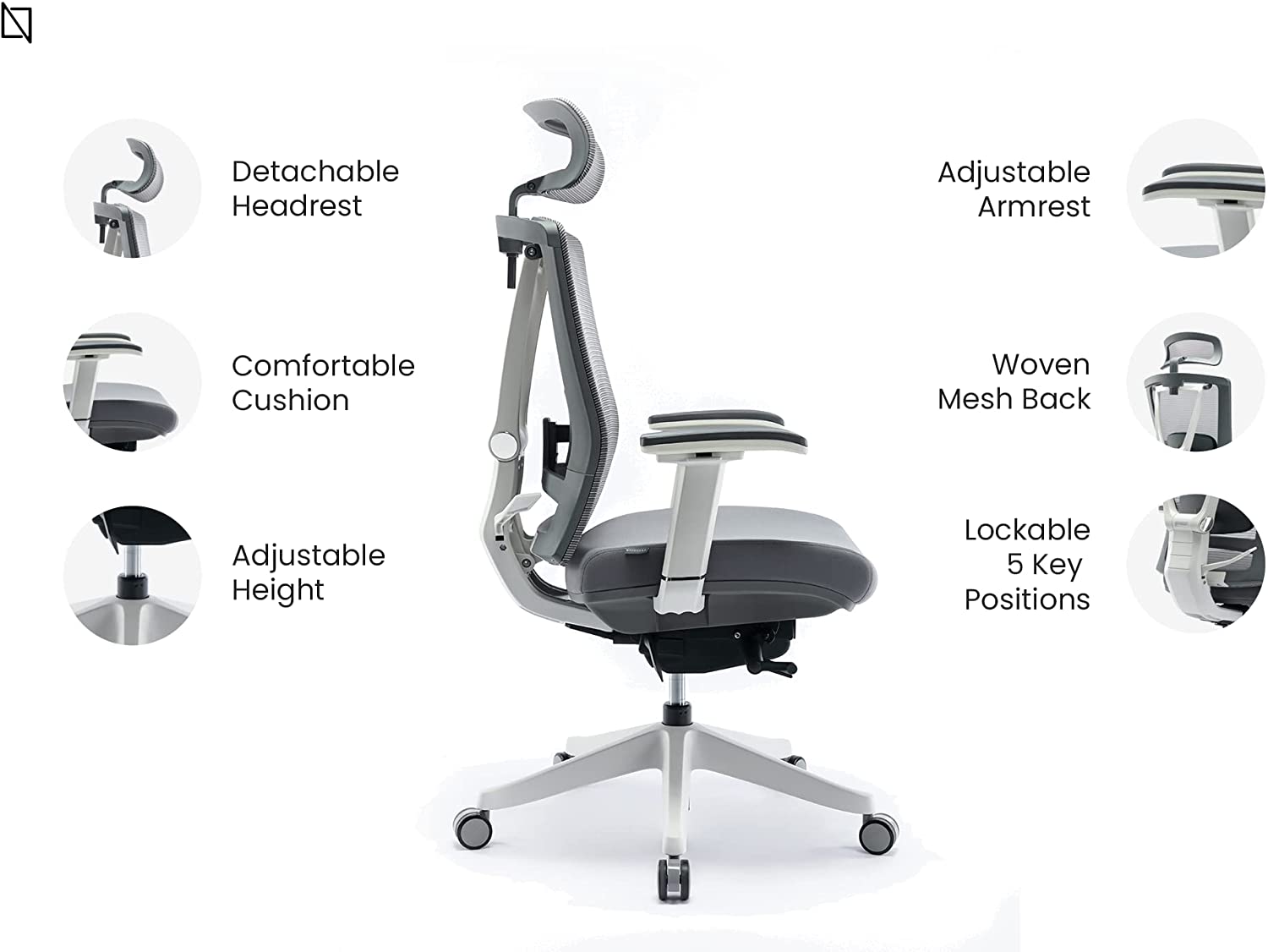
The most critical ergonomic feature. External lumbar pillows shift position during sitting and compress within 3–6 months. Built-in adjustable lumbar - as in Navo's HALO Chair (BIFMA-certified, 135kg capacity, adjustable dynamic lumbar) and ErgoMax All Mesh (height-adjustable mesh backrest, BIFMA-certified) - maintains consistent L4-L5 support regardless of user height.
Seat Height Range
Must reach correct ergonomic height: feet flat, knees at 90°, elbows at desk level. For users under 163cm using standard 75cm desks, this requires seat height of 42–45cm - which not all chairs achieve. Seat height that forces the chair too high (feet off floor) or too low (desk height wrong) defeats posture regardless of lumbar quality.
Seat Depth Adjustment
2–4 inches (5–10cm) gap between seat edge and back of knees prevents thigh pressure that restricts circulation. Fixed-depth seats compromise either lumbar contact (shallow) or knee circulation (deep) for any user who doesn't match the manufacturer's assumed body proportions.
Armrest Height Alignment
Arms should rest at elbow height with shoulders relaxed. Too high: shoulder elevation. Too low: side-lean. The ErgoMax's 5D adjustable armrests move in height, width, depth, pivot, and tilt - accommodating the full range of shoulder spans and desk heights.
Backrest Recline with Tension Control
Allows postural variation during the workday - leaning back during reading or calls, upright during intensive typing. Position variation throughout sitting reduces sustained muscle loading. The HALO Chair's 5 lockable recline positions support this throughout an 8-hour workday.
How Does Chair Material Affect Comfort in Dubai and GCC Offices?
Mesh-back chairs provide superior ventilation in climate-controlled GCC offices where ambient temperature differences between AC-cooled interiors (22–24°C) and outdoor heat (35–50°C) create a specific thermal challenge: the body adjusts to cool indoor temperatures but continues generating heat through sitting, making breathable materials materially important for sustained comfort.
Leather and solid foam upholstery retain body heat and moisture against the contact surface. Over 2–3 hours, this creates thermal discomfort at back and thigh contact points - prompting the postural shifting that undermines seated alignment.
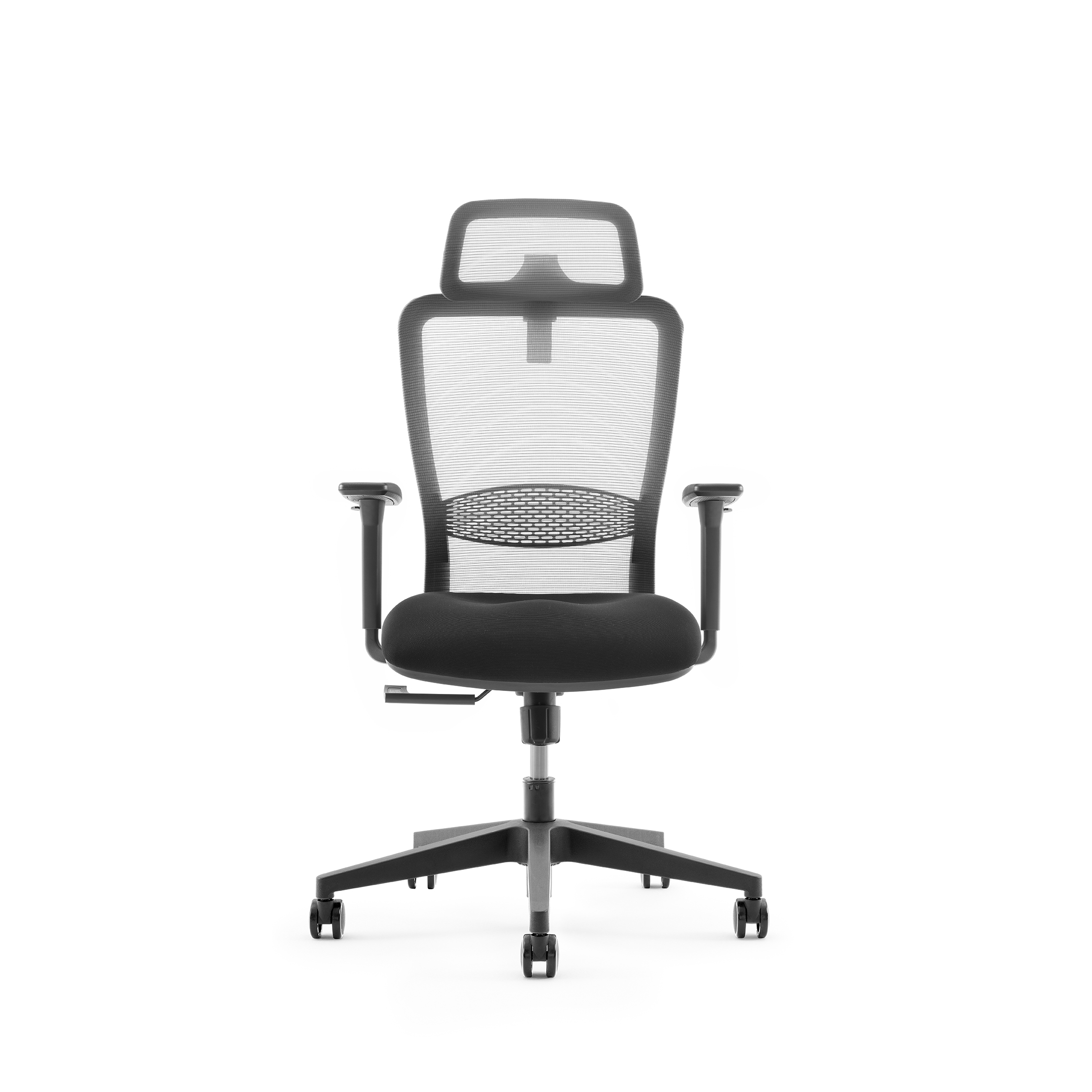
Mesh materials - as in the ErgoMax All Mesh and NANO Chair mesh backrest - maintain airflow through the backrest surface, preventing heat accumulation at the lumbar contact point during extended sitting.
The AERO Chair Fabric (AED 890, BIFMA-certified, 4D adjustable armrests) offers a middle ground - durable fabric upholstery with more breathability than leather, available in Light-Grey, Marine-Blue, and Pure-Black colourways suited to professional office environments.
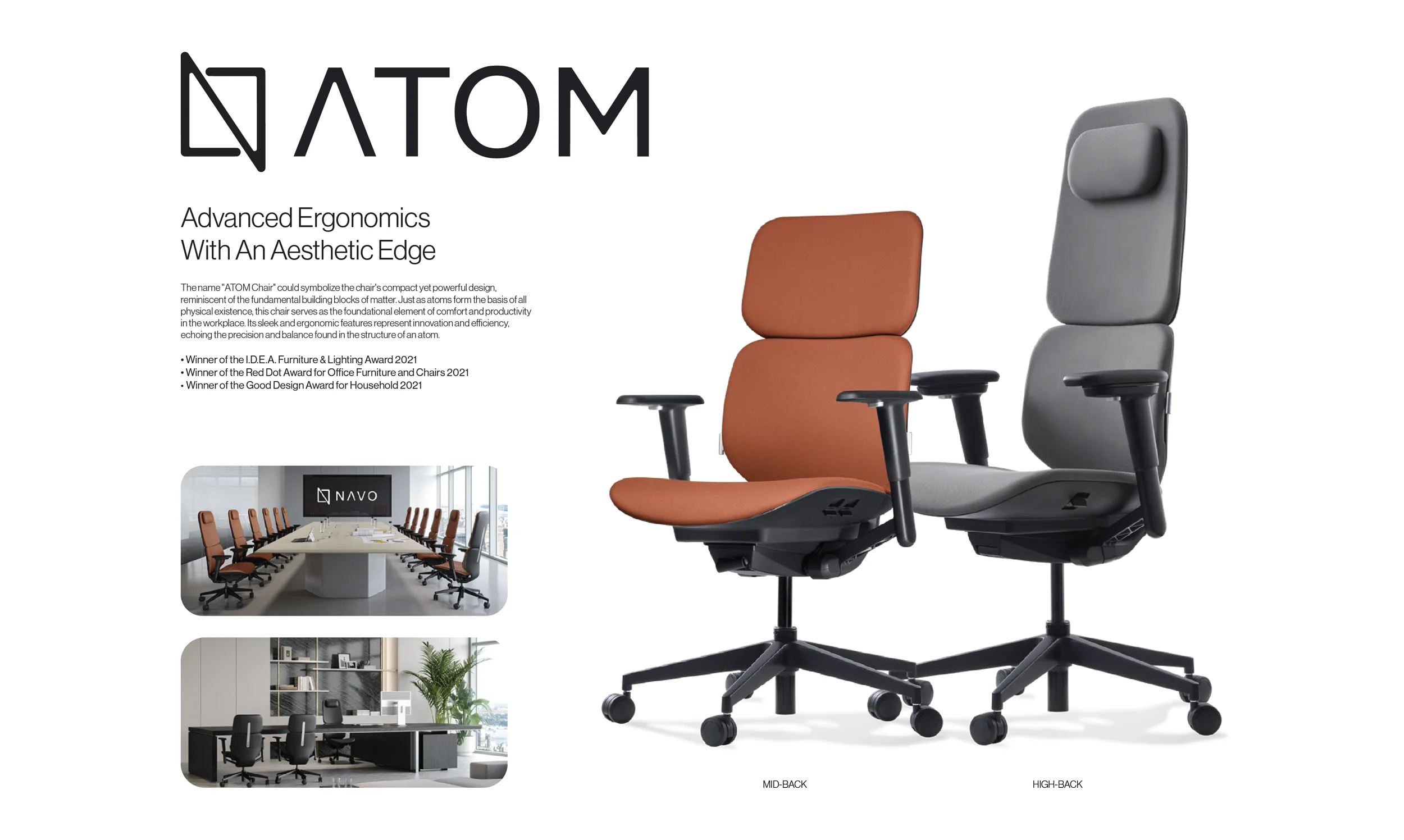
For premium office environments where aesthetics matter alongside ergonomics, the ATOM Chair - award-winning, aluminium frame, available in ErgoFabric, CloudLeather, and Leather finishes - provides ergonomic adjustment with executive-level material quality.
At What Price Point Do Ergonomic Chairs Deliver Real Benefits?
Quality ergonomic chairs with meaningful adjustability (adjustable lumbar, seat height, seat depth, and armrests) are available from AED 800–1,500. Premium models with advanced features (5D armrests, hidden footrests, BIFMA certification, premium materials) range AED 1,500–3,000+. Under AED 500, most chairs compromise the adjustability that drives ergonomic outcomes.
A study referenced by Mantooth, Zhu & Mehta (2017) highlighted that chairs without specific adjustable features lead to nerve compression and increased musculoskeletal disorder risk - confirming that the adjustability features, not the brand name, determine ergonomic value.
The correct frame for chair investment: not "how much do I want to spend on a chair?" but "how many hours daily do I sit, and what is the productivity cost of the discomfort the wrong chair creates?"
Browse Navo's complete ergonomic chairs collection - BIFMA-certified options starting from AED 890 with verified adjustability specifications.
How Do Ergonomic Chairs and Standing Desks Work Together?
Ergonomic chairs and standing desks address different components of the same problem: prolonged static posture. The chair optimises the seated component; the standing desk enables alternation out of it. Used together, they produce better outcomes than either alone - but only when both are set up correctly.
Research from a workplace sit-stand desk intervention study found participants using both ergonomic chairs and standing desks reported fewer physical complaints and higher productivity than those using conventional furniture alone, cited by TrueMed.
Setting up an office in Dubai requires coordinating chair and desk - the chair's maximum height must be compatible with the desk's minimum sitting height. The Navodesk range's minimum sitting heights (69–71cm for most models) are compatible with standard ergonomic chair adjustment ranges.
Frequently Asked Questions
- Yes - for users sitting 6+ hours daily. Research in the Journal of Occupational and Environmental Medicine found up to 17.7% productivity improvement with proper ergonomic workstation setup. The difference is most pronounced in the afternoon, when the cumulative effect of postural fatigue degrades performance in non-ergonomic setups.
- Adjustability that allows the chair to match your body: lumbar support at your spine's L4-L5 level, seat height reaching your ergonomic elbow position, seat depth leaving 2–4 inches at knee backs, armrests at shoulder-relaxed elbow height. A chair without these adjustments isn't ergonomic regardless of what its label says.
- Mesh for full-day use in Dubai's climate. AC environments maintain 22–24°C, but sustained sitting generates body heat at contact surfaces that mesh dissipates and leather retains. For 6–8 hour workdays, mesh consistently outperforms solid materials for sustained comfort. The HALO Chair's breathable
- Quality ergonomic chairs last 10–12 years with proper maintenance, according to Simplova's research. BIFMA-certified chairs (HALO, ErgoMax, NANO, AERO from Navo) are tested for structural integrity and load-bearing capacity - indicating expected service life under sustained professional use.
Need Help Building Your Ergonomic Setup?
We'll guide you to the perfect chair, desk setup, and comfort tips for a productive workday.
Shop Office FurnitureBoost Productivity with Perfect Posture
Discover Ergonomic Chairs Designed to Keep You Focused and Comfortable!
 450
450
Popular Blogs
View all
Ergonomic Furniture Meets Gaming & Education: Highlights from the University of Wollongong Event
We recently had the pleasure of hosting a gaming event at the University of Wollongong that combined competitive gaming with an opportunity to explore the importance of ergonomic furniture in gaming and educational environments. Our goal was to demonstrate how ergonomic products can support comfort and performance, enhancing the way students experience gaming and learning.
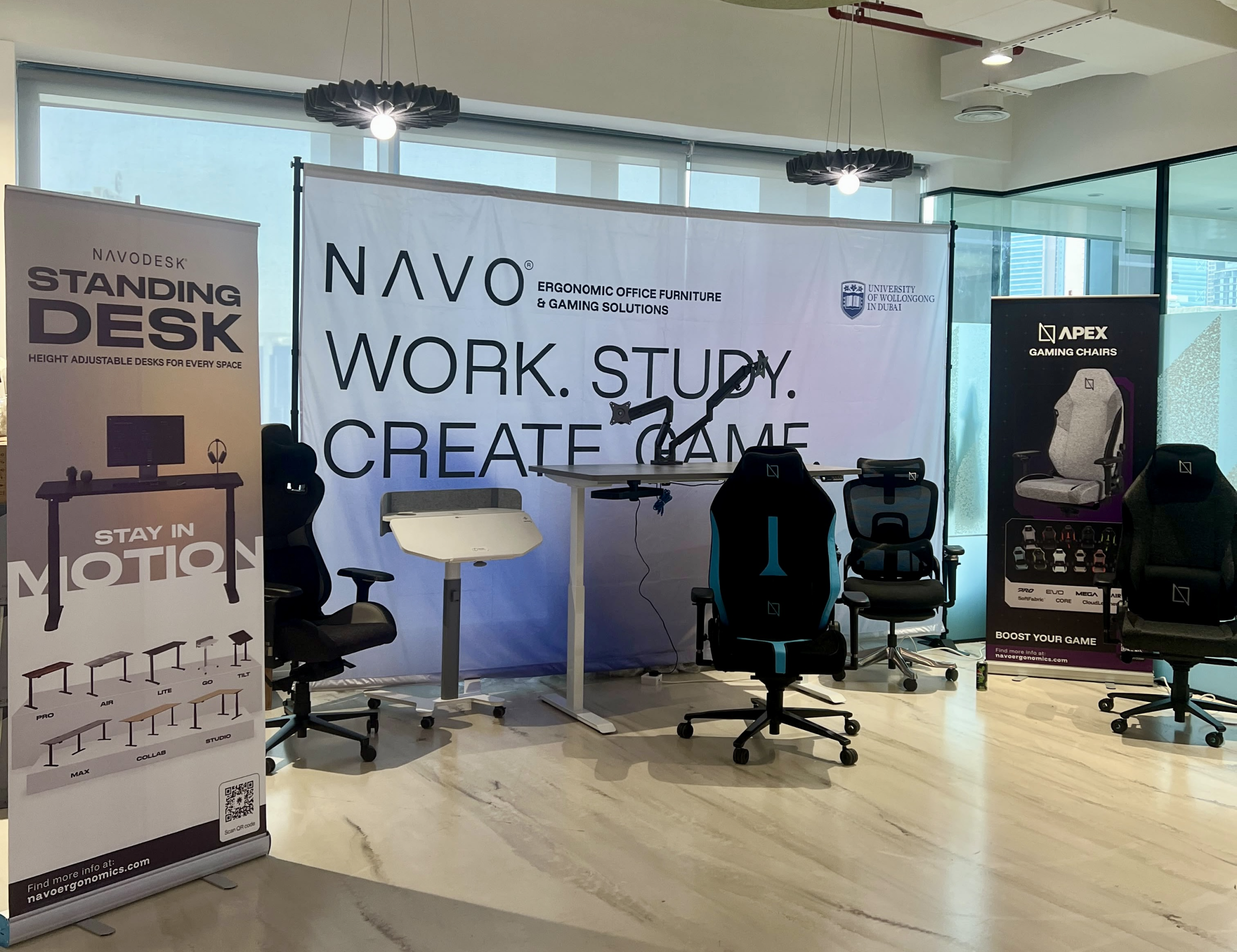
The tournament attracted over 70 participants, including avid gamers and curious onlookers. Our display featured gaming desks, chairs, and ergonomic accessories such as monitor arms. Students could compete in exciting gaming matches while experiencing our products firsthand.
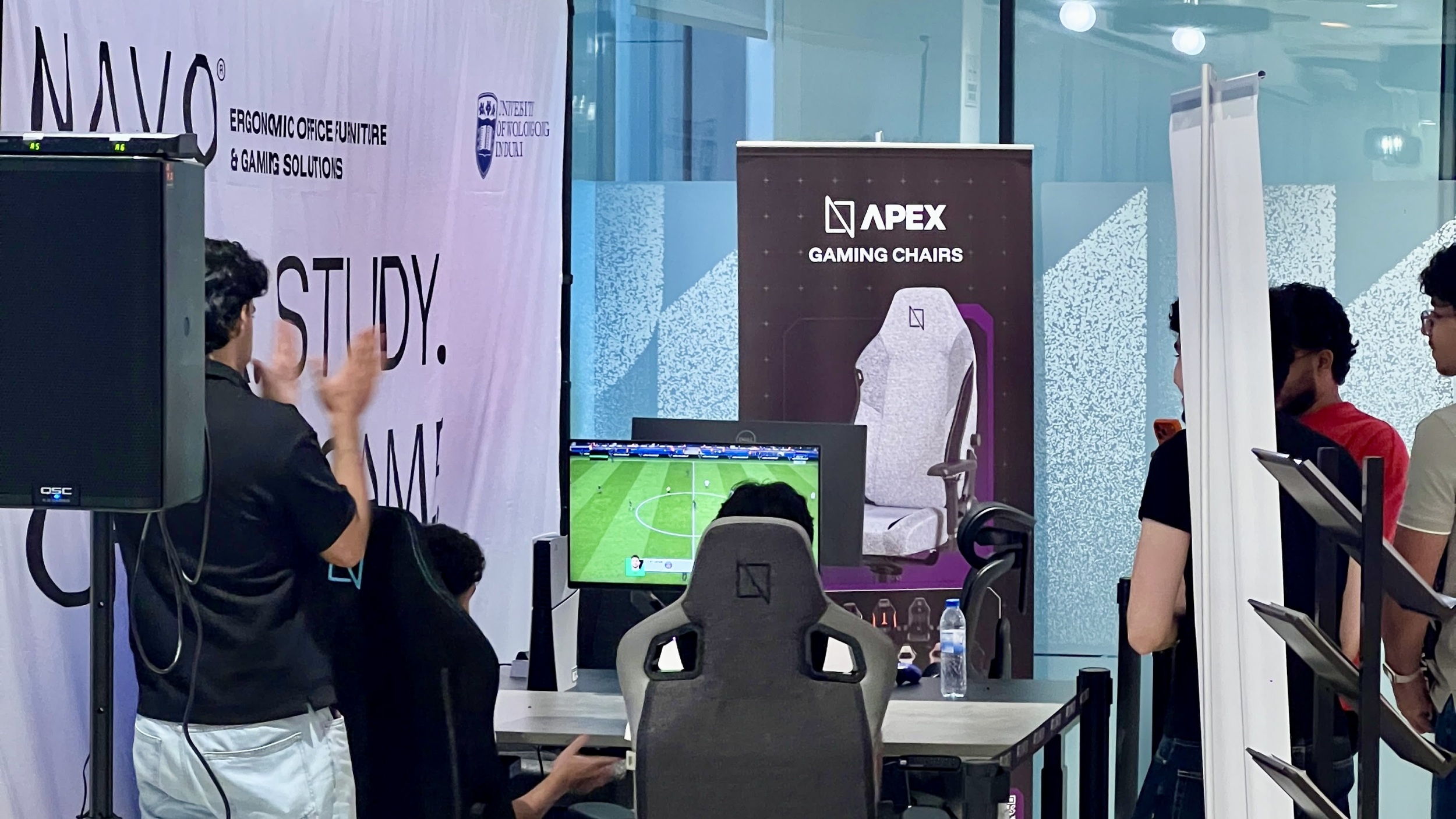
One of the event's highlights was the opportunity to experience our ergonomic gaming chairs alongside our specially designed ergonomic chairs. Students could compare their comfort, support, and overall seating experience. The feedback was overwhelmingly positive, with many participants noticing differences in posture support and comfort during extended use.
The excitement extended beyond the students, with faculty members also showing interest in our products. Professors and educators often spend long hours teaching, making ergonomic solutions a valuable consideration for classrooms and other educational spaces. It was encouraging to see faculty members explore how ergonomic furniture could support their everyday work.
The event provided a valuable opportunity to showcase NAVO's commitment to ergonomic solutions for both gaming and education. We aim to encourage greater awareness of workplace and study ergonomics, helping students and faculty create comfortable environments that support productivity while reducing physical strain.
Looking back, we are encouraged by the positive interactions and insights shared by students and faculty. Promoting ergonomic awareness in university environments is a cause we strongly support, and we look forward to continuing our efforts to help create more comfortable and productive spaces for learning, gaming, and work.
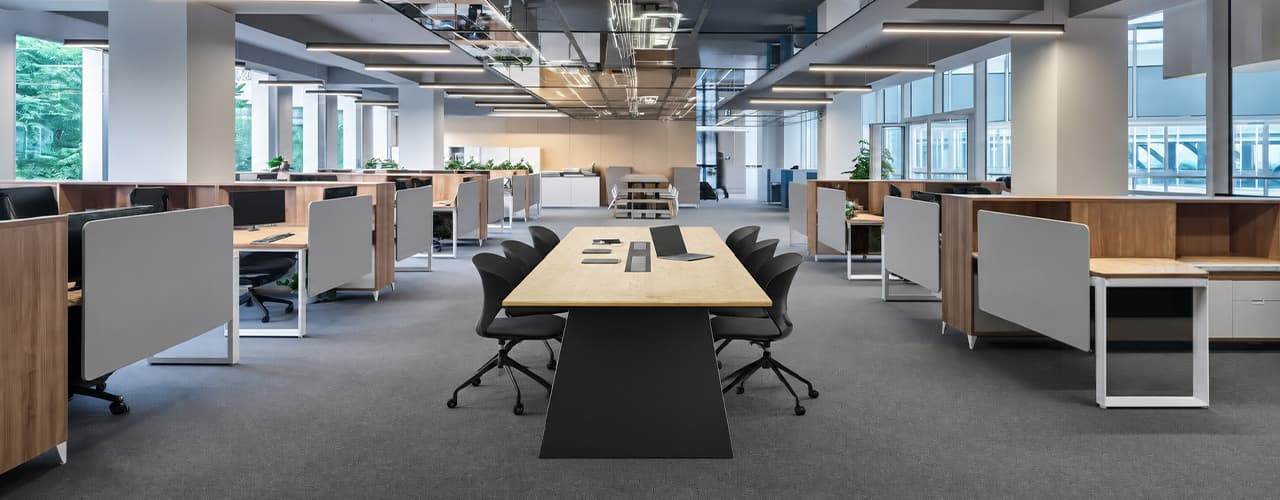
Open Plan vs Cubicle vs Hybrid Office Layout: Which Is Right for You?
The open-plan office was supposed to fix everything the cubicle farm got wrong. It didn't. It created a different set of problems and left people nostalgic for the one thing cubicles did well: quiet. The hybrid layout is positioned as the solution that addresses the shortcomings of both. It might be only if it fits how a specific team works. It shouldn't be a mix of two philosophies that didn’t help the team before. This guide shows what each layout offers and where it falls short. It also helps you choose the best option-or combination-for your office in Dubai or the GCC.
Key Findings
*Global office use is now at 53%, up from 38% in 2024. Also, 69% of teams have over 40% of their staff sharing desks. This shows that 2019 workspace designs don’t fit current needs.
*A Harvard study found that open-plan spaces often lower face-to-face interaction. Instead, they boost digital communication. This is the opposite of what these designs aim for.
*A hybrid model conversion at a 120-person SaaS company restored engineering deployment speed to baseline. It also reduced voluntary turnover in technical roles by 18% over nine months.
*Steelcase research shows that companies improving their work environment boost productivity by 17%.
*In 2026, the most innovative UAE offices aren’t just picking open plans or cubicles. They’re creating “activity neighborhoods.” These are clusters of spaces designed for different work styles.
*No layout is universally right. The best choice depends on your team's work style, industry, hybrid attendance ratio, and specific acoustic needs for your floor.
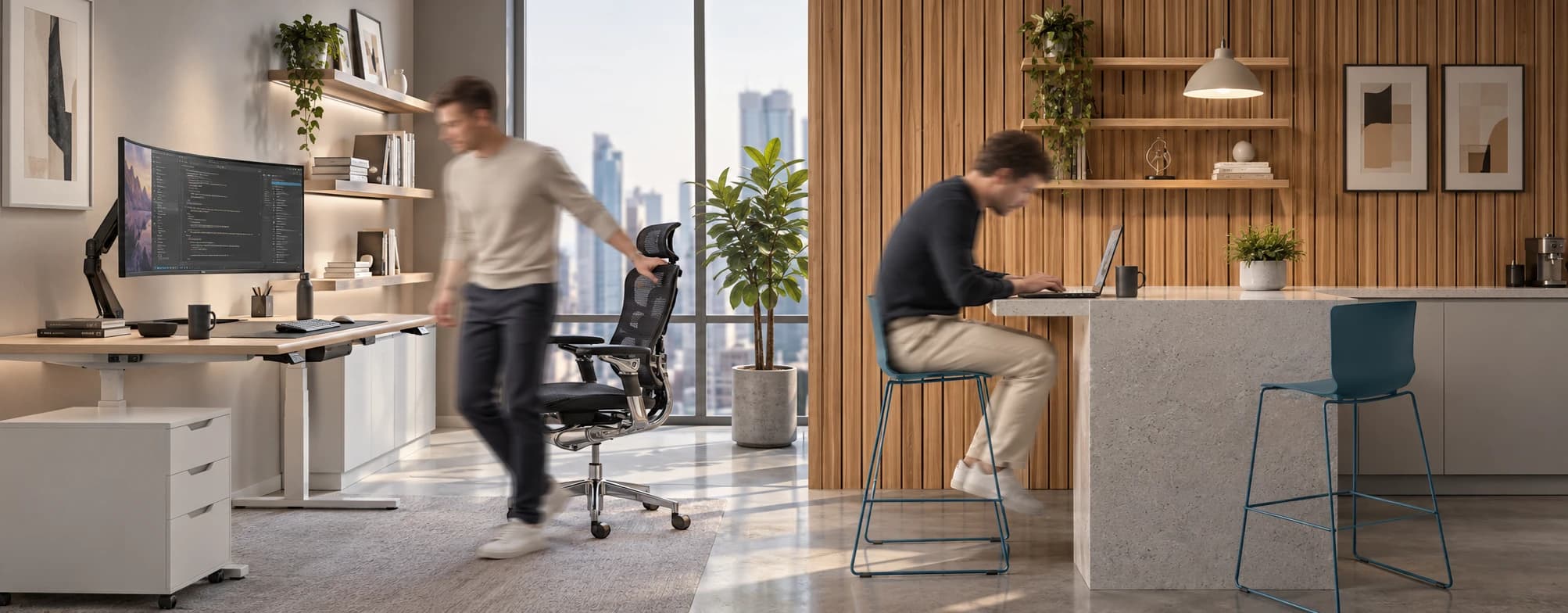
Sitting isn’t the Enemy, How You Sit Is: How to Align Your Desk for Zero Back Strain
If your job keeps you at a desk for most of the day, you are not alone—and you are not stuck. Software developers and data entry keyers spend 100% of a typical workday seated, while financial managers sit for 94%. Sitting is a standard part of modern work, so the real goal is learning how to reduce its physical impact while staying productive.
What the Research Shows
*Sedentary Volume: Adults in high-income countries spend 11–12 hours daily sitting over 75% of their waking hours (British Journal of Sports Medicine).
*Cardiovascular Risks: Sitting 6–8 hours daily increases cardiovascular event risk by 125% to 150% (Mayo Clinic).
*The 22-Minute Counter: 22 minutes of daily moderate-to-vigorous activity (brisk walking, cycling, active housework) offsets the mortality risk of prolonged sitting (BJSM).
*Micro-Break Impact: 5-minute movement breaks every hour significantly reduce fatigue and improve mood without hurting work performance (2026 BJSM Study).
*Gym Fallacy: A 60-minute workout in the morning does not fully reverse 9 hours of continuous sitting; daily movement breaks are still required.
You x Navo
Feel free to reach out to us for any queries & concerns