

 Visit our Showroom
Take me to
Mistake 1: Prioritising Appearance Over Adjustability
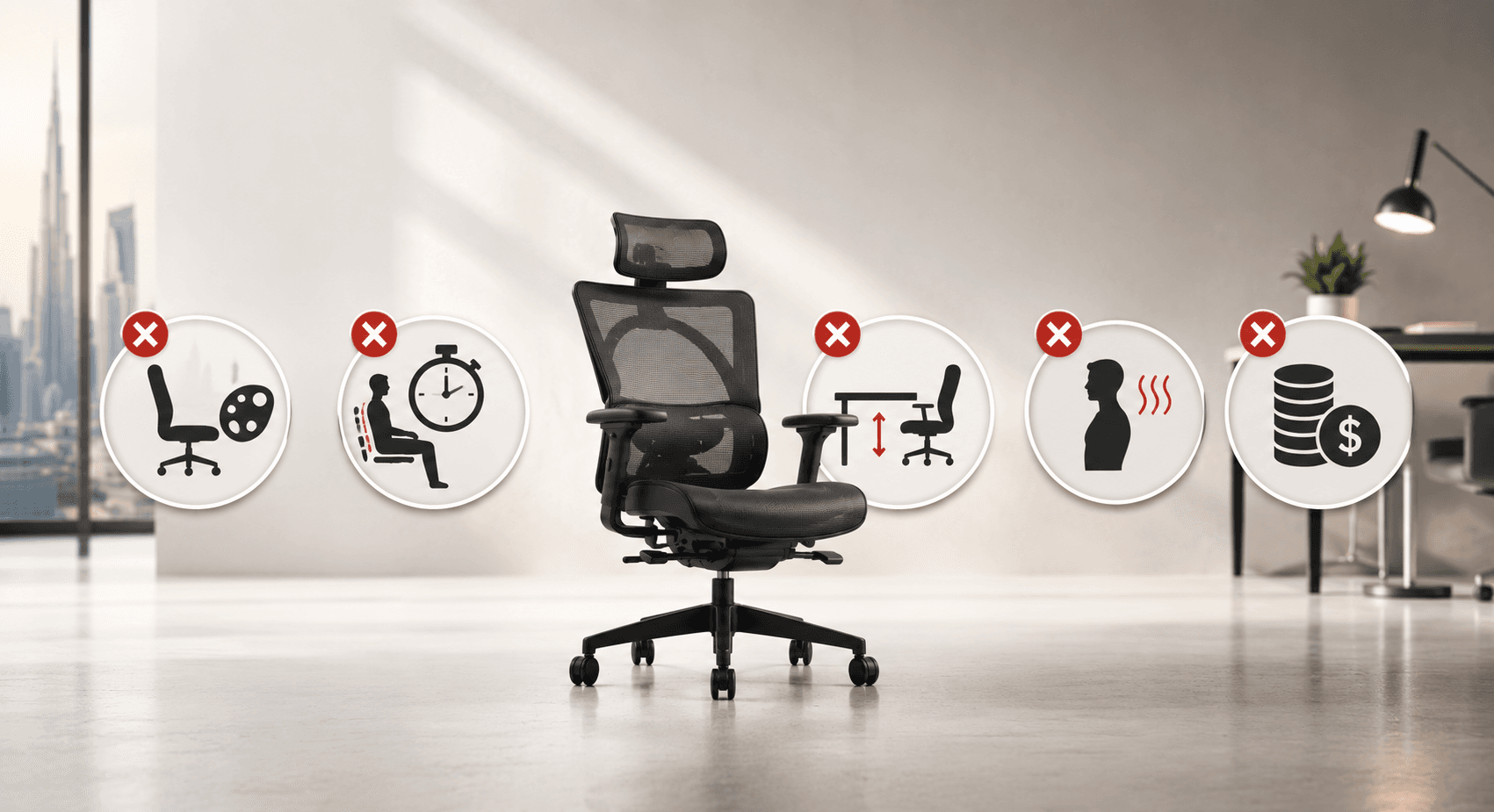
The most common ergonomic chair buying mistake is choosing based on appearance - a high back, premium leather finish, executive aesthetic - without verifying whether the chair has functional lumbar adjustment, seat depth control, and armrest range that match your body dimensions.
A chair can look authoritative and still lack adjustable lumbar depth - the single most important ergonomic feature for lower back health. According to Sihoo's ergonomic chair analysis, an "ergonomic" label doesn't guarantee adjustability. Always verify: seat height range, lumbar height AND depth adjustment (not just up-down), seat depth adjustment, and multi-directional armrests.
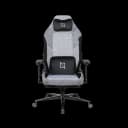
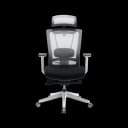
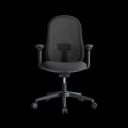
In Dubai offices where executive aesthetics matter, the ATOM Chair (award-winning, aluminium frame, ErgoFabric/CloudLeather options, adjustable lumbar, CloudFoam™ cushion) delivers both visual presence and functional ergonomics. You don't have to choose between them.
Mistake 2: Choosing a Chair Without Testing at Your Actual Duration
A 5-minute showroom test reveals nothing about 8-hour ergonomic performance. Pressure points and support inadequacies surface after 2–4 hours. According to Eureka Ergonomic's buyer guide, ergonomists suggest a 5–10 day adaptation period even for correctly fitted chairs.
The relevant test isn't "does this feel comfortable right now" but "does this feel better at hour 4 than the chair I'm replacing?" A chair that feels firm initially but maintains support throughout the day outperforms one that feels plush for 30 minutes then bottoms out as foam compresses.
Current biomechanical research (cited in WoodenStreet's ergonomic guide) supports 100–110° hip angle - a slight recline - as placing minimum pressure on lumbar discs, rather than strict 90° upright posture. A chair that locks you upright at exactly 90° is based on 1970s research, not current ergonomics.
This is why Navo has a Dubai showroom (Al Khabaisi Complex, 74 2B Street, Al Khabaisi) - so buyers can test chairs before committing, not rely on product page photography.
Mistake 3: Buying a Chair That Doesn't Match Your Desk Height
A chair is ergonomic only when it reaches your correct ergonomic position at your specific desk. If your desk is 75cm and the chair's maximum useful height leaves your elbows 5cm above desk level, the correct ergonomic outcome is impossible regardless of chair quality.
Most standard desks in Dubai homes and offices sit at 75cm. For users under ~165cm, correct elbow height at a 75cm desk requires raising the chair - which then lifts feet off the floor, requiring a footrest. For users over ~185cm, 75cm desks are too low, causing forward lean regardless of chair adjustment.
If your desk is height-adjustable (Navodesk range from 69–123cm depending on model), the desk finds you. If your desk is fixed, verify the chair reaches your ergonomic height and add a footrest if needed for shorter users. As covered in our ergonomic chair and desk setup guide, desk compatibility is the pre-purchase check most buyers skip.
Mistake 4: Ignoring Material Suitability for Dubai Climate
Choosing leather or thick foam upholstery for full-day Dubai office use creates sustained afternoon discomfort that mesh alternatives prevent. Dubai offices maintained at 22–24°C with 35–50°C outdoor temperatures create a thermal differential that makes contact-surface breathability practically important - not a luxury feature.
URBANICA's chair buying guide specifically notes that breathability is a critical material consideration for sustained comfort. For UAE professionals spending 6–8 hours in chairs daily, mesh materials outperform alternatives for thermal management across the full workday.
The HALO Chair's breathable mesh back and ErgoMax All Mesh all-mesh construction are specifically relevant here. The AERO Chair Fabric offers a breathable fabric alternative to leather at AED 890 with BIFMA certification.
Mistake 5: Underinvesting Based on Purchase Price Rather Than Total Cost
Budget chairs at AED 200–400 typically fail ergonomically within 6–12 months as foam compresses and mechanisms degrade. Quality ergonomic chairs last 10–12 years (Ergo Shoppe longevity research). Over a 10-year period, AED 1,500 invested once costs AED 150/year. AED 350 replaced every 18 months costs AED 2,800+ over 10 years - plus the accumulated back pain treatment and productivity loss from poorly supported sitting.
The ANSI/BIFMA X5.1 standard tests chairs through thousands of load cycles simulating years of use. A BIFMA-certified chair has passed these tests. A non-certified budget chair has not.
Navo's BIFMA-certified range starts at AED 890 (AERO Fabric) - providing structural verification at a price point that makes the total-cost calculation straightforward.
Frequently Asked Questions
- Check: BIFMA certification (independent structural testing), adjustable lumbar with both height AND depth control, seat depth adjustment, multi-directional armrests, and seat height range covering your ergonomic position. A chair without adjustable lumbar depth - regardless of label - is not functionally ergonomic.
- Yes - dimensions refer to adjustment directions. 3D: height, width, depth. 4D: adds pivot/angle. 5D: adds tilt adjustment. More dimensions accommodate more varied shoulder positions and desk heights. The ErgoMax has 5D armrests; AERO Fabric has 4D.
- Sit back fully against backrest. Adjust lumbar so it contacts lower back without pushing. Check feet reach floor at correct elbow height. Test recline. Move through positions: typing, reading, reclining. Then visit the showroom again after a week with your specific back pain location in mind.
Need Help Building Your Ergonomic Setup?
We'll guide you to the perfect chair, desk setup, and comfort tips for a productive workday.
Shop Office FurniturePopular Blogs
View all
Ergonomic Furniture Meets Gaming & Education: Highlights from the University of Wollongong Event
We recently had the pleasure of hosting a gaming event at the University of Wollongong that combined competitive gaming with an opportunity to explore the importance of ergonomic furniture in gaming and educational environments. Our goal was to demonstrate how ergonomic products can support comfort and performance, enhancing the way students experience gaming and learning.
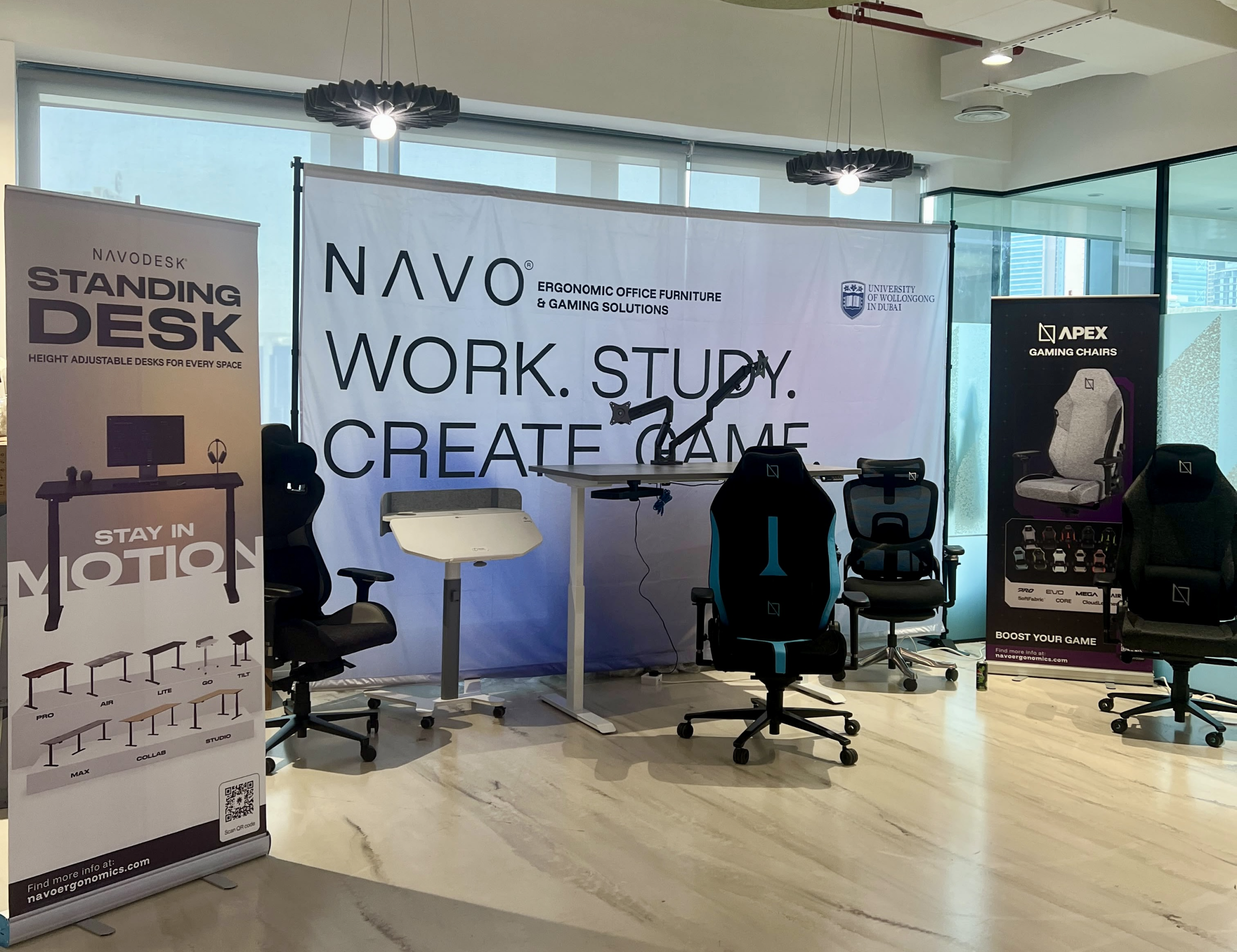
The tournament attracted over 70 participants, including avid gamers and curious onlookers. Our display featured gaming desks, chairs, and ergonomic accessories such as monitor arms. Students could compete in exciting gaming matches while experiencing our products firsthand.
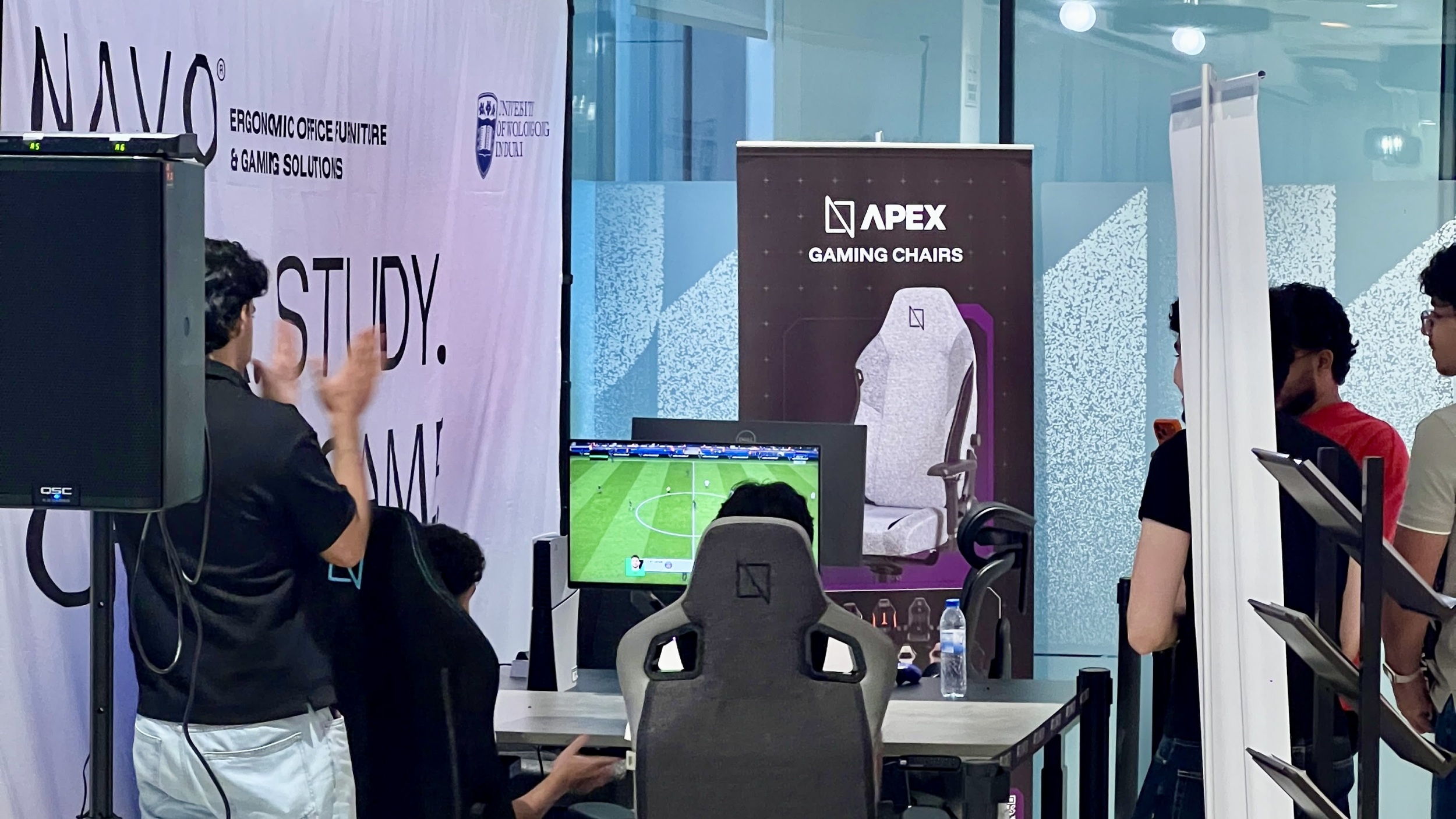
One of the event's highlights was the opportunity to experience our ergonomic gaming chairs alongside our specially designed ergonomic chairs. Students could compare their comfort, support, and overall seating experience. The feedback was overwhelmingly positive, with many participants noticing differences in posture support and comfort during extended use.
The excitement extended beyond the students, with faculty members also showing interest in our products. Professors and educators often spend long hours teaching, making ergonomic solutions a valuable consideration for classrooms and other educational spaces. It was encouraging to see faculty members explore how ergonomic furniture could support their everyday work.
The event provided a valuable opportunity to showcase NAVO's commitment to ergonomic solutions for both gaming and education. We aim to encourage greater awareness of workplace and study ergonomics, helping students and faculty create comfortable environments that support productivity while reducing physical strain.
Looking back, we are encouraged by the positive interactions and insights shared by students and faculty. Promoting ergonomic awareness in university environments is a cause we strongly support, and we look forward to continuing our efforts to help create more comfortable and productive spaces for learning, gaming, and work.
Open Plan vs Cubicle vs Hybrid Office Layout: Which Is Right for You?
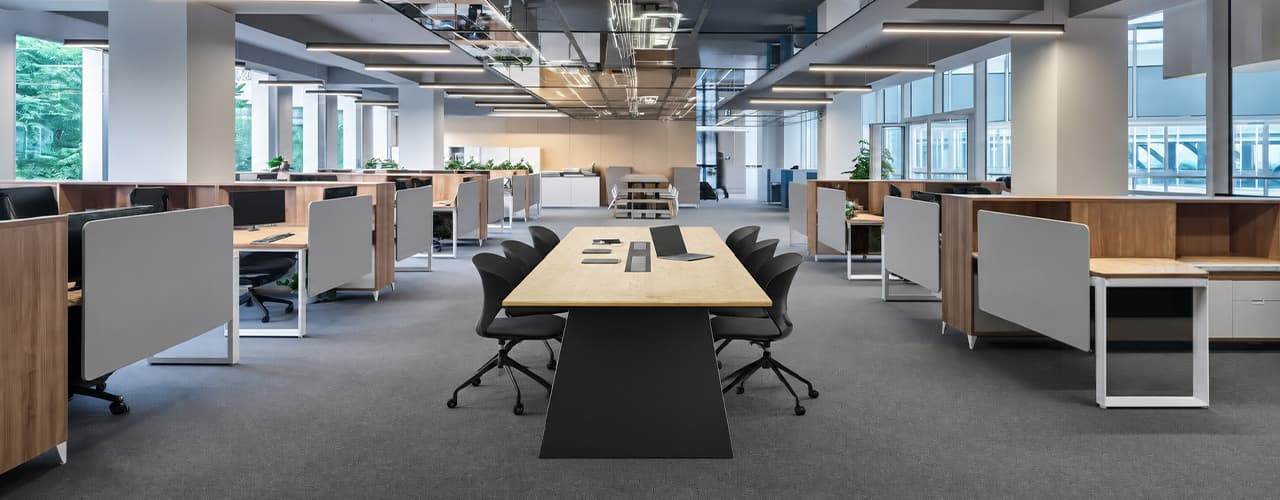
The open-plan office was supposed to fix everything the cubicle farm got wrong. It didn't. It created a different set of problems and left people nostalgic for the one thing cubicles did well: quiet. The hybrid layout is positioned as the solution that addresses the shortcomings of both. It might be only if it fits how a specific team works. It shouldn't be a mix of two philosophies that didn’t help the team before. This guide shows what each layout offers and where it falls short. It also helps you choose the best option-or combination-for your office in Dubai or the GCC.
Key Findings
*Global office use is now at 53%, up from 38% in 2024. Also, 69% of teams have over 40% of their staff sharing desks. This shows that 2019 workspace designs don’t fit current needs.
*A Harvard study found that open-plan spaces often lower face-to-face interaction. Instead, they boost digital communication. This is the opposite of what these designs aim for.
*A hybrid model conversion at a 120-person SaaS company restored engineering deployment speed to baseline. It also reduced voluntary turnover in technical roles by 18% over nine months.
*Steelcase research shows that companies improving their work environment boost productivity by 17%.
*In 2026, the most innovative UAE offices aren’t just picking open plans or cubicles. They’re creating “activity neighborhoods.” These are clusters of spaces designed for different work styles.
*No layout is universally right. The best choice depends on your team's work style, industry, hybrid attendance ratio, and specific acoustic needs for your floor.
Sitting isn’t the Enemy, How You Sit Is: How to Align Your Desk for Zero Back Strain
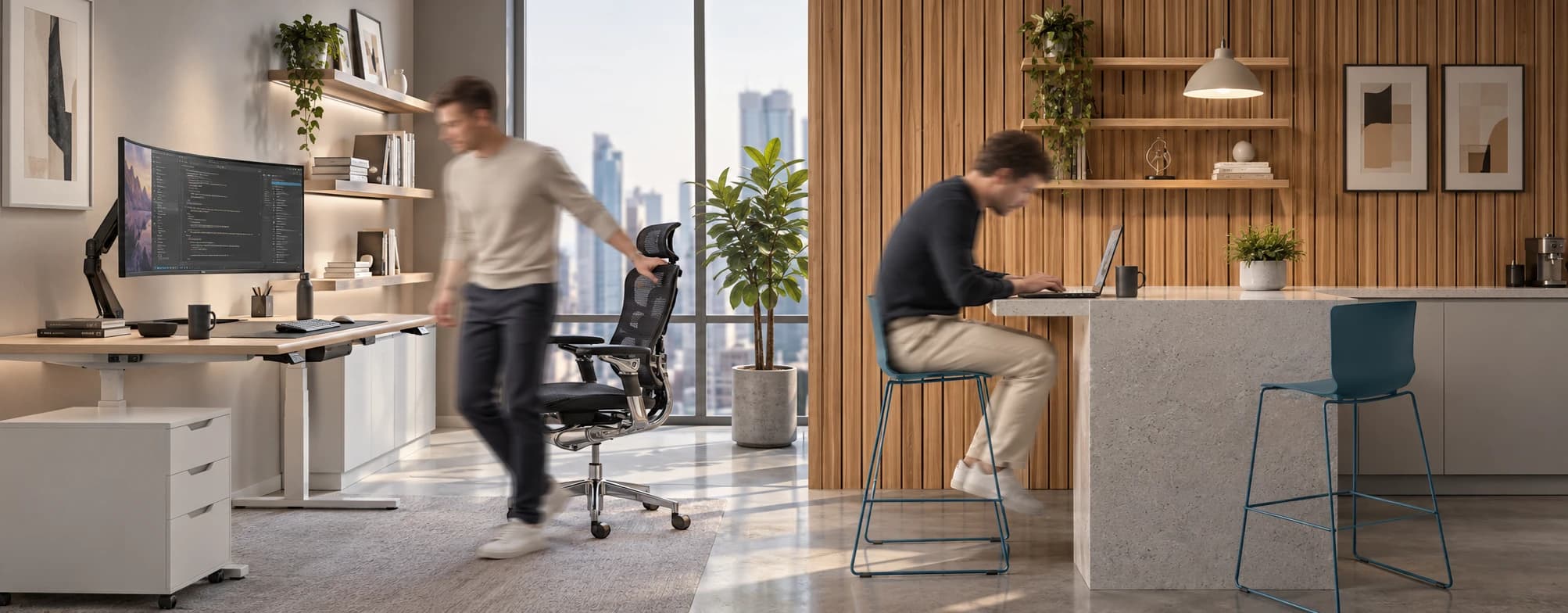
If your job keeps you at a desk for most of the day, you are not alone—and you are not stuck. Software developers and data entry keyers spend 100% of a typical workday seated, while financial managers sit for 94%. Sitting is a standard part of modern work, so the real goal is learning how to reduce its physical impact while staying productive.
What the Research Shows
*Sedentary Volume: Adults in high-income countries spend 11–12 hours daily sitting over 75% of their waking hours (British Journal of Sports Medicine).
*Cardiovascular Risks: Sitting 6–8 hours daily increases cardiovascular event risk by 125% to 150% (Mayo Clinic).
*The 22-Minute Counter: 22 minutes of daily moderate-to-vigorous activity (brisk walking, cycling, active housework) offsets the mortality risk of prolonged sitting (BJSM).
*Micro-Break Impact: 5-minute movement breaks every hour significantly reduce fatigue and improve mood without hurting work performance (2026 BJSM Study).
*Gym Fallacy: A 60-minute workout in the morning does not fully reverse 9 hours of continuous sitting; daily movement breaks are still required.
You x Navo
Feel free to reach out to us for any queries & concerns