

 Visit our Showroom
Take me to
What Is the Core Difference Between Height-Adjustable and Fixed Desks?
A height-adjustable desk changes work surface height to match sitting or standing ergonomic requirements for individual users. A fixed desk maintains a single height - typically 75cm - which is ergonomically correct for approximately 30-40% of users and creates compensatory postures for the remaining 60–70%.
Standard desk height (75cm) was designed for average male height populations from mid-20th century workspace research. Modern Dubai and GCC offices serve internationally diverse workforces where user height varies from 155cm to 200cm. The "average" desk serves a narrowing slice of that population correctly.
This is the fundamental problem height-adjustable desks solve - not primarily the standing function, but correct seated height for the individual user. As we explored in our analysis of whether standing is better than sitting, the core benefit of sit-stand desks is position variation - which requires getting both positions correct.
What Are the Ergonomic Advantages of Height-Adjustable Desks?
Height-adjustable desks provide correct seated keyboard height for the full user height range (155–200cm), enable sit-stand alternation that reduces musculoskeletal loading, and accommodate shared workstations where different users require different configurations.
For individual users: A 165cm professional at a 75cm desk has keyboard 3–5cm too high - forcing sustained shoulder elevation and wrist dorsiflexion. A standing desk adjusted to 70–71cm corrects this immediately. The Navodesk PRO Frame reaches 69cm; the Flex L-Shape reaches 58cm - covering users well below average height.
For shared workstations: Hot-desking and shift-based offices where multiple users work at the same desk require height adjustment, or require taller users to hunch and shorter users to reach. A fixed desk cannot serve both within the same day.
For sit-stand benefits: As our guide to how long to stand at a standing desk explains, 2-4 hours of standing across a workday meaningfully reduces sedentary health risk. Fixed desks cannot provide this — without adding a desk riser, which introduces its own ergonomic complications.
What Are the Advantages of Fixed Desks?
Fixed desks offer lower initial cost, greater structural simplicity (no mechanical components to maintain), and typically more stable surfaces at any given configuration. For individual users at the correct height for whom 75cm is ergonomically appropriate, a fixed desk provides everything needed at lower investment.
Where fixed desks genuinely make sense:
Reception and front-of-house: Fixed reception desks designed at standing-interaction height (90–100cm) serve their purpose precisely. Adjustability adds cost without benefit.
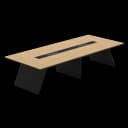
Meeting rooms: Standard meeting tables at 74–76cm serve seated meetings correctly. The exception is the Navodesk COLLAB at our meeting tables collection - for organisations that run standing meeting formats.
Budget-constrained new offices: Quality fixed desks paired with good ergonomic chairs - which adjust to compensate for fixed desk height - can be a better investment than mediocre standing desks. The chair is the higher-impact ergonomic intervention when budget is limited.
Executive statement pieces: Premium fixed desks in wood veneer or solid surface finishes project the authority expected in UAE and GCC boardrooms and executive offices. Navo's executive desks in premium finishes serve this use case specifically.
How Do They Compare on Cost Over 5 Years?
Initial investment: quality fixed desk AED 800–2,500; quality electric standing desk AED 1,800–6,000+. Over five years, quality standing desk motors require no maintenance under normal use - making the premium primarily a one-time difference rather than an ongoing cost.
The Navodesk PRO Frame is BIFMA-certified and backed by a 5-year warranty - defining the expected service period of the core mechanical systems.
Which Is Better for UAE and GCC Offices?
For permanent individual workstations in Dubai and GCC: height-adjustable desks provide better ergonomic outcomes across diverse teams and support sit-stand working patterns standard in international business. For shared or specialised furniture (meeting tables, reception, executive statement pieces): fixed configurations are appropriate and often preferred.
GCC-specific context:
Workforce diversity in Dubai offices makes shared fixed-height desks a poor ergonomic fit. A hot desk serving someone 162cm and someone 191cm at a fixed 75cm surface is ergonomically correct for neither.
UAE corporate wellness initiatives increasingly specify ergonomic workstations - with height adjustability as standard rather than premium. This signals the direction of commercial fit-out specifications in Dubai and Abu Dhabi.
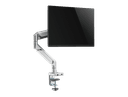
For Dubai home offices - where a desk often serves multiple functions at different times - the flexibility of height adjustment adds value beyond the ergonomic case. The ergonomic accessories that work with height-adjustable desks also differ from those suited to fixed desks - monitor arms that move independently of the surface, cable management for dynamic routing - so the desk choice cascades through the full setup.
Frequently Asked Questions
- For full-time professionals sitting 6–8 hours daily: yes. Correct seated height alone — independent of standing function — justifies the premium for most users whose height differs from the 75cm standard. For occasional-use setups, fixed desks at lower cost are appropriate.
- Higher initial cost and mechanical components that, while rated for extended use, represent complexity absent from fixed furniture. For users who simply need 75cm flat surface and won't use standing function, the additional cost provides limited return.
- Yes — the desk adjusts to match your chair position rather than the chair adapting to the desk. Navodesk electric desks reach 69–71cm at their lowest, compatible with standard ergonomic chairs at their height range.
- The Navodesk AIR for clean minimal setups. Dual-motor, NavoSense™, USB charging, modular frame. The Navodesk Lite for compact spaces.
Need Help Building Your Ergonomic Setup?
We'll guide you to the perfect chair, desk setup, and comfort tips for a productive workday.
Shop Office FurniturePopular Blogs
View all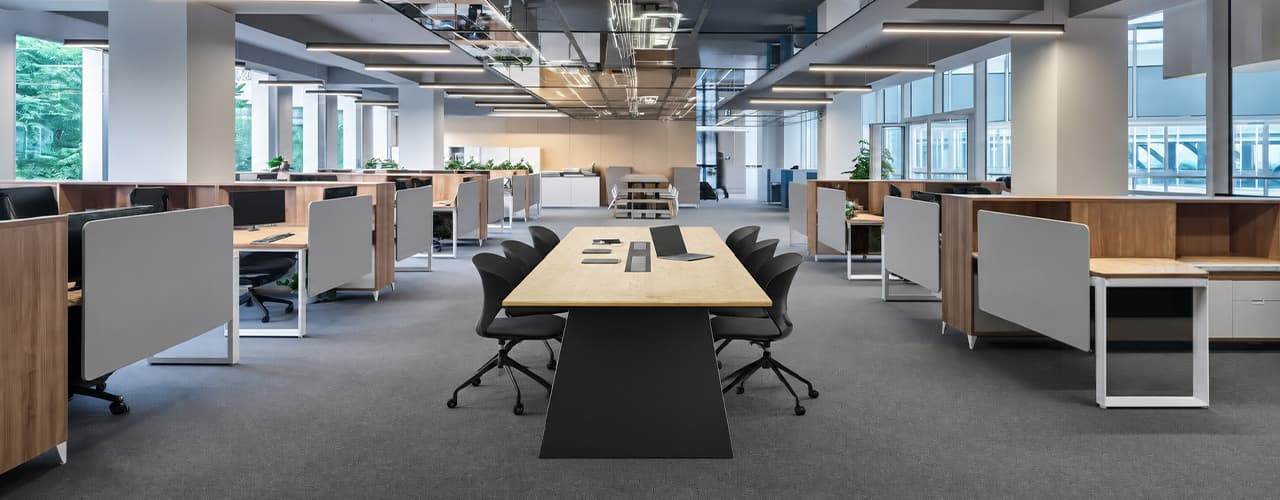
Open Plan vs Cubicle vs Hybrid Office Layout: Which Is Right for You?
The open-plan office was supposed to fix everything the cubicle farm got wrong. It didn't. It created a different set of problems and left people nostalgic for the one thing cubicles did well: quiet. The hybrid layout is positioned as the solution that addresses the shortcomings of both. It might be only if it fits how a specific team works. It shouldn't be a mix of two philosophies that didn’t help the team before. This guide shows what each layout offers and where it falls short. It also helps you choose the best option-or combination-for your office in Dubai or the GCC.
Key Findings
*Global office use is now at 53%, up from 38% in 2024. Also, 69% of teams have over 40% of their staff sharing desks. This shows that 2019 workspace designs don’t fit current needs.
*A Harvard study found that open-plan spaces often lower face-to-face interaction. Instead, they boost digital communication. This is the opposite of what these designs aim for.
*A hybrid model conversion at a 120-person SaaS company restored engineering deployment speed to baseline. It also reduced voluntary turnover in technical roles by 18% over nine months.
*Steelcase research shows that companies improving their work environment boost productivity by 17%.
*In 2026, the most innovative UAE offices aren’t just picking open plans or cubicles. They’re creating “activity neighborhoods.” These are clusters of spaces designed for different work styles.
*No layout is universally right. The best choice depends on your team's work style, industry, hybrid attendance ratio, and specific acoustic needs for your floor.
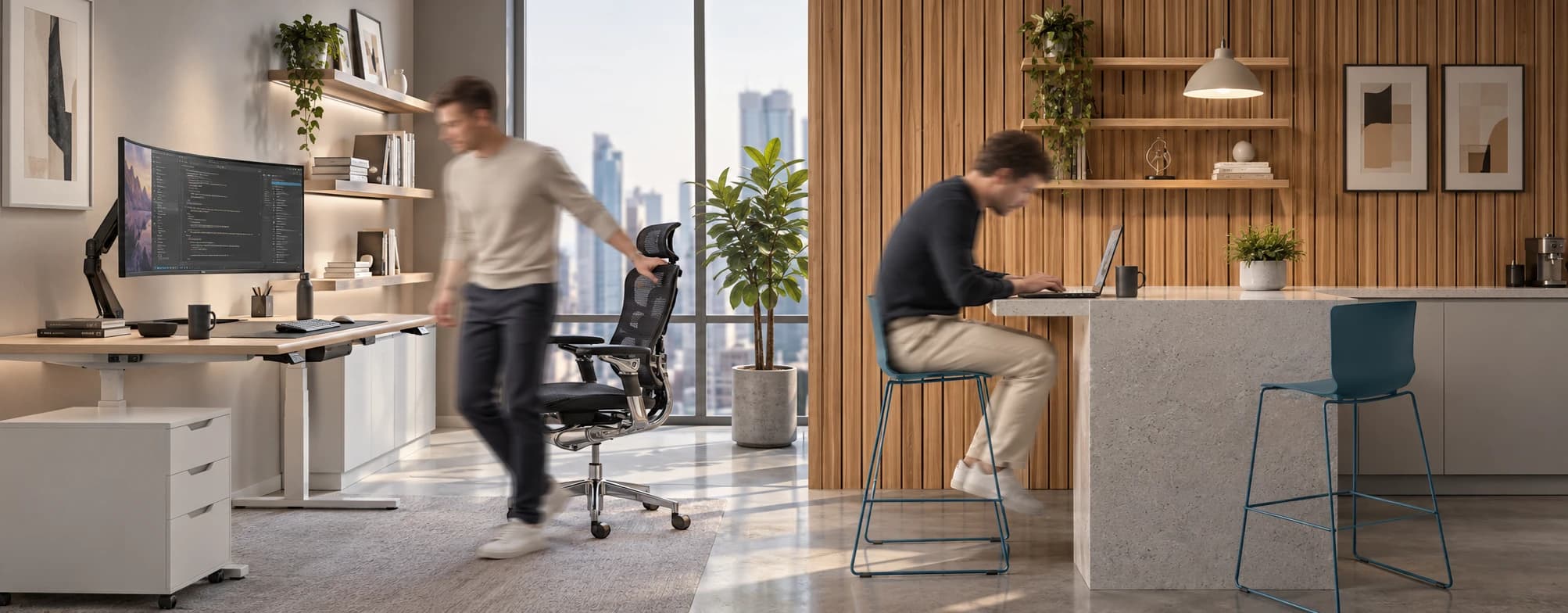
Sitting isn’t the Enemy, How You Sit Is: How to Align Your Desk for Zero Back Strain
If your job keeps you at a desk for most of the day, you are not alone—and you are not stuck. Software developers and data entry keyers spend 100% of a typical workday seated, while financial managers sit for 94%. Sitting is a standard part of modern work, so the real goal is learning how to reduce its physical impact while staying productive.
What the Research Shows
*Sedentary Volume: Adults in high-income countries spend 11–12 hours daily sitting over 75% of their waking hours (British Journal of Sports Medicine).
*Cardiovascular Risks: Sitting 6–8 hours daily increases cardiovascular event risk by 125% to 150% (Mayo Clinic).
*The 22-Minute Counter: 22 minutes of daily moderate-to-vigorous activity (brisk walking, cycling, active housework) offsets the mortality risk of prolonged sitting (BJSM).
*Micro-Break Impact: 5-minute movement breaks every hour significantly reduce fatigue and improve mood without hurting work performance (2026 BJSM Study).
*Gym Fallacy: A 60-minute workout in the morning does not fully reverse 9 hours of continuous sitting; daily movement breaks are still required.
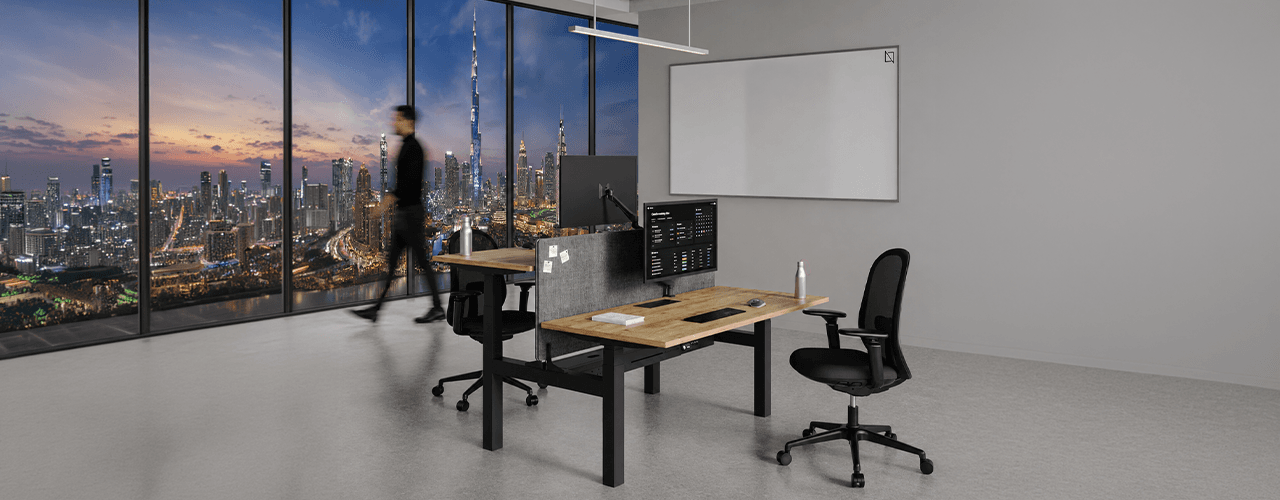
The Ultimate Office Furniture Setup Checklist for Modern Teams
Most offices aren't badly furnished. They're incompletely furnished. A great chair paired with the wrong desk height. A standing desk with no monitor arm. A collaborative floor with no acoustic separation.
The gap is rarely one big thing. It's several small things missing from the same setup at the same time.
This checklist covers every furniture category a modern UAE office needs — what to look for, what to avoid, and what the research says about each. Use it for a new fit-out, an upgrade review, or a department-by-department audit.
Key Findings
*The chair is the top furniture investment for knowledge workers. It has the most contact hours and directly impacts posture, energy, and afternoon performance.
*Fixed desks at 75cm fit about 30–40% of UAE office teams well. Height adjustability isn’t a luxury; it meets everyone’s needs.
*Open-plan offices without acoustic zones can lose employees up to 86 minutes of productive time each day. This is based on workplace productivity research.
*EU-OSHA highlights musculoskeletal disorders as the top workplace health concern worldwide. Poor seating and desk height are key factors.
*CBRE's 2026 Global Workplace Insights reveals that 69% of organizations have over 40% of staff sharing desks. This shift means adjustability is now a standard requirement, not just an upgrade.
*Quality ergonomic chairs last 8–12 years. A BIFMA-certified chair costs less per year when spread over 10 years. This cost is lower than one physiotherapy session for occupational back pain in Dubai.
You x Navo
Feel free to reach out to us for any queries & concerns